Dave is a marketing expert with 15 years experience in the tech and SaaS world. He specializes in educating IT and channel audiences, with a focus on security, privacy, compliance, and marketing technology. With a talent for storytelling and a deep understanding of the industry, Dave transforms complex IT topics into clear, engaging, and impactful narratives.
How to create a Google Workspace email signature
TL;DR
Google Workspace email signatures are created and deployed from the Admin console using the Append Footer setting
Native tools apply one template per organizational unit and can’t sync employee data from Google Directory
Images must be web-hosted and signatures can’t be previewed before deployment
Exclaimer for Google Workspace cloud solution applies signatures server-side in the mail flow, not by writing into each account, with directory sync and role-based access built in
Managing email signatures in Google Workspace takes time when every employee uses their own version.
To create a company-wide email signature in Google Workspace, sign in to the Google Admin console, go to Apps > Google Workspace > Gmail > Compliance, and configure the Append Footer setting to apply a footer to your chosen organizational units.
This guide covers how to create and apply a Google Workspace footer, where Google’s native tools stop short, and how Exclaimer’s Google Workspace solution manages email signatures from one place.
Quick answer
A Google Workspace email signature is the block of text and imagery that appears automatically at the end of each Gmail message. It typically includes the sender's name, job title, contact details, company logo, and sometimes a disclaimer or marketing banner.
How to create a Google Workspace email signature using the Append Footer setting
In Google Workspace, you manage email signatures with the Append Footer setting in the Google Admin console. Google Workspace IT administrators (Super Admins, or admins with the Gmail Settings privilege) can give everyone a consistent email signature template.
Step 1: Sign in to the Google Admin console
Go to admin.google.com and sign in with your Super Admin credentials.
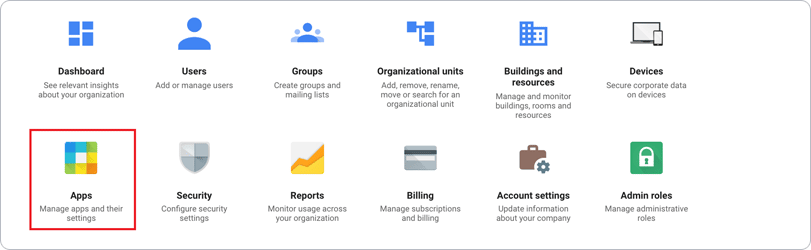
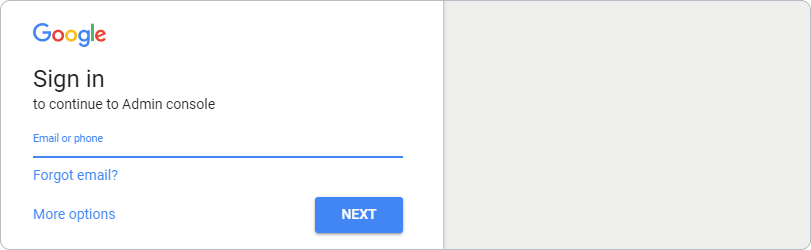 Select Apps from the console dashboard.
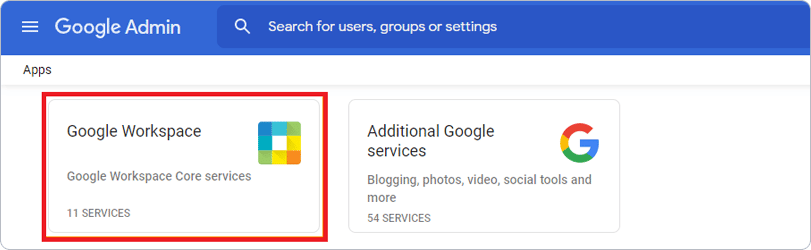
You’ll be taken to the Apps settings page. Select Google Workspace.
Select Gmail from the Services list. Go to Advanced settings >>
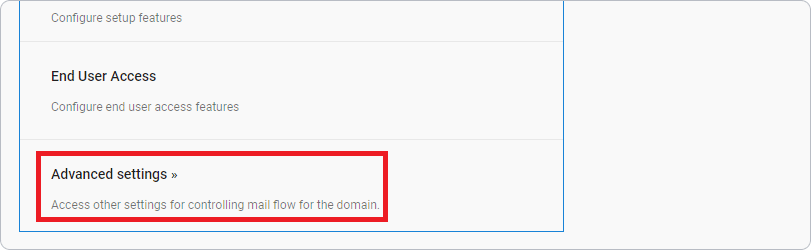
Step 2: Create an organization-wide email signature
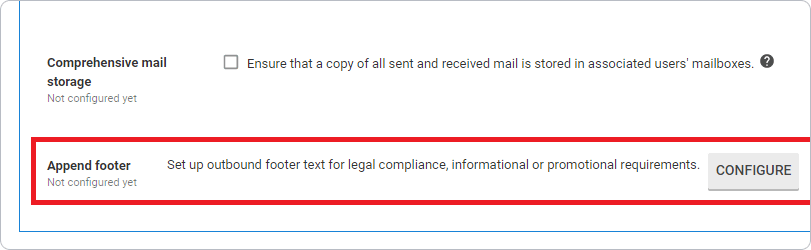
Within the General Settings tab, scroll to the Compliance section.
Here, you can define a company email signature (also called a footer) that automatically appears on all outgoing messages for users within a specific organizational unit (OU).
Click Configure to start setting up your signature and specify which groups or OUs it applies to.
Tip
Images in the footer must be web-hosted, not attachments, and images stored in Google Drive can’t be used. Host logos on a secure HTTPS server.
Step 3: Customize formatting and branding
This will open an Add Setting window. Enter a short description for your Gmail signature.
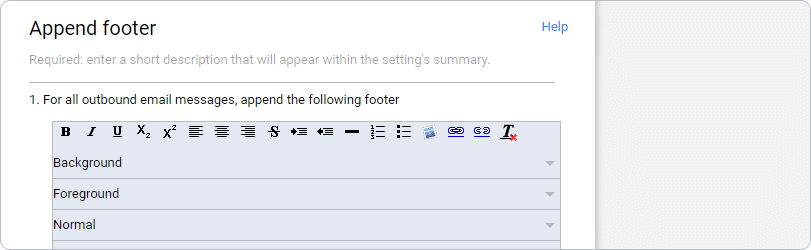
Use the text formatting tools to style fonts, colors, and links. The editor doesn’t support HTML content. To add an image, select the image icon and enter the image’s URL on a public web server. Google recommends images 70 to 100 pixels high by 300 to 400 pixels wide, with a maximum of 100 pixels high by 1000 pixels wide.
Keep the design simple. Large images and complex tables don’t render reliably across mail clients.
Include:
Company name and legal address
Employee contact fields such as
%FirstName%,%LastName%, or%Title%Your organization’s logo or banner (image URL)
Optional social links or disclaimers
A finished template is usually a simple HTML table, not a wall of tags. Something like this renders reliably across the widest range of mail clients:
Logo: 150x50px, web-hosted
Line 1:
%FirstName%%LastName%Line 2:
%Title%| Example CorpLine 3: Direct: (555) 010-0175 | example-corp.com
Line 4 (disclaimer, smaller text): This email and any attachments are confidential and may be privileged.
Substitute the actual image URL and disclaimer text for the organization. The structure, not the exact wording, is what needs to survive across Gmail, Outlook, and mobile clients. A footer is the same for everyone in the OU, so it can’t carry a per-user name or title.
Step 4: Define who gets the signature
In the Email messages to affect field, choose whether the signature applies to internal, external, or all messages.
You can create separate configurations for each OU to apply unique disclaimers or layouts.
Check Append the footer to messages being sent within the organization if applicable.
Step 5: Save and deploy
Click Add setting > Save.
Changes typically take effect within an hour but can take up to 24 hours to propagate across all users.
Once applied, every outgoing message from the selected users will include your standardized Google Workspace email signature automatically.
Step 6: Verify your configuration
Send a test message from different user accounts to confirm:
The correct footer appears for each OU.
Links, formatting, and images render properly on desktop and mobile.
Email disclaimers meet your company’s legal requirements.
Optional: Add per-user fields
The Append footer setting can’t pull per-user details from Google Directory.
Per-user fields need a third-party tool. Exclaimer reads the attributes below from Google Workspace Directory, and you can add custom attributes for anything else.
Google Workspace display name | Google API name | Exclaimer field |
|---|---|---|
First Name |
| {GivenName} |
Last Name |
| {FamilyName} |
Full name |
| {FullName} |
Job Title |
| {JobTitle} |
Department |
| {Department} |
Name (organization) |
| {OrganizationName} |
Primary email |
| {Email1} |
Alternate email addresses |
| {Email2}, {Email3} |
Address (Work) |
| {Address.Work1}, {Address.Work2} |
Country (Billing address) |
| {Address.Company.CountryCode} |
Phone (Home) |
| {Phone.Home1}, {Phone.Home2} |
Phone (Mobile) |
| {Phone.Mobile1}, {Phone.Mobile2} |
Phone (Work) |
| {Phone.Work1}, {Phone.Work2} |
Exclaimer also provides {Domain}, {Recipient}, {Recipients}, and {Subject}. The list comes from Exclaimer's knowledge base article on Google Directory attributes, updated May 5, 2026.
Why does the native Append Footer setting stop working at scale?
Getting one signature live for one OU is quick. However, if you want every signature to be accurate for every department, every region, and every new hire, without a repeated manual pass, the Append Footer setting isn't enough.
Exclaimer's State of Business Email 2025 research (4,009 IT professionals across the UK, US, Germany, and Australia) puts a number on how common this is: 80% of organizations still rely on manual methods or user self-service for their email signatures. Only 18% use centralized signature management, even though 35% name signature management as one of their top two most time-consuming tasks.
To create business email signatures without those limits, see our Google Workspace signature solution.
Tips for creating a professional Google Workspace email signature
Designing a clean, compliant, and on-brand Google Workspace email signature helps every employee represent your organization consistently. Follow these best practices to keep your signatures professional and effective.
1. Keep it simple
Avoid cluttering your Google Workspace email signature with unnecessary details or oversized images.
Use a single, legible font and avoid excessive colors or imagery.
Focus on the essentials: name, job title, company logo, and contact details.
2. Include essential contact information
Make sure each signature includes up-to-date details:
Full name
Job title
Company name
Direct phone number
Email address or website link
3. Use consistent branding
Match your brand guidelines for fonts, colors, and logo usage.
4. Add relevant links
Link to your company website, social profiles, or key landing pages to drive engagement.
Avoid excessive links that distract from your main message.
5. Update regularly
Review your Google Workspace email signature periodically to confirm all contact information, job titles, and disclaimers are still accurate.
Tip
Keep a master signature template stored in your central design library or Exclaimer account.
What are the limitations of native Google Workspace email signatures?
The Append footer setting gives each organizational unit one uniform footer. The gaps below turn into support requests as an organization grows.
"As infrastructure moved into cloud platforms like Microsoft 365 and Google Workspace, control over how communication is configured moved in the opposite direction. The result is a situation in which infrastructure is centralized, but configuration is not. And that gap is where inconsistency, risk, and operational friction begin to surface."

1. Only one signature per organizational unit
The Append Footer setting lets you assign a single email signature to each organizational unit (OU).
This does mean consistency, but it also means you can’t deploy multiple designs for different departments, user groups, or regions. Every update must be configured manually, one OU at a time. Child OUs inherit the setting from their parent.
2. No dynamic contact information from Google Directory
The Admin console cannot automatically pull user details from Google Directory.
That means IT must either create a generic, one-size-fits-all signature for each OU or build and upload separate templates for every employee. This is an approach that quickly becomes unmanageable at scale.
"There are no options to pull in per-user details from Google Directory as parameters, so this option really is for a singular uniform signature to be used by all employees within the organization. In actuality, given the fixed text-only capabilities, this 'default signature' feature feels far more appropriate for a legal disclaimer than a signature."
3. Basic HTML support and strict size limits
The Append Footer tool supports HTML, but only as pasted content rather than editable code.
There’s a 10,000-character limit, and replying to a plain-text email strips out formatting, images, and hyperlinks.
You can add images (such as logos or icons), but they must be web-hosted, not stored in Google Drive, and linked securely over HTTPS. The footer isn’t applied to email encrypted with Google Workspace client-side encryption.
"Even offering a signature template for users to copy and paste is going to have very mixed results, and there are two really big concerns I have here: lack of compatibility, there's no guarantee that HTML will render correctly on every email client, and user error, given individuals will need to use an HTML editor, will likely need to navigate multiple parts of the code to place their personal details, and then copy and paste the HTML into Gmail's settings, it feels like this is going to cause potentially more problems than it solves."
4. No preview, testing, or version history
Google Workspace doesn't offer a way to preview or test a template before it goes live. The only way to check how it looks is to publish it, ideally during a low-traffic window, and a formatting or design error affects every user in that OU immediately until someone notices and fixes it manually.
There’s also no version history for the footer, so compliance teams can’t see what it said on a past date.
Google's Admin log events do record that a Gmail setting was created, changed, or deleted, along with who made the change, when, and in which organizational unit. They don't record what the footer said before or after.
5. Limited placement and visibility in replies
Signatures added via the Append Footer appear only at the bottom of the entire email chain, not below each reply or forward.
Over time, this causes long email threads to stack signatures repeatedly, making messages harder to read.
Workarounds, like canned responses for reply signatures, must be configured manually in each user’s Gmail settings.
What governance gaps does native Google Workspace signature management leave open?
The technical limits above are what an admin hits first. The governance gaps are what show up later, once marketing, compliance, or a growing user base get involved.
1. No marketing, campaign, or personalization features
Google Workspace signatures can't include targeted banners, promotional messages, or dynamic calls to action. Marketing can't update content across the user base without going through IT, and IT ends up fielding requests that don't need technical skill to resolve, just permission.
2. No compliance enforcement or approval workflows
Legal disclaimers can be added manually, but there's no automation by department or region, and no approval step before a content change goes live. Organizations subject to GDPR, HIPAA, and similar regulations carry the risk of inconsistencies that add up to a compliance gap.
3. Limited user control and occasional duplication
Server-side signatures are appended after an email is sent, so users don't see them while composing. That prevents unauthorized edits, but it also means duplication is possible if a user has also set a personal Gmail signature in their own settings; both can appear in the same message.
"It's evident that, as an organization using Google Workspace, none of these options are ideal. With the goal being a unified, consistent email signature organization-wide, anything less than individual standardized signatures is a non-starter."
What alternatives to the native Google Workspace email signature tool exist?
Google’s Gmail API lets you manage signatures on a basic level. It requires programming knowledge to use effectively, and the process is lengthy and complex for most IT teams, particularly those without dedicated developer resources.
A category of dedicated email signature management platforms builds on that same Gmail API to write signatures directly into each user's account server-side, without asking IT to write or maintain the integration themselves. That's the gap this category exists to close: the control the API makes possible, without the engineering overhead of building it in-house.
That overhead shows up in Exclaimer's Build vs Buy research (2,000+ IT and security decision-makers, November 2025): 13% of teams had built their own email signature management tool, and 27% of teams who chose to buy rather than build cited keeping up with API changes as a specific reason.
"Email signatures look simple, but the complexity grows fast. You start with one policy for one region, then you're managing multiple departments, multiple templates, and people who need exemptions, so you're writing logic to handle exceptions instead of core work. Then the signatures won't render, or they stack at the bottom of a thread, or they don't show up right on mobile, and you're debugging HTML across email clients instead of doing engineering. It's not that you can't build it. It's whether you should."

How does Exclaimer manage Google Workspace email signatures?
Unlike the Gmail-API approach described above, Exclaimer's cloud deployment applies the signature after the message is sent, in the mail flow itself, rather than writing it into the account before compose. With Exclaimer's Sent Items Update for Google Workspace, Exclaimer also adds a copy of each sent email, labeled "Exclaimer Sent Items", so users can see the email signature the recipient received. It's available to Google Workspace customers using server-side deployment.
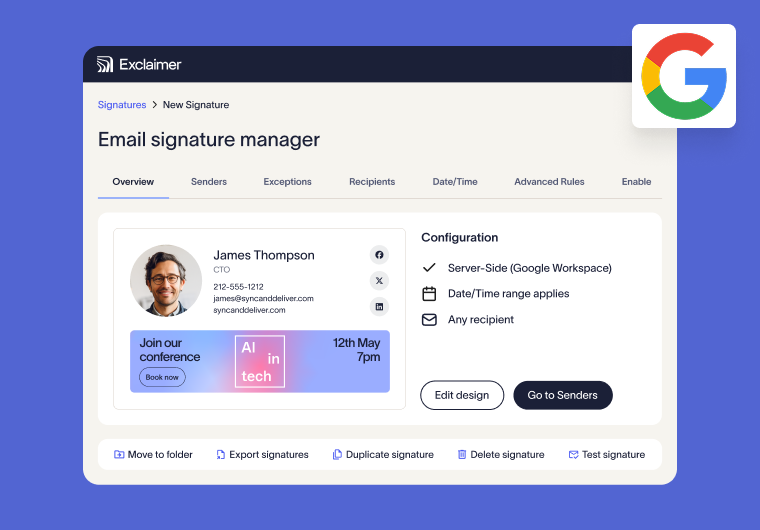
Exclaimer also offers client-side deployment for Gmail. The email signature is applied inside Gmail before the email is sent, so the email isn't routed through Exclaimer for that step. Exclaimer syncs one client-side email signature to each user's Gmail account, and it overrides any signature the user had configured for new messages. Client-side deployment is supported in a web browser only.
Centralized management
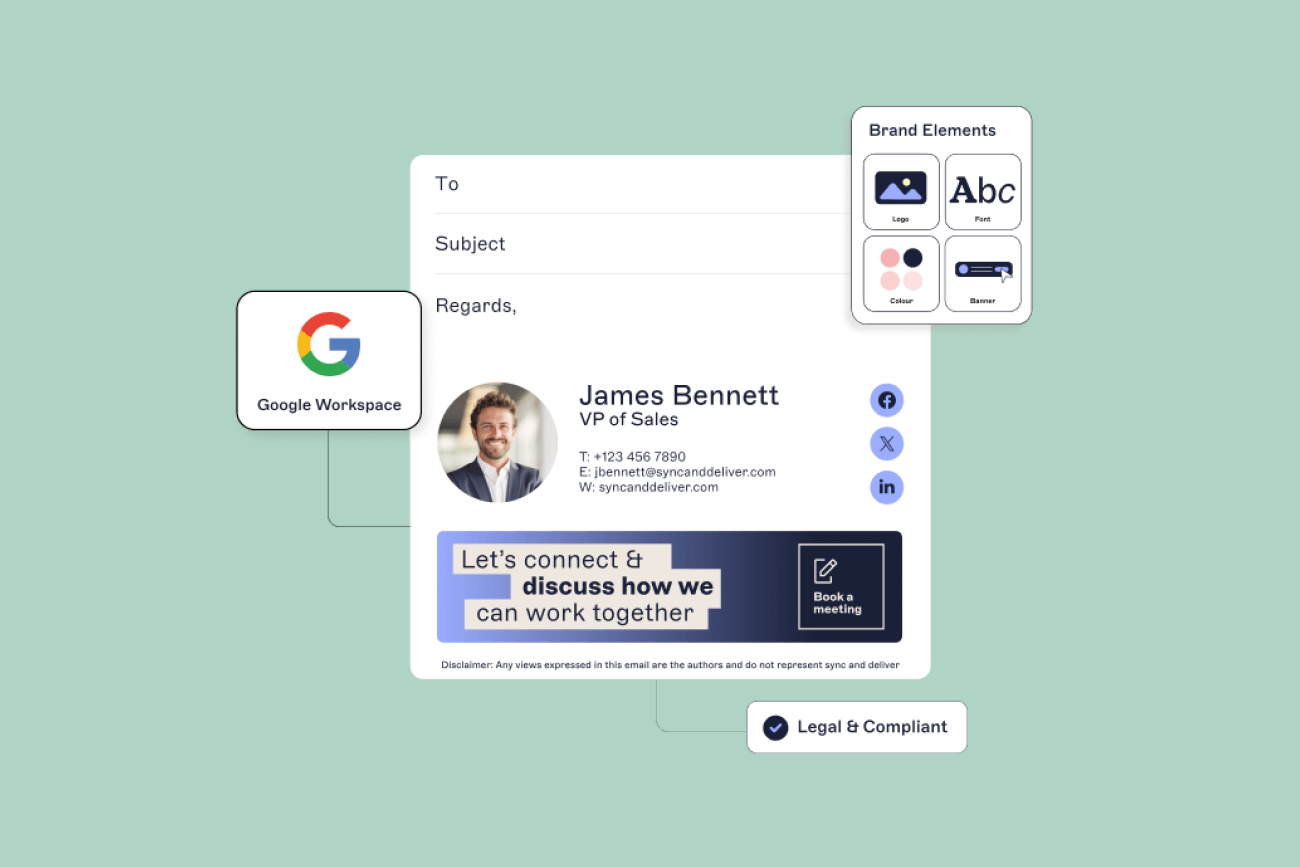
Design, deploy, and update Google Workspace email signatures for every user from one platform, with no HTML coding or scripts.
Automated compliance
Legal disclaimers, department-specific messaging, and regional compliance statements apply automatically to the email Exclaimer processes.
Consistent branding across your organization
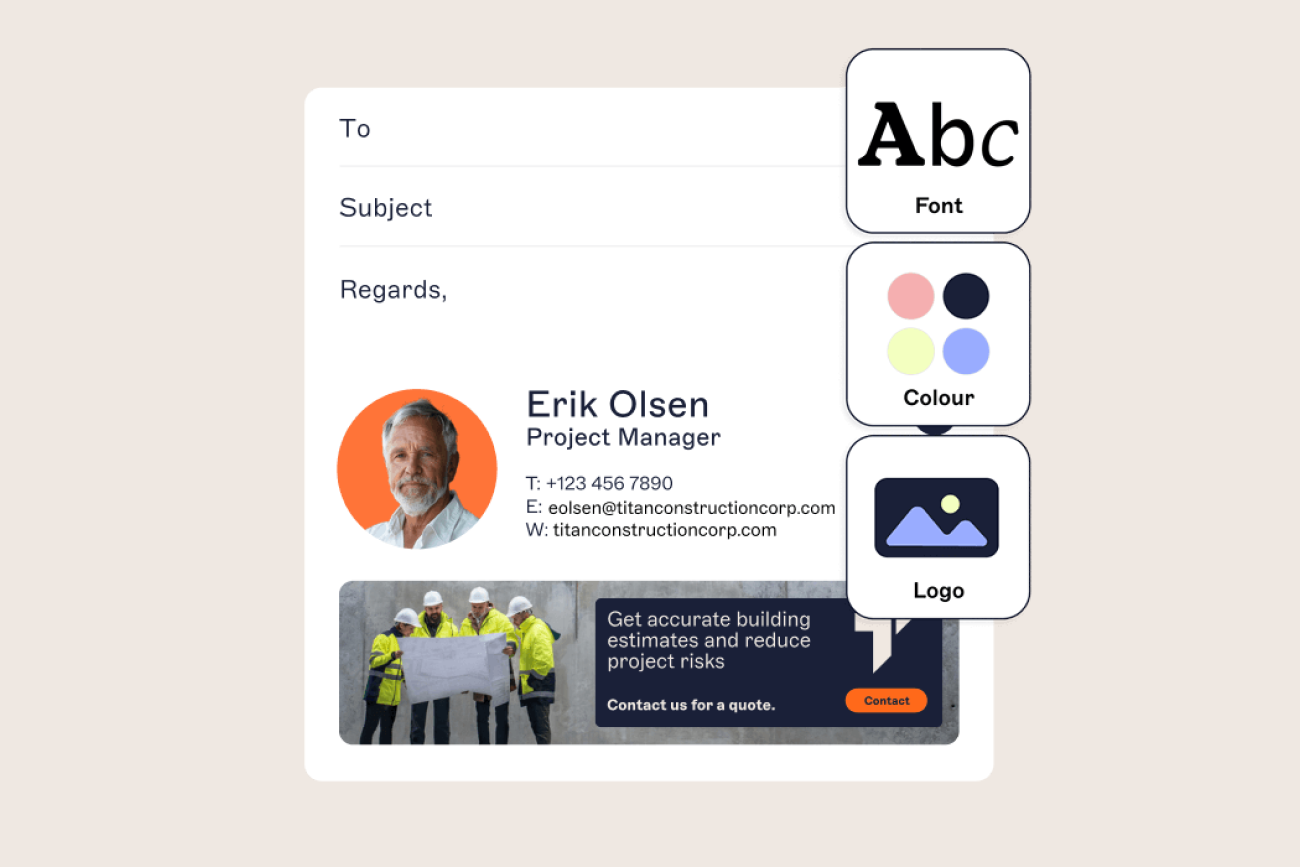
Company logos, fonts, and layouts stay standardized across departments, offices, and regions, without IT managing each one individually.
Directory synchronization
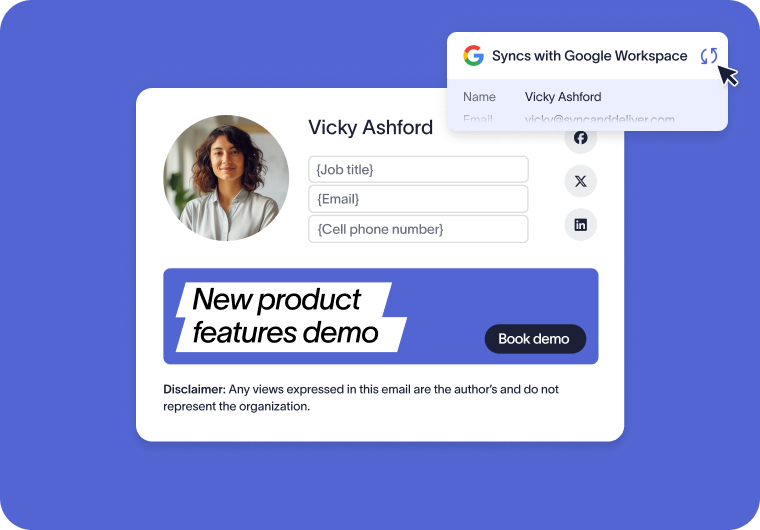
Exclaimer connects directly to Google Workspace Directory, pulling through each user's name, job title, department, and contact details automatically. When someone joins or changes role, their email signature updates on the next sync, which runs every 12 hours for Google Workspace, with no manual template edit and no IT ticket.
Delegated control without losing oversight
Role-Based Access Control lets IT delegate design and content permissions to teams like Marketing, HR, or Compliance, plus a dedicated Auditor role for reviewing who has access to what. Marketing can update banners, promotional content, or disclaimers within the permissions IT sets, and IT keeps administrative control.
Advanced features that add value
Turn every email into a measurable channel with:
Rotating banners for product launches or events
Click tracking and engagement analytics
One-click customer satisfaction (CSAT) surveys
Integrated scheduling links (Calendly or Chili Piper)
Built for security and reliability
The platform runs on Microsoft Azure infrastructure with SOC 2 Type II, ISO 27001, and ISO 27018 certifications and 99.99% uptime.
What does Exclaimer need from Google Workspace?
Item | Detail |
|---|---|
Admin account | Google Workspace Super Admin credentials. A Super Admin without a Google Workspace license fails verification |
Directory service | Google Directory |
Directory sync | Automatically every 12 hours. Up to six email addresses per user. A manual sync by an Owner or Admin can take up to 3 hours |
Server-side setup | A new host in Gmail Hosts for Exclaimer, a compliance rule that routes outgoing mail to it, an allowed-sender rule for mail coming back, and an SPF update for each sending domain |
Client-side setup | Enable in the Exclaimer portal. One client-side email signature per Google account. Needs Google Drive and Docs permissions for embedded images |
Client support | Gmail in a web browser. The Gmail mobile app isn't supported client-side |
Unsupported plans | G Suite Basic |
Without the SPF update, recipients may mark messages as spam. Exclaimer's mail flow article for Google Workspace has the steps. The other details come from Exclaimer's system requirements and its client-side onboarding article.
Exclaimer's Google Workspace Marketplace listing shows the permissions it requests. Exclaimer's knowledge base article on Google Workspace application permissions, updated October 27, 2025, explains each one.
Permission Google shows | Why Exclaimer needs it |
|---|---|
See, edit, create, and delete all of your Google Drive files | Exclaimer stores the files it uses for signature deployment in a Google Drive folder. It doesn't remove, edit, or download personal files |
See, edit, create, or change your email settings and filters in Gmail | To apply and change the settings that deploy email signatures. Google's wording is broader than signatures and also covers filters, forwarding, and vacation responder settings |
Add emails into your Gmail mailbox | To add a copy of each sent email that carries the applied email signature, for Sent Items Update. Exclaimer doesn't access or add any other mail |
Create and apply labels | To label those copies "Exclaimer Sent Items", so users can tell them from the originals |
See info about users, groups, group subscriptions, and organizational units on your domain | To fill email signatures with user details such as names, email addresses, addresses, and phone numbers, and to see who can use the subscription. The metadata includes role, manager, and last login time |
View customer related information and domains related to your customers | To identify company contact details, and to see which domains need access to email signatures, so unauthorized domains can't use the subscription |
See your primary Google Account email address and personal info | To identify the admin user who set up the subscription |
How does Exclaimer compare to Google Workspace's native tools?
Features | Exclaimer | Gmail Settings | Append Footer |
|---|---|---|---|
Centrally control Google signatures for everyone | ✔ | ✖ | ✖ |
Brand consistency on all emails | ✔ | ✖ | ✔ |
Support compliance with a disclaimer on every sent email | ✔ | ✖ | ✔ |
Gmail signatures on emails from all devices and clients | ✔ | ✖ | ✔ |
Users can see their signature while writing an email | ✔ | ✔ | ✖ |
Add embedded images and user photos | ✔ | ✔ | ✖ |
Include clickable promotional banners | ✔ | ✔ | ✖ |
Apply signatures under the most recent reply | ✔ | ✔ | ✖ |
Use shorter signatures for reply emails | ✔ | ✔ | ✖ |
Assign signatures to teams & individuals | ✔ | ✔ | ✖ |
Create signatures for specific audiences based on email domain | ✔ | ✖ | ✖ |
Segment signatures for internal & external emails | ✔ | ✖ | ✖ |
Delegate access to non-technical users | ✔ | ✖ | ✖ |
Run email signature marketing and ABM campaigns | ✔ | ✖ | ✖ |
Automatic sync of user info from Google Workspace Directory | ✔ | ✖ | ✖ |
Use a drag and drop editor | ✔ | ✖ | ✖ |
Pre-designed template library | ✔ | ✖ | ✖ |
Include HTML signatures on plain and rich text emails | ✔ | ✖ | ✖ |
Use any font in Google signatures | ✔ | ✖ | ✖ |
Monitor, analyze, and report on email signatures | ✔ | ✖ | ✖ |
Optimize performance and run A/B testing | ✔ | ✖ | ✖ |
Apply content above the email message body | ✔ | ✖ | ✖ |
Run repeatable campaigns with enhanced scheduling rules | ✔ | ✖ | ✖ |
Let users self-manage specific contact fields | ✔ | ✖ | ✖ |
Apply one-click signature surveys | ✔ | ✖ | ✖ |
Integrate with CRM platforms like Salesforce & HubSpot | ✔ | ✖ | ✖ |
Display your latest social posts on Facebook & LinkedIn | ✔ | ✖ | ✖ |
Centrally update brand assets from one hub | ✔ | ✖ | ✖ |
Key takeaway
Exclaimer takes the heavy lifting out of managing Google Workspace email signatures. IT gets centralized control, Marketing gets flexibility, and your organization gains consistent, compliant, professional communication
Why move to Exclaimer for Google Workspace email signatures?
Adding or updating an email signature in Google Workspace is straightforward. The native tools have real limitations, particularly for organizations managing multiple departments, regions, or compliance requirements.
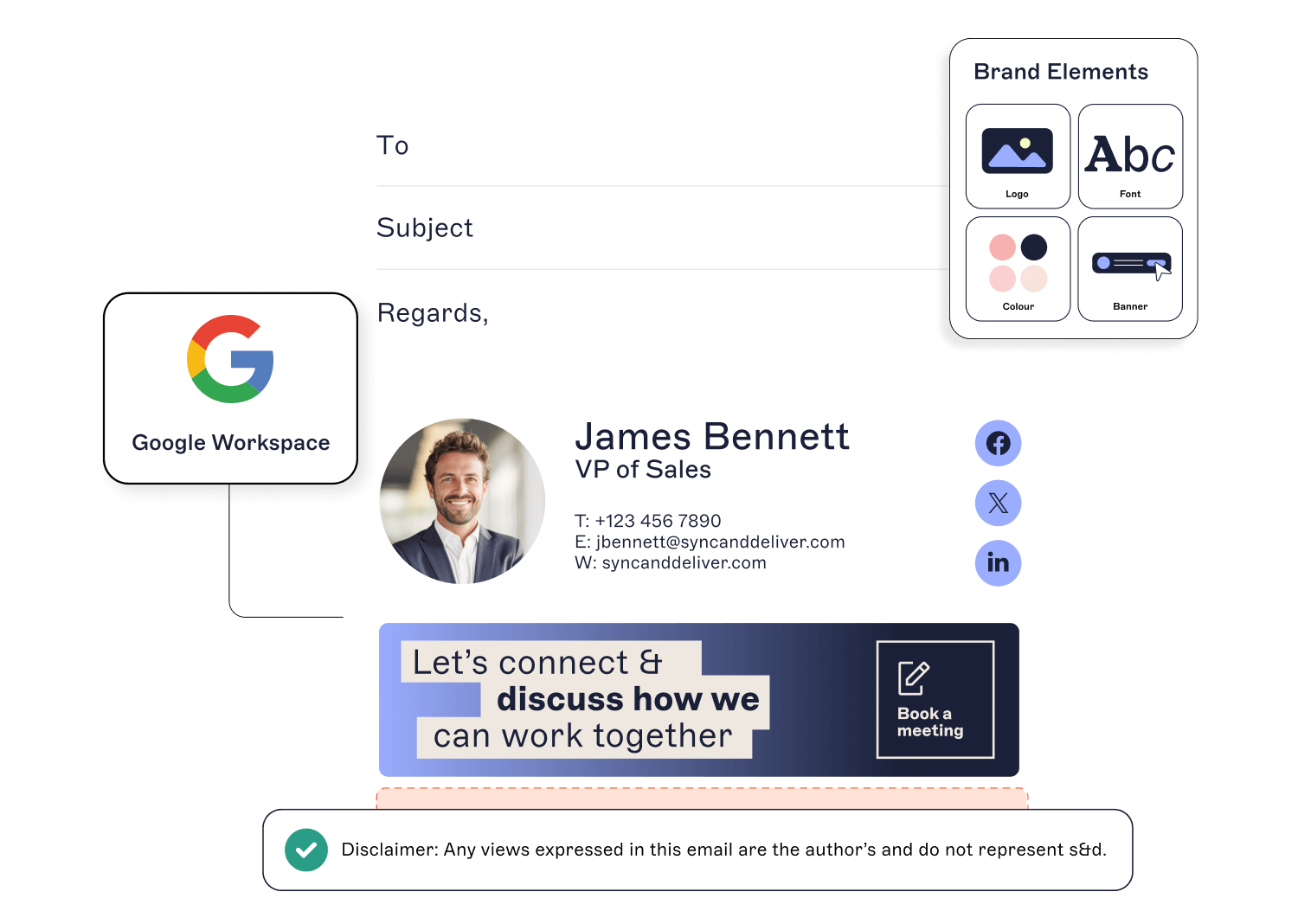
Exclaimer's Google Workspace email signature solution adds centralized control, brand consistency, and customizable designs on top of what the native tool can do.
With the ability to update and manage multiple Google Workspace email signatures from one place, Exclaimer keeps every email sent from a Google Workspace domain looking consistent and professional.
Why 80,000+ organizations choose Exclaimer for Google Workspace
Centralized management: Update all email signatures from one platform
Consistent branding: Keep every employee email on-brand and professional
Automated compliance: Apply disclaimers and legal notices automatically
Delegated oversight: Role-based access with a dedicated Auditor role
Scalable and secure: ISO 27001 and SOC 2 Type II certified, built on Microsoft Azure
Book a demo to see how easy it is to manage company-wide email signatures in Google Workspace.