Naimh is a seasoned marketer of 12 years, including in SaaS and tech. She’s an expert at simplifying complex technology concepts, bridging the gap between IT and marketing. Naimh specializes in turning tech speak into actionable insights, helping marketers get the most out of their tools and technology.
How to make a professional email footer: Best practices & examples
TL;DR
A business email footer works best as five or six lines at the bottom of your email: your name, job title, company, phone number, email address, and website. Keep the design to brand colors and one or two fonts, with images sized for a phone.
Contact details are among the strongest trust signals in Exclaimer’s 2026 survey of 1,000 US adults: 40% named full contact details.
Legal text depends on the email type and the country, so check the rules before you copy a newsletter footer onto everyday business email.
Add the footer yourself in new Outlook for Windows (Settings, Accounts, Signatures) or Gmail (Settings, See all settings, Signature), or set the footer centrally for every employee.
What is an email footer?
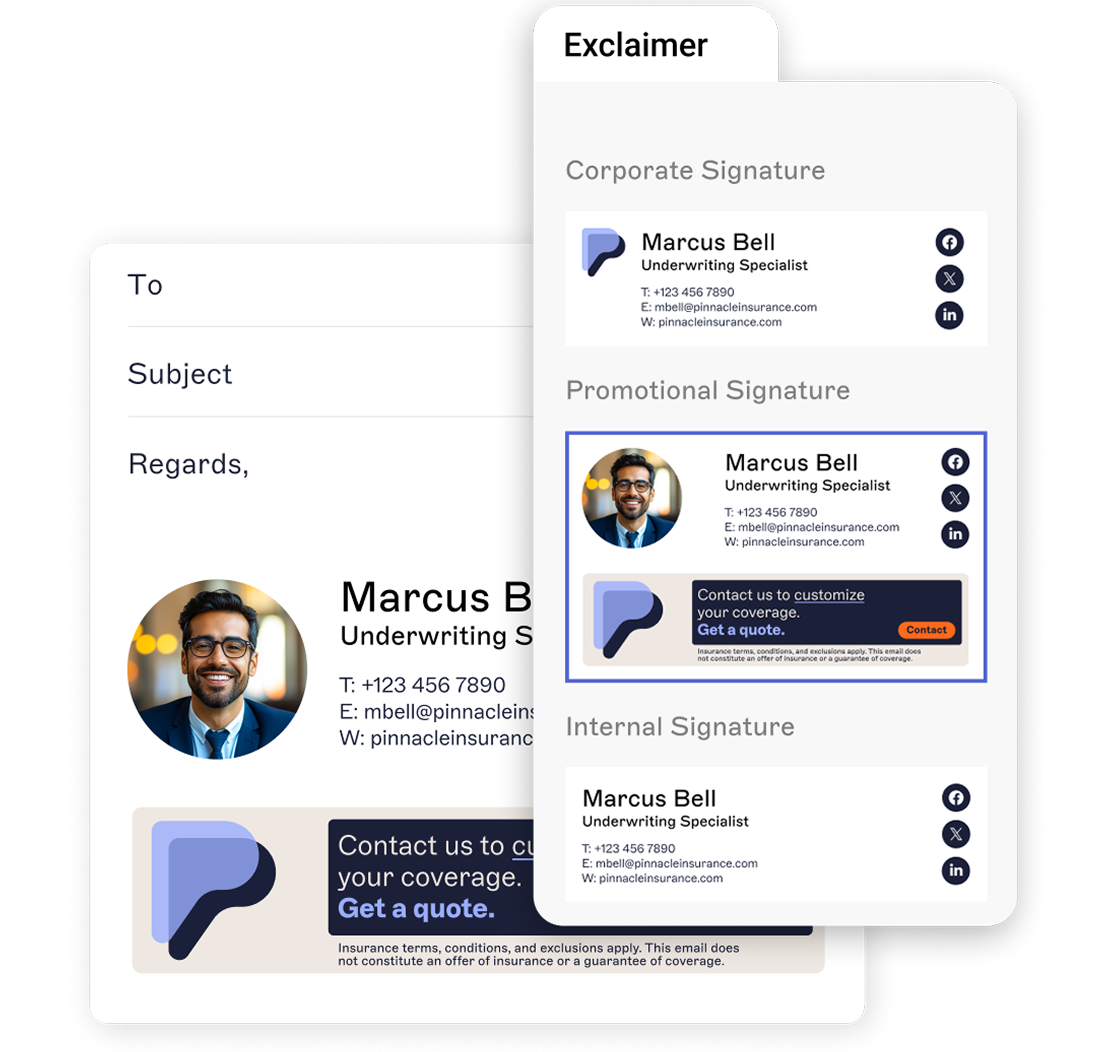
An email footer is the block of text and images at the bottom of an email. On business email, it’s the part of the email signature that carries the sender’s contact details, so the two terms name the same block. On marketing email, the footer is the strip a marketing platform adds under every message, with an unsubscribe link and a postal address. This guide covers the business email footer.
Business email footer | Marketing email footer | |
|---|---|---|
Sent by | A person, to one recipient or a small group | A marketing platform, to a list |
Typical content | Name, job title, company, phone, website, social links, optional banner | Unsubscribe link, postal address, company details, social links |
Added by | The sender, or IT centrally for the whole company | The marketing platform’s email template |
Legal text | Set by your legal or compliance team, industry rules, and your own disclaimer policy | Set by marketing email law, such as the US CAN-SPAM Act |
What does a basic business email footer look like?
A basic business email footer gives each line one job: the name, then the job title and company, then the phone number and email address, then the website and social links, then the legal text if the company needs any. A sample, with fictional details:
Amara Osei
Customer Success Manager, Northwind Traders
(555) 010-4821 | [email protected]
northwind.example.com | LinkedIn | X
This email and any attachments are confidential.
The last line is the legal text, which belongs in the footer only if your company needs one. A newsletter footer would add an unsubscribe link and a postal address. Drop any line your email doesn’t need.
What should a business email footer include?
A business email footer has four parts: contact details, social links, legal text, and promotional content.
Why do contact details come first in an email footer?
Contact details go first because recipients look for them when judging an email. In Exclaimer’s press release of July 30, 2026, a OnePoll study of 1,000 US adults found 40% named full contact details, and 35% a professional email address on a company domain, as signs a business email can be trusted.
Exclaimer’s UK release of the same date reported that UK adults look for a professional company email address and want to see full contact details, from a OnePoll survey fielded 26 May to 2 June 2026.
What recipients look for | US adults (US release) | UK adults (UK release) |
|---|---|---|
Full contact details | 40%, named as a trust signal | 51%, want to see them |
Professional company email address | 35%, named as a trust signal | 53%, look for one |
A headshot is optional. If your company uses them, crop and size every photo the same way, so the footers look like they belong to one organization.
How many social links should an email footer have?
Link to the networks where your company posts, and stop at four icons, because each extra icon pulls attention from your contact details. Our guide to social media icons covers sizing and placement.
What legal text goes in an email footer?
Legal text in a footer can be a confidentiality notice, company registration details, or an opt-out link on marketing email. The requirements differ by email type and country, so the legal text section below sets them out.
Should an email footer include a banner?
Yes, but keep it to one banner: a single banner for a webinar, a new report, or an event gives readers one thing to click. You can swap the banner as campaigns change, and our email signature banner examples show how other companies do it.
How do you make an email footer?
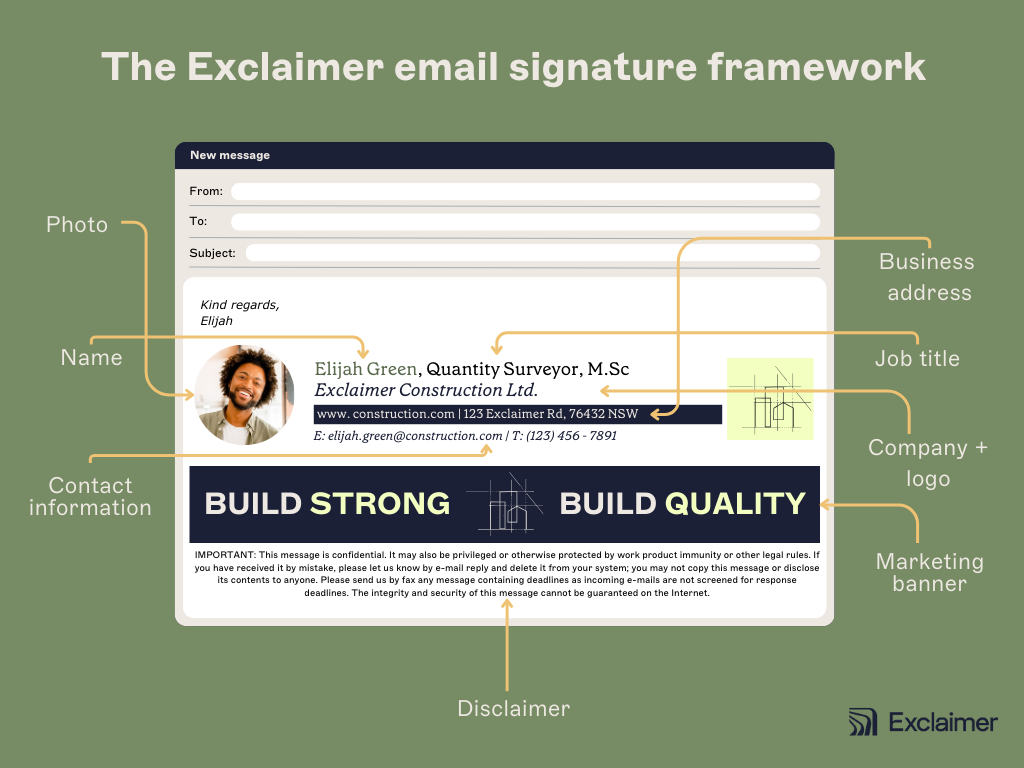
Making a business email footer takes nine steps, from deciding what the footer is for to rolling the footer out.
Define the purpose. Decide whether the footer exists to give contact details, promote something, or both.
Choose the contact details. Include only the ones recipients need to reach you.
Design the layout. Pick a text-only or image-based layout, and sketch where each element sits.
Select fonts and colors. Use your brand’s and choose fonts your recipients’ email clients can display.
Add images with care. A logo helps, but large files slow the email.
Add a call to action. Point to one page, one profile, or one sign-up.
Check the legal text. Add only what your email type and country require, using the legal section below.
Test and finalize. Send a test to Outlook, Gmail, and a phone, then fix anything that breaks.
Install the footer. Add the footer to your email client, or to your company’s central email signature management setup, and review it when details change.
To skip the layout work, draft the footer in Exclaimer’s free email signature generator, which runs in your browser.
How do you add an email footer in Outlook, Gmail, or company-wide?
A person sets a footer in the email signature settings of Outlook or Gmail, and an admin sets one for the whole company in the Exchange admin center or the Google Admin console.
Where | Scope | Where to set the footer | Source |
|---|---|---|---|
New Outlook for Windows | One person | Settings, Accounts, Signatures | Microsoft’s guide to email signatures in Outlook |
Gmail | One person | Settings, See all settings, Signature | Gmail Help |
Exchange admin center | Whole company | Mail flow, Rules: a mail flow rule adds a disclaimer, an email signature, or other text to the top or bottom of email messages | Microsoft Learn |
Google Admin console | Whole company | Apps, Google Workspace, Gmail, Compliance, Append footer | Google’s admin guide |
Does an email footer make a business email more trustworthy?

23% of US adults say a professional, branded email signature makes a company email feel more trustworthy, according to Exclaimer’s press release of July 30, 2026, a OnePoll survey of 1,000 US adults that ranked the signature ahead of legal disclaimers (17%) and consistent formatting (16%).
Item | Share of US adults, as ranked in the release |
|---|---|
A professional, branded email signature | 23% |
Legal disclaimers | 17% |
Consistent formatting | 16% |
Of 4,009 IT professionals in the UK, US, Germany, and Australia surveyed by Censuswide in April 2025 for Exclaimer’s State of Business Email 2025 report, 92% agreed that consistent, well-managed email signatures build trust and make a company look professional.
What are the best practices for email footer design?

A professional email footer uses one layout, one or two fonts, and brand colors, in a single column that stays readable on a narrow screen.
Use the same layout, fonts, and colors in every employee’s footer.
Cut anything that doesn’t help the recipient contact you or take a next step.
Set your name largest, your job title second, and the rest of the details smaller, so the eye lands in the right order.
Use real text for contact details rather than a single image, so recipients can copy a phone number and screen readers can read it.
Link only to pages that matter, and describe each link in words, such as “Book a demo”, instead of “click here”.
Test the footer on a phone, in Outlook, and in Gmail before you roll it out.
Have your legal team approve any legal wording before it goes live.
Review the footer when a name, title, address, or brand element changes, and at least once a year.
Our guide to email signature design goes deeper on layout and formatting.
What size should an email footer be?
Aim for five or six lines, which hold the contact details, one link or banner, and a legal line if you need one. Images should be no wider than the email body, and compressed so the footer loads quickly.
What are some email footer examples?
The ten common email footer types are the classic, branded, promotional, personalized, disclaimer, social, feedback, green, recruitment, and holiday footers, each shown below with the same fictional sender.
1. Who should use a classic email footer?
The classic footer suits teams that want a clean, quick-to-read footer.
2. When should you use a branded email footer?
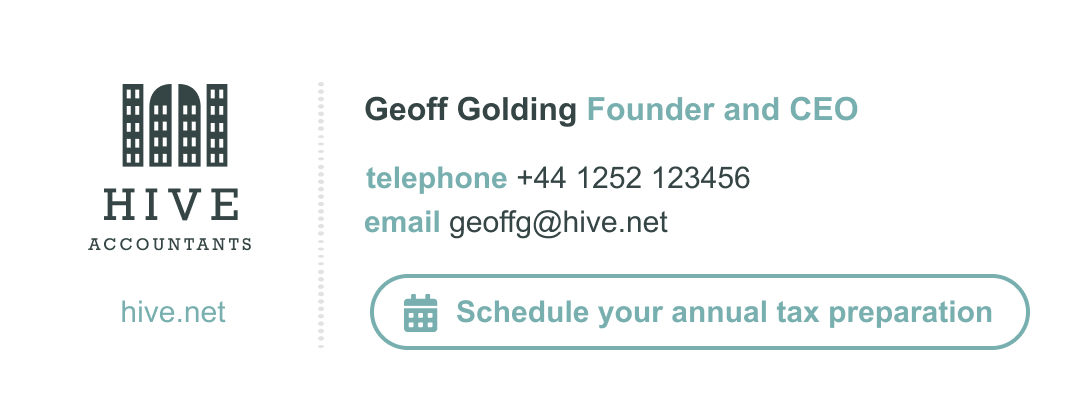
The branded footer sets the company logo in the brand’s colors and fonts, and fits client-facing teams, where recognition matters.

3. What does a promotional email footer add?
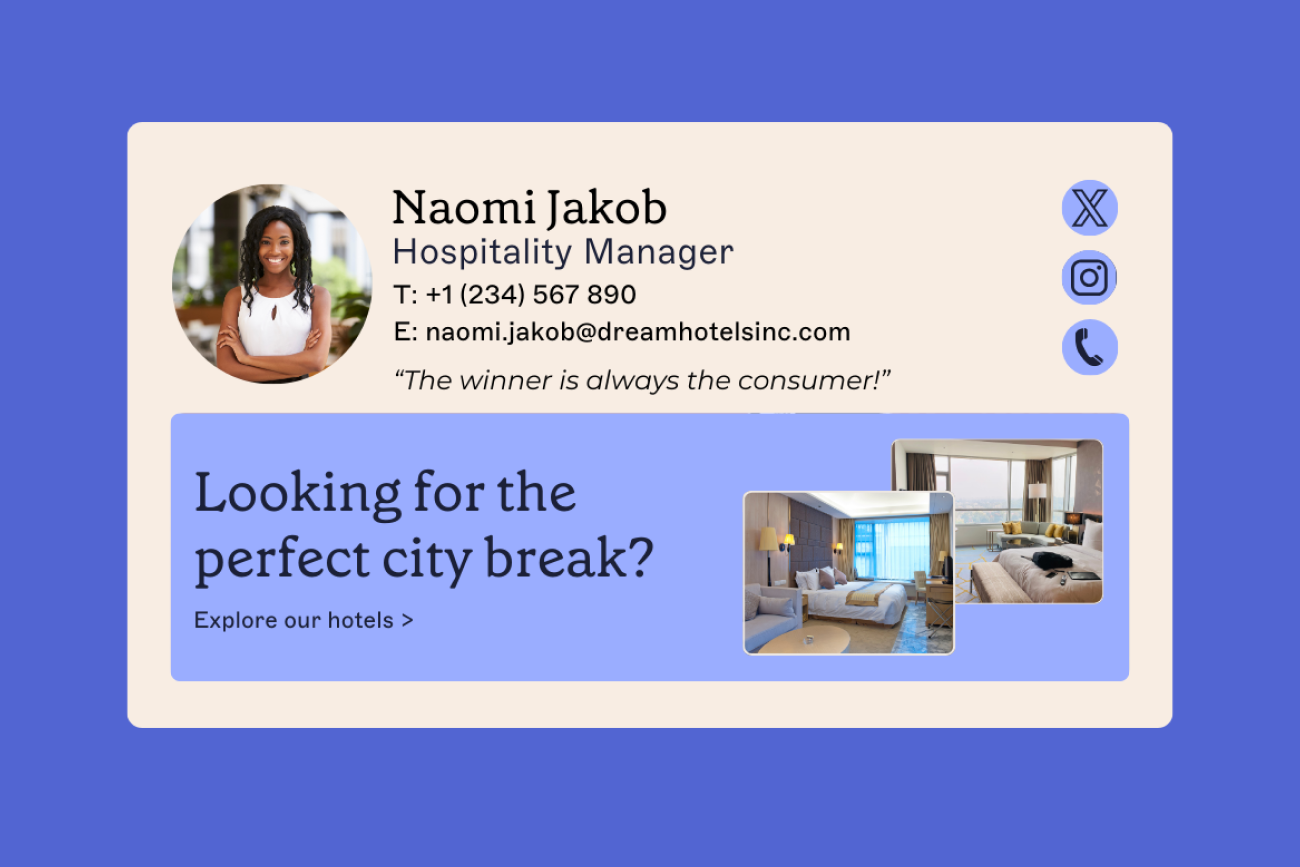
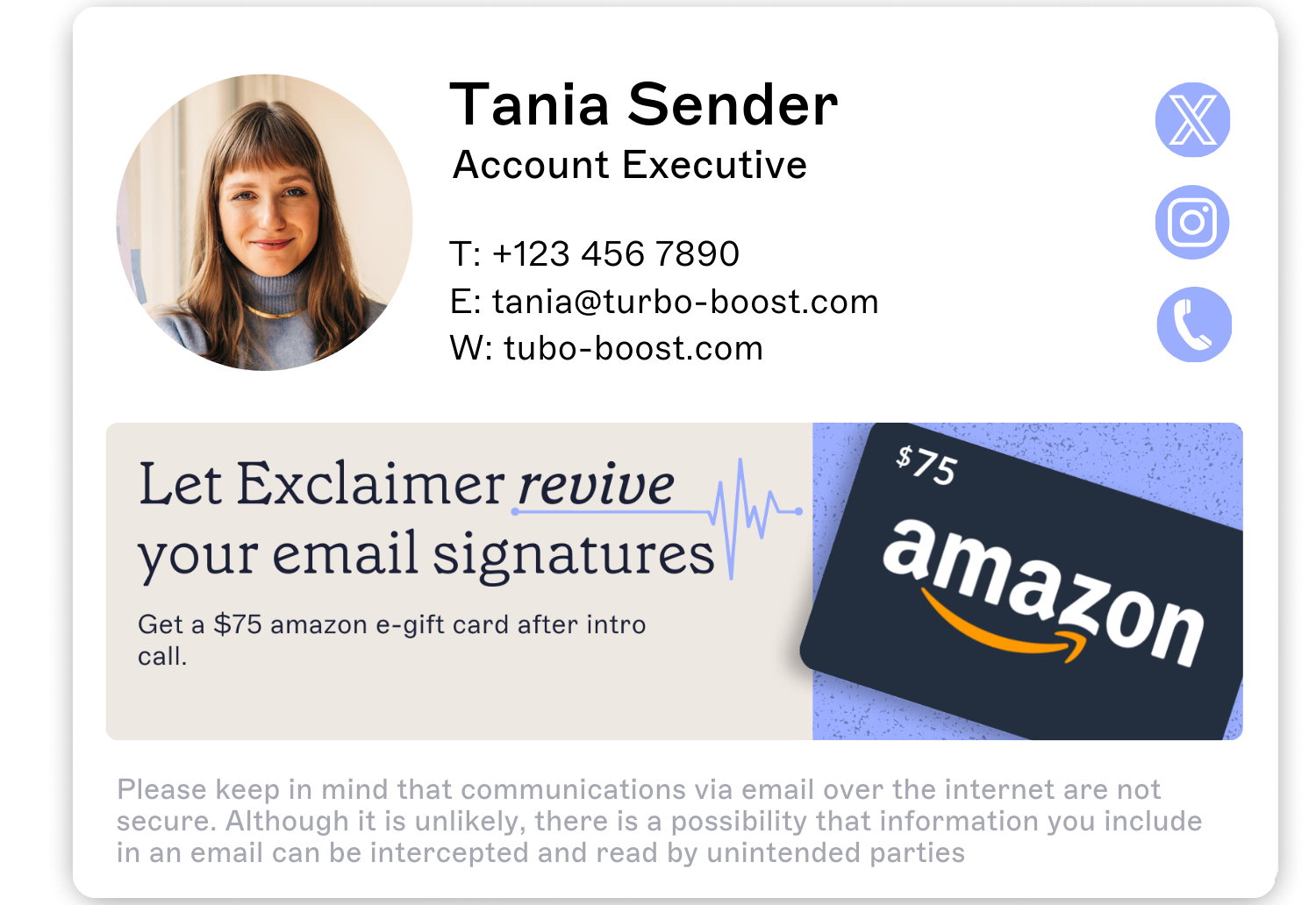
The promotional footer carries a banner, such as a referral offer or a product launch, and changes per campaign.

4. Who should use a personalized email footer?
The personalized footer works for account managers and advisors, whose clients deal with one named person.
5. When does an email footer need a legal disclaimer?
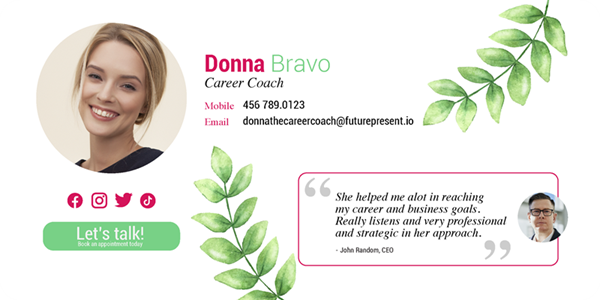
The disclaimer footer adds a confidentiality notice or regulatory statement beneath the contact details, at the request of a legal or compliance team. Our email disclaimer guide lists the options.
6. Who should use a social email footer?
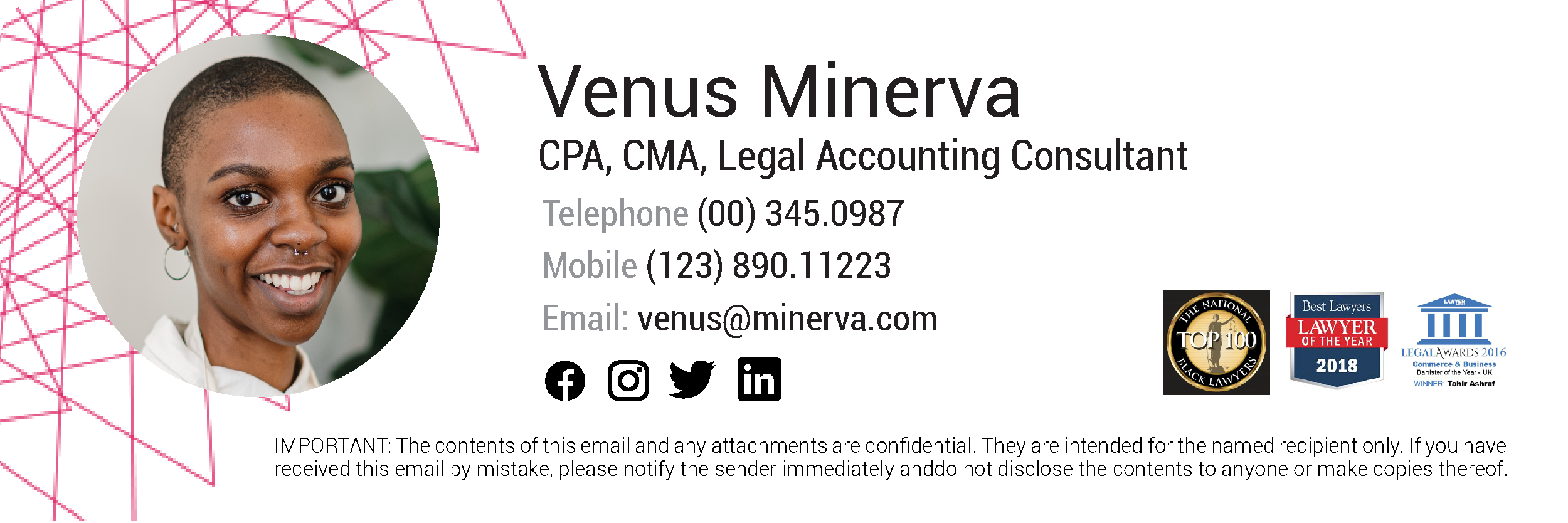
The social footer links to the company’s LinkedIn, X, or other active profiles, and suits marketing and recruiting teams.

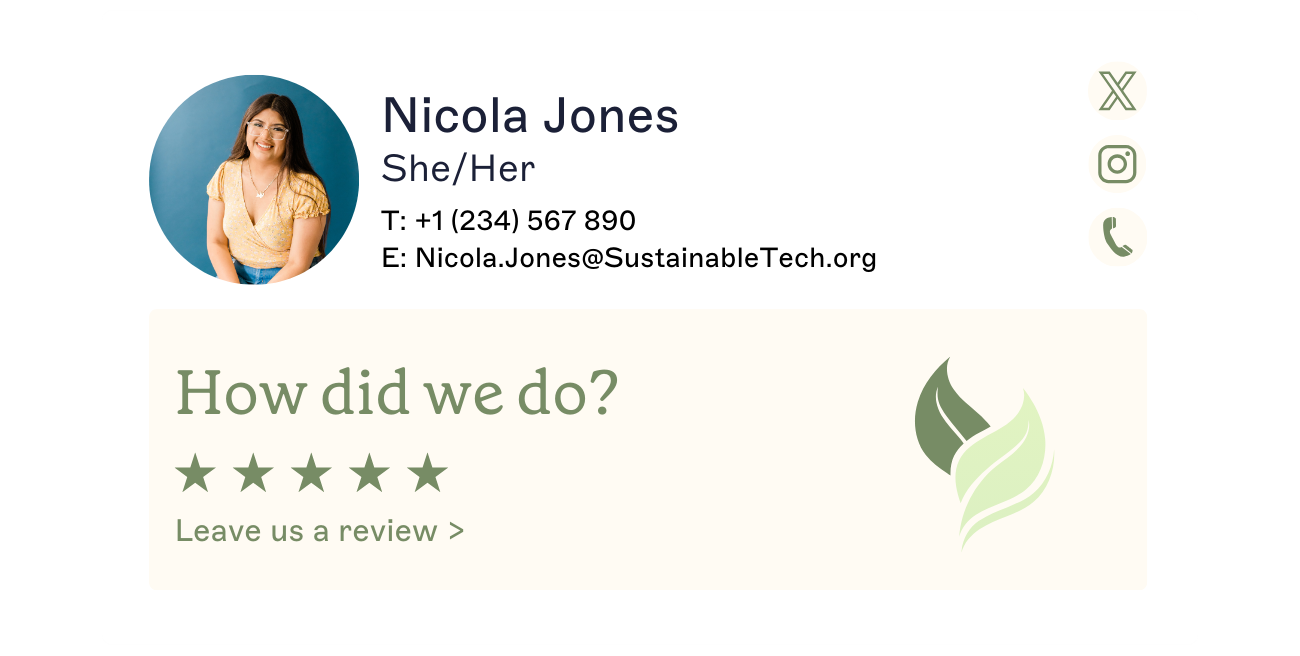
7. What does a customer feedback email footer do?
The feedback footer invites the recipient to rate the interaction. Support teams use the link to collect a rating straight from the thread.
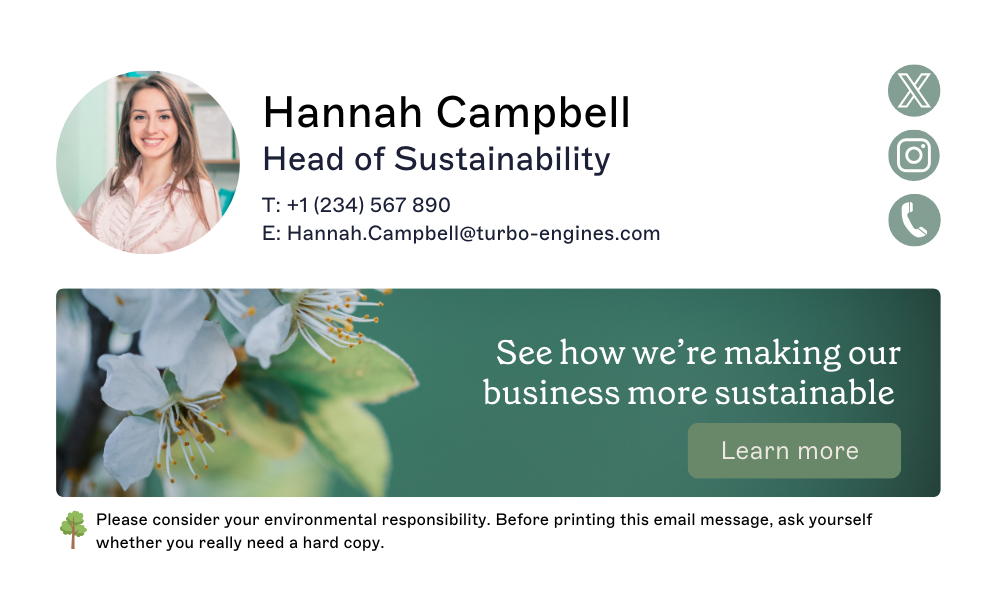
8. What does a green email footer say?
The green footer pairs a green color palette with a short sustainability message, such as an environmental accreditation. Our guide to the green email signature footer has wording to borrow.
9. When should you use a recruitment email footer?
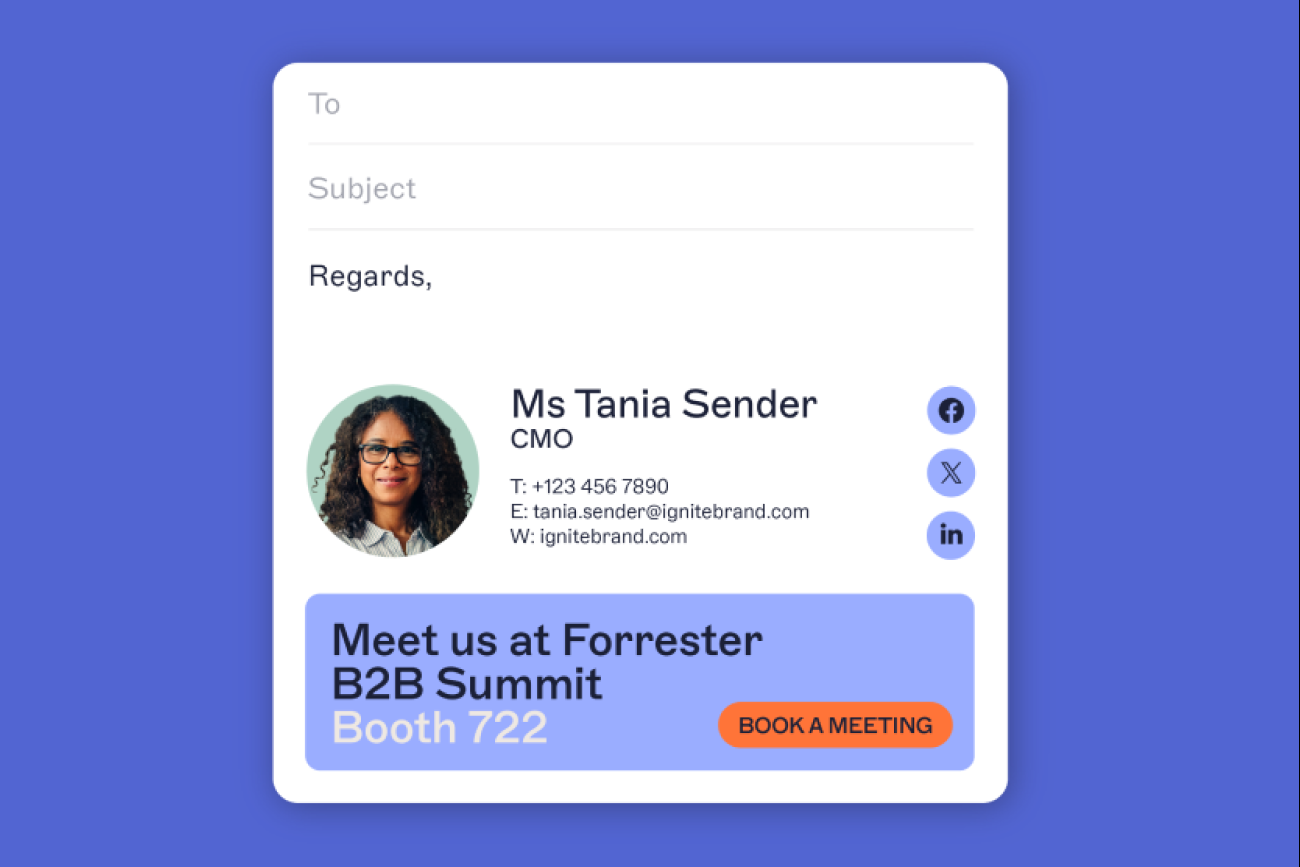
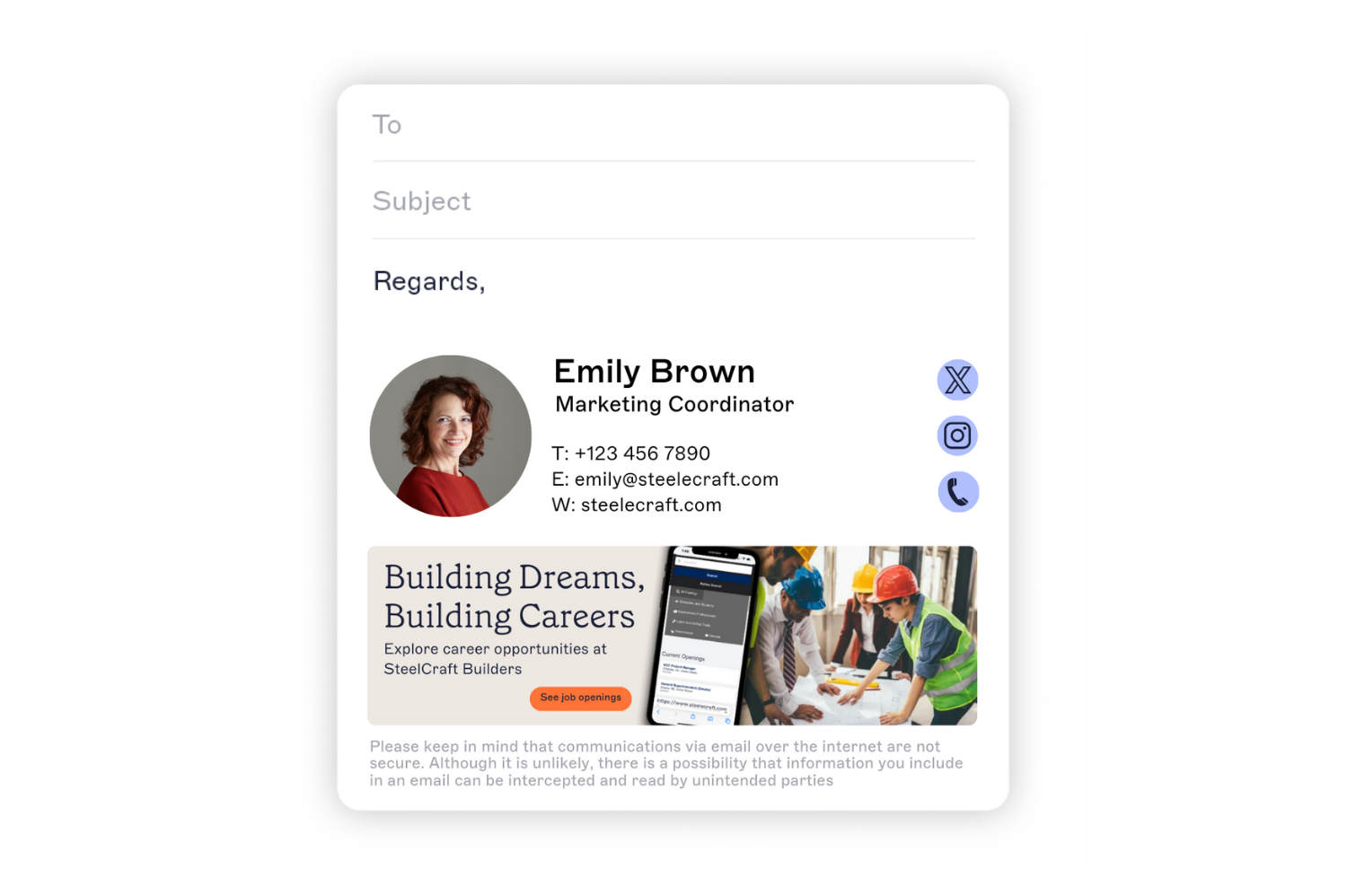
The recruitment footer shows a banner for open roles on email sent by hiring managers and anyone else the company wants promoting jobs.
10. How long should a holiday email footer stay?
The holiday footer carries a seasonal greeting and festive styling, swapped in for a few weeks and then removed. See holiday email signature templates for ready-made designs.

What are some cool email footer ideas?
A cool email footer adds one useful element for the recipient, such as a campaign banner, an attributed quote, a booking link, or a QR code. Artists and other content creators can use a portfolio link as that element.
Idea | What it adds | Use it for | Watch for |
|---|---|---|---|
Campaign banner | An image that links to an offer or event | Launches, events, webinars | Run one banner at a time, and check it reads on a phone |
Attributed quote | A real quote from a named expert | Credibility and thought leadership | Skip generic motivational lines, and name the speaker |
Booking, demo, or review link | A one-click action | Sales and support teams | Label the link with the action, such as “Book a call” |
Animated GIF | Movement in a banner | Launches and seasonal promotions | GIF display varies by email client, so design the first frame to work alone. See animated GIFs in email signatures |
QR code or vCard | Contact details a phone can scan or save | Events and field staff | Test the scan at the size it appears in the email |
Video link | A thumbnail that links to a recorded video | Product demos and welcome messages | Link to a page you update, so the footer doesn’t go stale |
Map link | A pin for your office location | Visitor-facing teams and retail | Check that the address in the link matches the one in the footer |
Handwritten sign-off | An image of your name in your own handwriting | Executives and consultants | Add alt text, and keep the file small |
Personalized offer link | A link to an offer matched to the recipient | Sales and account-based marketing | Needs targeting by recipient or sender, or the offer reads as generic |
Whichever idea you pick, the contact details stay at the top and stay accurate.
Does an email footer need legal text?
An email footer needs legal text only where a law or your own legal team requires it. The rules differ for marketing email and everyday business email.
What the footer needs | Source | |
|---|---|---|
US commercial email, including business-to-business | Your valid physical postal address and a way to opt out of future marketing email. The CAN-SPAM Act makes no exception for business-to-business messages. | FTC CAN-SPAM compliance guide |
UK marketing email | No disguised or concealed identity, and a valid contact address so recipients can opt out | Information Commissioner’s Office (ICO) guidance on electronic mail marketing |
UK limited company documents | The registered name on business correspondence. The registered number, place of registration, and registered office address on business letters, order forms, and websites. The regulations cover documents in any form but don’t name email. | Companies (Trading Disclosures) Regulations 2008 |
Everyday one-to-one business email | Decided by your legal or compliance team and your industry’s rules. The sources above cover marketing email and UK company documents. | Your legal or compliance team |
Who decides the legal wording in an email footer?
Confidentiality notices and compliance statements are a policy choice made with your legal or compliance team, and the wording differs by industry and country.
A central setup applies the wording at the mail server, so employees don’t edit it by hand. This guide isn’t legal advice. Our disclaimer examples have starting points for your legal team.
Why do email footers break down when managed by hand?

Most organizations still manage email signatures by hand, according to Exclaimer’s State of Business Email 2025 report, which surveyed 4,009 IT professionals in the UK, US, Germany, and Australia (Censuswide, April 2025). In that survey, 80% rely on manual methods or employee self-service for email signatures, and 18% use centralized management. A third (33%) said employees ignore email signature guidelines.
How do native email footer settings compare with Exclaimer’s cloud solution?
Native settings set a footer per person or by admin rule, and Exclaimer’s cloud solution manages templates centrally. Microsoft 365 and Google Workspace each include native email signature settings, and Exclaimer’s Microsoft 365 setup guide covers where the native settings stop.
Native tools in Microsoft 365 and Google Workspace | Exclaimer’s cloud solution | |
|---|---|---|
Who sets the footer | Each person sets a signature in Outlook or Gmail. An admin can add text with an Exchange mail flow rule or Google’s Append footer setting. | IT sets templates centrally, and marketing, HR, and other teams edit within permissions IT sets |
Sender details in the text | Exchange mail flow rule text can use sender tokens such as department, title, and phone | Auto-populated from Microsoft Entra ID and Google Workspace Directory |
Designing the footer | Signatures are edited in each person’s settings, and an Exchange rule adds HTML or plain text | A drag-and-drop designer managed from a single web portal |
Use Exclaimer to take control of your professional email footers
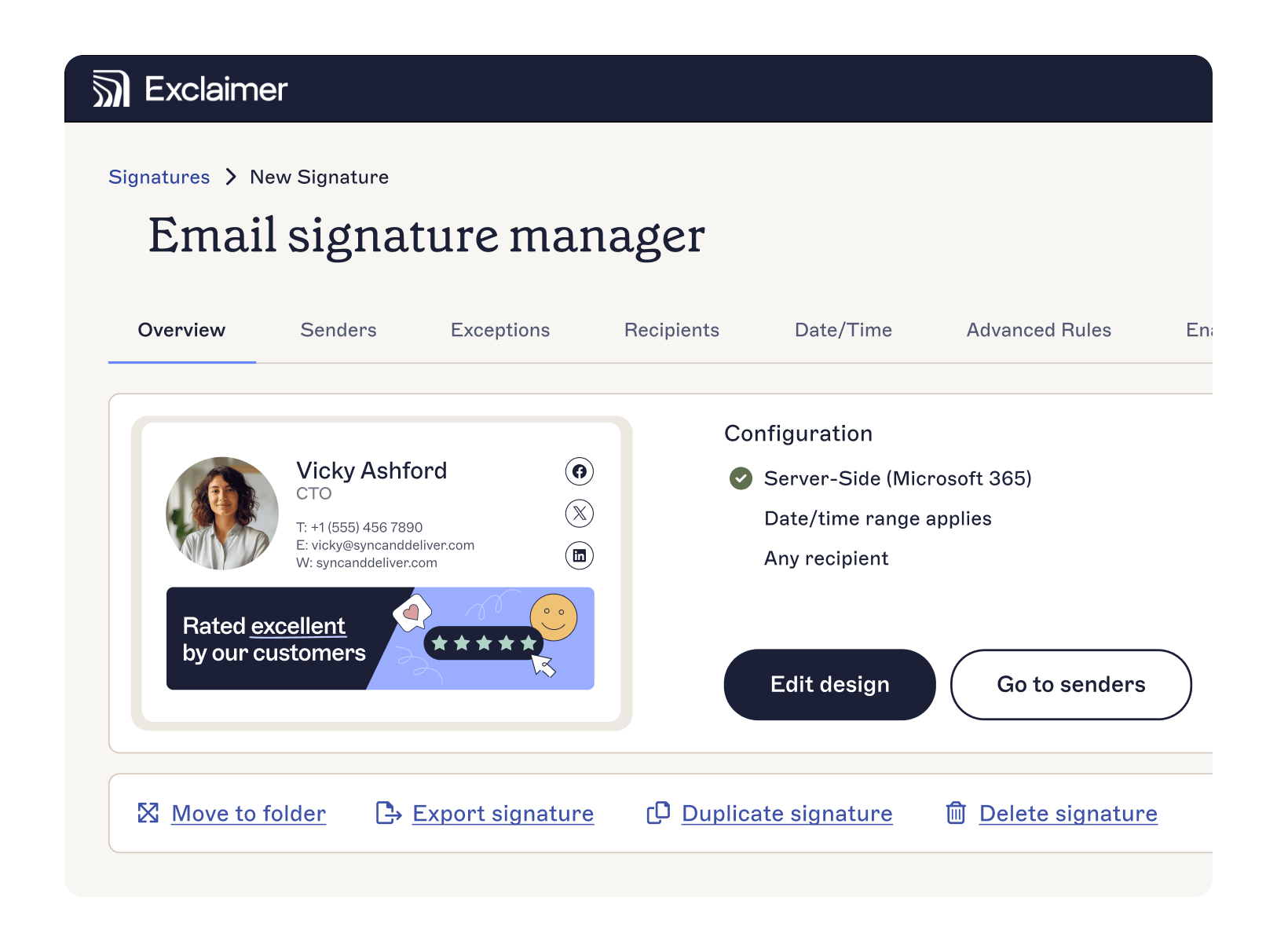
Exclaimer's email signature software simplifies email footer management with a centralized platform for creating, updating, and enforcing designs throughout your organization.
By using Exclaimer, businesses can ensure that every employee aligns with the latest branding, incorporates essential legal disclaimers, and presents a consistent appearance that boosts professional communication.
This solution not only saves valuable time but also enhances your brand image, making Exclaimer an essential tool for companies seeking cohesive and effective communication.
Optimize your professional email footers today with Exclaimer to elevate your branding and ensure compliance across your organization.
Start with a free trial or get an online demonstration to experience the ease and efficiency of managing your company email footers.