Naimh is a seasoned marketer of 12 years, including in SaaS and tech. She’s an expert at simplifying complex technology concepts, bridging the gap between IT and marketing. Naimh specializes in turning tech speak into actionable insights, helping marketers get the most out of their tools and technology.
Using the right email signature size
TL;DR
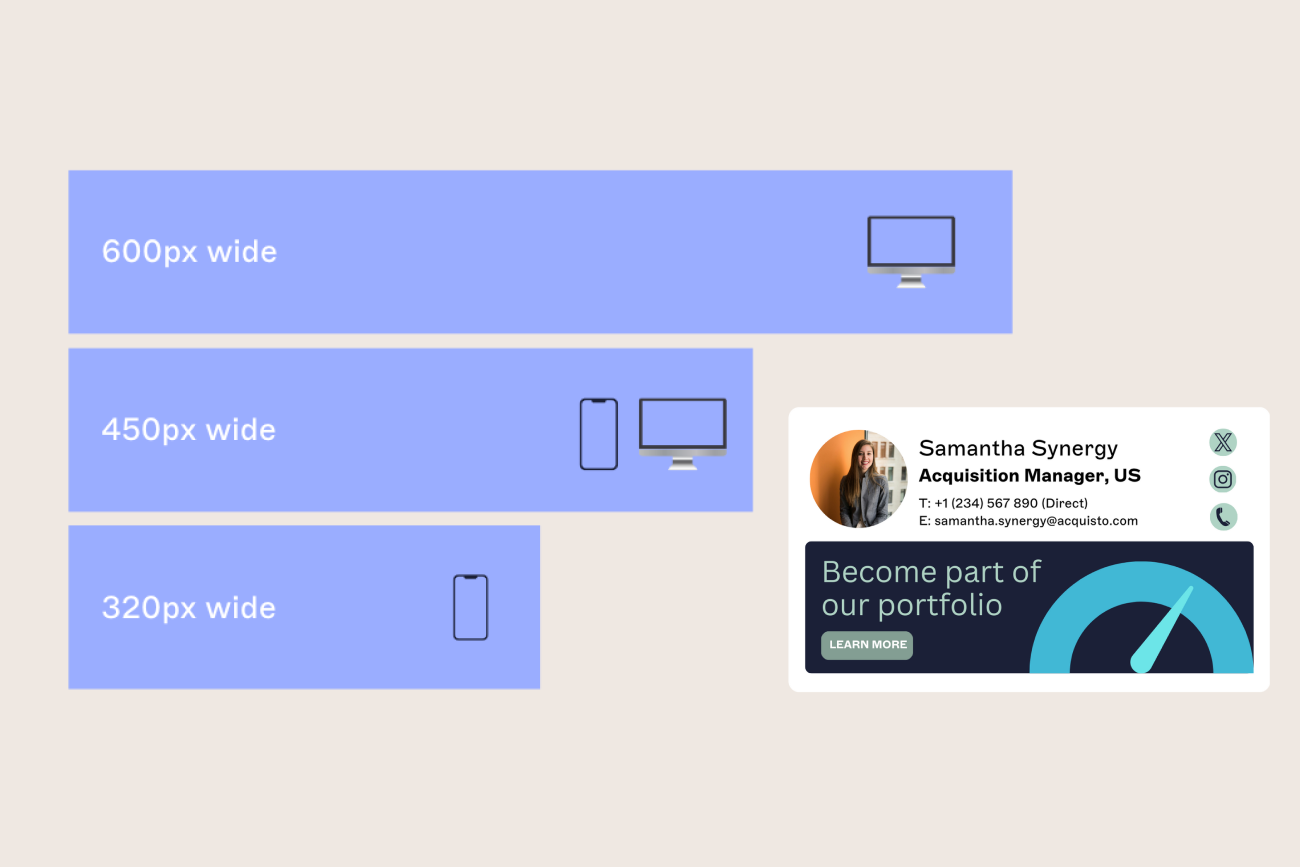
Using the right email signature size ensures it won't get cropped and appears clean and professional across different devices and platforms
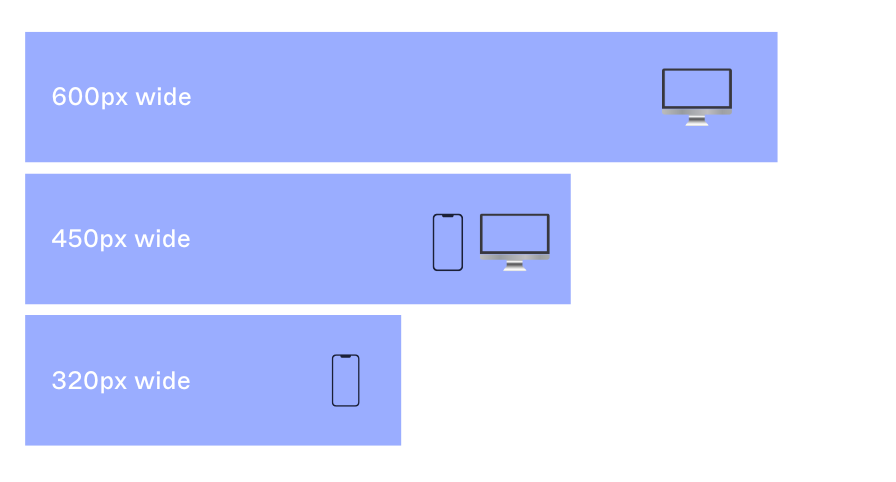
The ideal email signature size for desktop is 600 pixels wide and between 150 to 200 pixels high
The ideal email signature size for mobile is 320 pixels wide
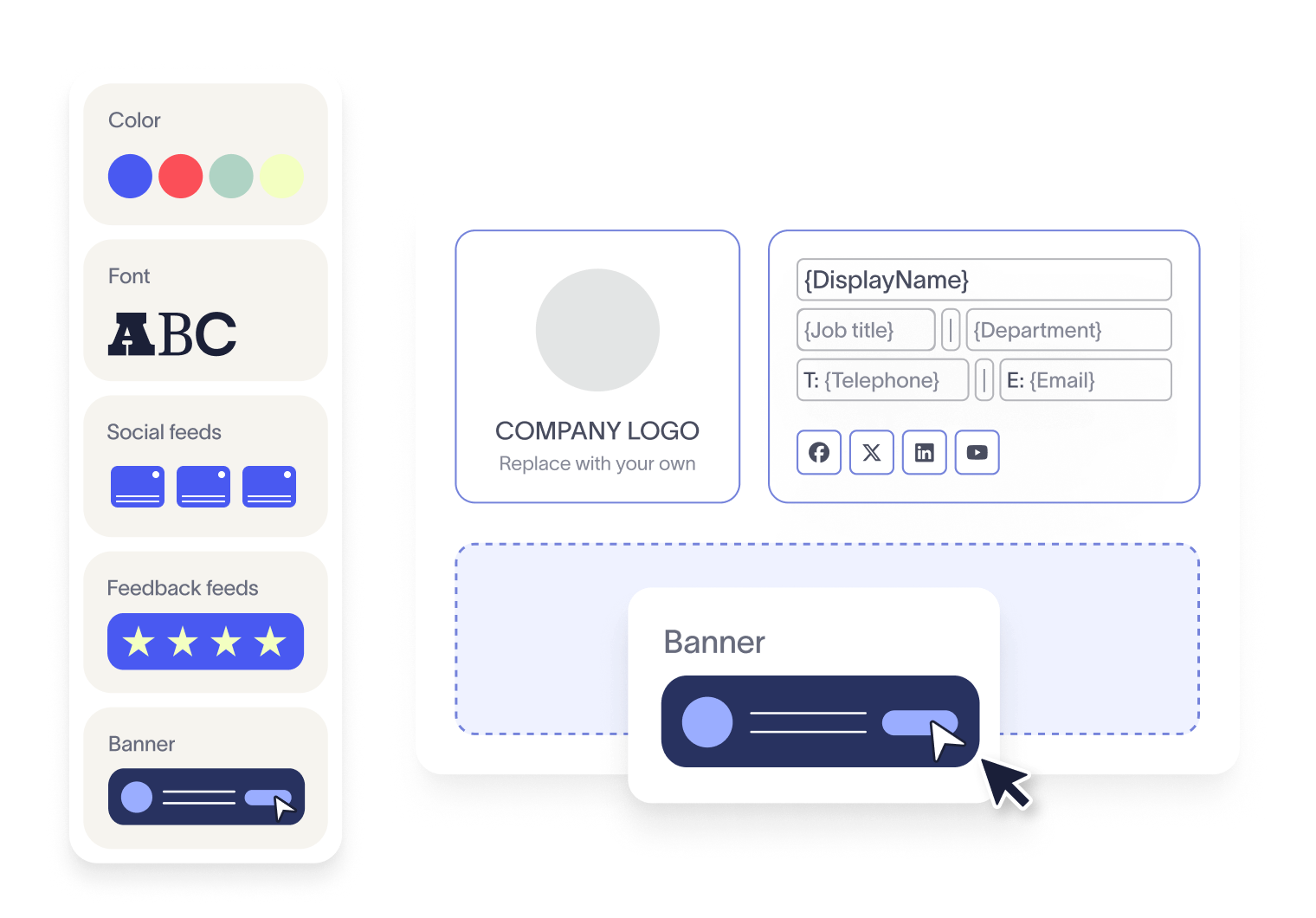
Exclaimer's drag-and-drop signature designer builds signatures to the right dimensions from the start, and server-side deployment keeps them rendering consistently on every device
What's the right email signature size to use?
Email signature size is more important than you might think. There's no single published standard. What works on a desktop PC or Mac may not work on a smartphone, and a signature that looks fine in Outlook can break entirely in Gmail.
Here's how the two environments compare at a glance:
Desktop | Mobile | |
Width | 600px (practical convention, not a spec) | 320px |
Height | 150–200px | Scales with width |
Why | Fits most email clients' reading panes | Matches the narrowest common mobile screen width |
To keep your email signature looking professional and consistent across devices, use the sizing guidelines below so any template you build renders correctly, no matter where it's opened.
Don't leave the professionalism of your organization's email signatures up to chance. If you're using Microsoft 365 or Google Workspace, our email signature management solution ensures every email looks polished and consistent, no matter what device it's viewed on.
Why does email signature size matter?
Getting your email signature size right is essential for:
Keeping a professional image
Making a strong impression
Ensuring it doesn't look incomplete or get ignored
Not overwhelming for the recipient
The perfect email signature strikes a balance: grabbing attention without being distracting.
A well-sized email signature ensures your contact details are clear and easy to read, while leaving enough white space for a neat, polished design.

How size impacts functionality
Both the memory size and visual dimensions of an HTML email signature can affect its functionality. While the signature might look fine, if it's too large in file size, many email clients won't load it. A large signature slows down loading time, which can cause frustration for recipients.
For example, using a high-resolution image might seem like a good idea, but if the file is 6MB or more, it will inflate the signature size and make it impractical. It's better to use appropriately sized images that still look sharp, without bogging down the email's performance.
What's the right image size for an email signature?
To create the best email signature, make sure images are wide enough to fit a full-screen window. This way, they shrink seamlessly to fit smaller screens while maintaining their clarity, rather than stretching to fill larger windows and losing quality.
Oversized images distract recipients and overpower the message. Undersized images make key details, like a logo or a promotional banner, hard to see or read.
"How big should your images be? That's the question I get asked all the time, and honestly, it's up to you. But whatever size you land on, design and upload at that size. If your logo works at 200 by 200 pixels, that's the size you build it at and the size you upload it at. We recommend keeping the whole signature to around 600 pixels wide. It's not really a rule, it's just a nice constraint to work within."
What is the ideal mobile email signature size?
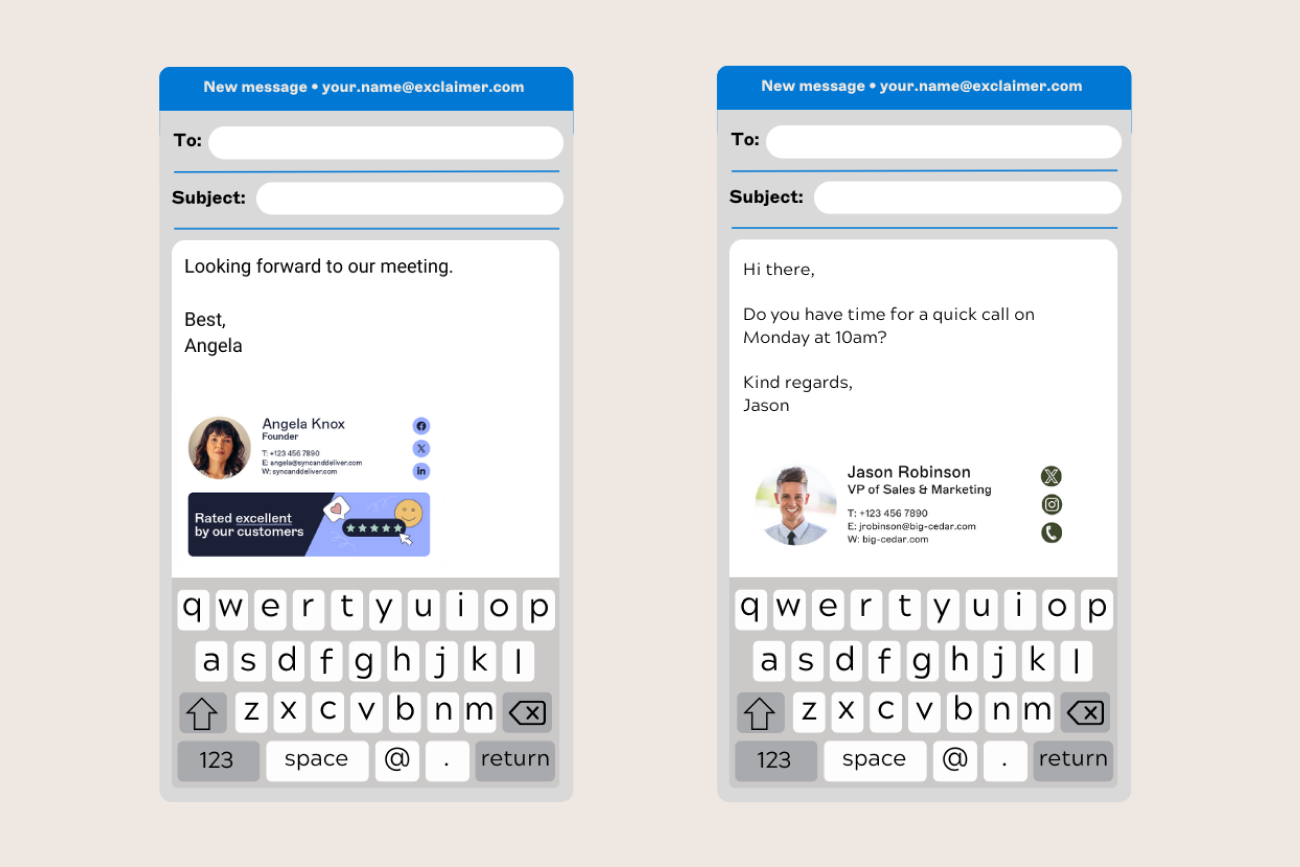
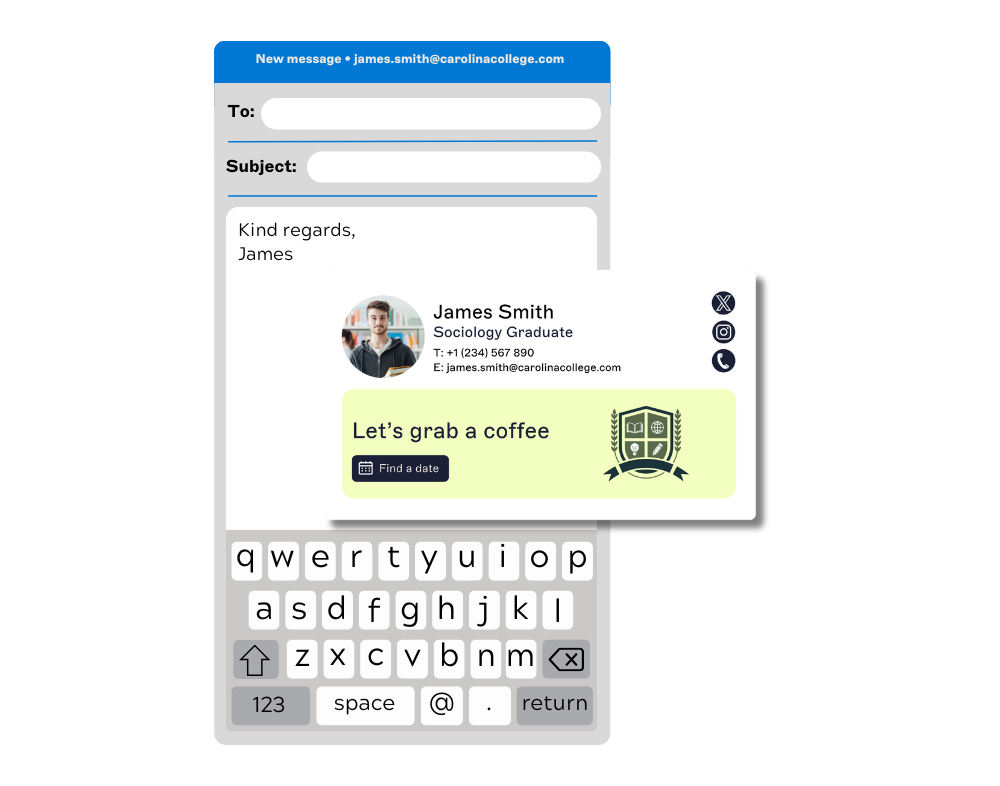
The ideal email signature size for mobile is 320 pixels wide. Mobile device screens typically range between 320 and 500 pixels wide, so targeting the lowest screen dimensions ensures your email signature looks sharp and clear.
It's important to use the right size for mobile email signatures so they look professional and display correctly on smaller screens.
Why choose 320 pixels for mobile email signatures?
A width of 320 pixels is optimized for smaller mobile screens, preventing distortion or blurriness. High-quality, properly sized images are also crucial, as many mobile devices compress or resize images automatically.
Keeping the dimensions at 320 pixels helps maintain a polished appearance while ensuring compatibility across devices.
How to optimize your mobile email signature size
To ensure quick loading times and avoid clutter, limit the number of elements in your mobile email signature. Focus on simplicity and readability. Make sure any text is large enough to read easily on a smartphone screen.
It's also worth considering the difference in layout between mobile and desktop screens. Desktops often display emails in a landscape format, while smartphones use a portrait orientation. Designing your email signature with this in mind ensures it looks great on both platforms.
What's the best email signature size for desktop?
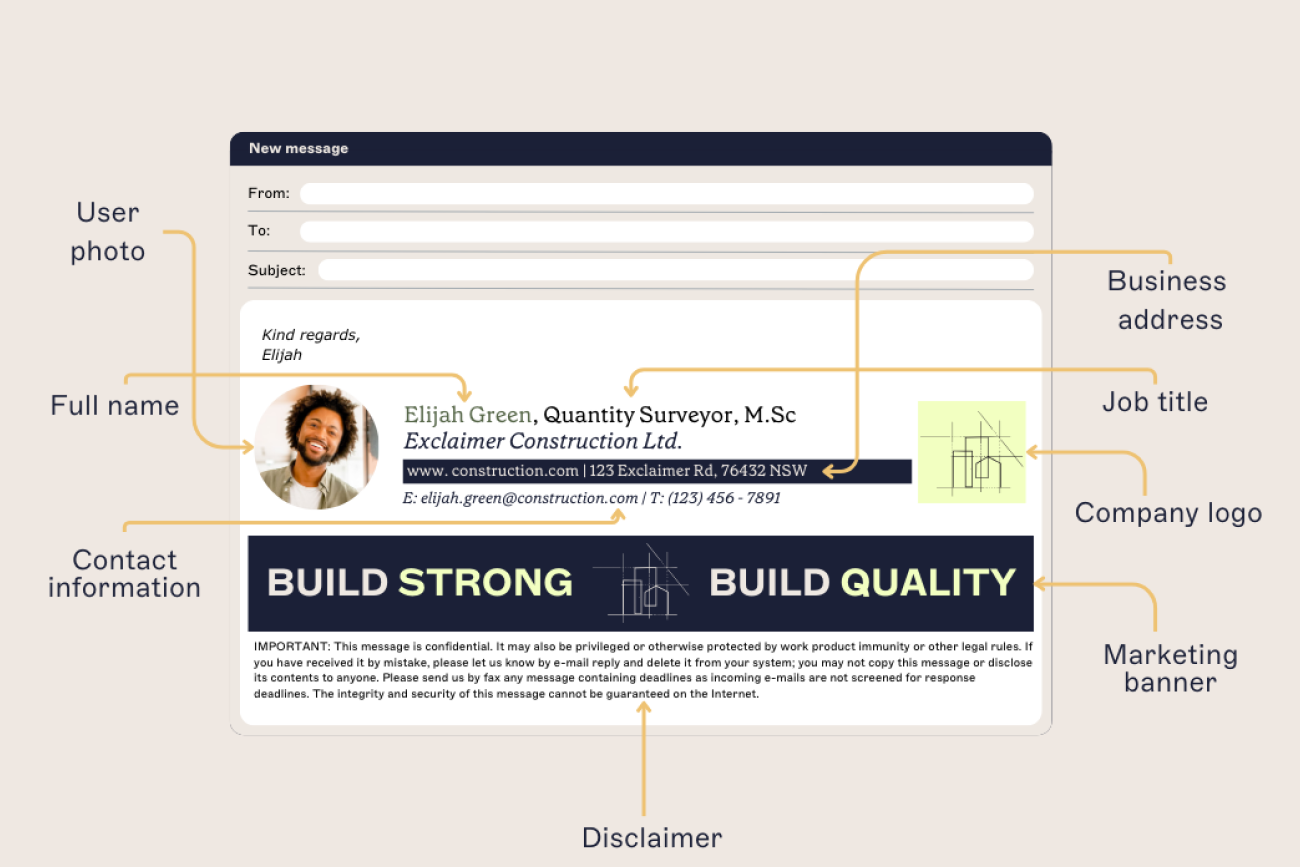
The ideal email signature size for desktop is 600 pixels wide and between 150 to 200 pixels high. This recommended size ensures your email signature won't get cropped and appears clean and professional across different devices and platforms.

Why choose 600 pixels for email signatures?
A 600-pixel width keeps your email signature looking clean and professional across most email clients.
Getting the size right is key when designing an email signature for desktop. It ensures a professional look and displays properly on popular email clients like Outlook and Gmail.
One possible drawback: when viewed in wider email windows, the signature may appear aligned to the bottom-left corner instead of stretching across the screen.
How to prevent cropping or scaling issues
To avoid cropping or scaling issues, consider placing your email signature within an HTML table. Using complementary colors in the table lets your branding extend to the edges of the email while keeping the signature itself intact.
For even better compatibility, you can also reduce the maximum width to 450 pixels. This smaller size minimizes scaling issues and ensures your email signature looks great on both desktop and mobile devices, while still leaving room for all essential contact details.
"People treat the table like it's just a container, but it's doing the actual work. Email clients throw out most of the CSS you'd normally use for layout, so rows and columns end up being your only real structure. Once you stop thinking of a signature as one image or one block and start thinking of it as a grid, nesting makes sense: put the banner in its own table, the text in another, and each one can hold its own size. Skip that and the whole thing shrinks or breaks together. That's usually why a signature looks fine on one screen and falls apart on the next."
Designing for the best email signature dimensions
Creating the perfect email signature size is a balancing act, and there’s no one-size-fits-all solution. It's essential to consider your recipients and their preferred devices when determining the ideal dimensions for your email signature.
Quick reference: Email signature element sizing
Element | Width | Height | Notes |
|---|---|---|---|
Desktop email signature | 600px | 150–200px | Standard email clients |
Mobile email signature | 320px | — | Matches the narrowest common mobile screen |
Banner (general) | 300–400px | 70–100px | Around 72 dpi |
Gmail banner | up to 200px | around 80px | Keep the file under 15kb |
Social media icon | 22px | 22px | Keep icons uniform in size |
Company logo | 200x100px (example) | — | Match the file to the display size, don't scale down in the client |
The ideal size for an email signature image
For the best rendering across mail clients, an image should already be the size you want it displayed at. If your logo should show up at 200 x 100 pixels in the signature, the image file itself should be 200 x 100 pixels, not a larger file scaled down in the markup. Mismatched dimensions are also the most common cause of a blurry signature logo in Gmail or Outlook, so getting this right solves two problems at once.
Keep images under 50kb where you can. Larger image files mean longer send and load times for the recipient.
Email signature banner size
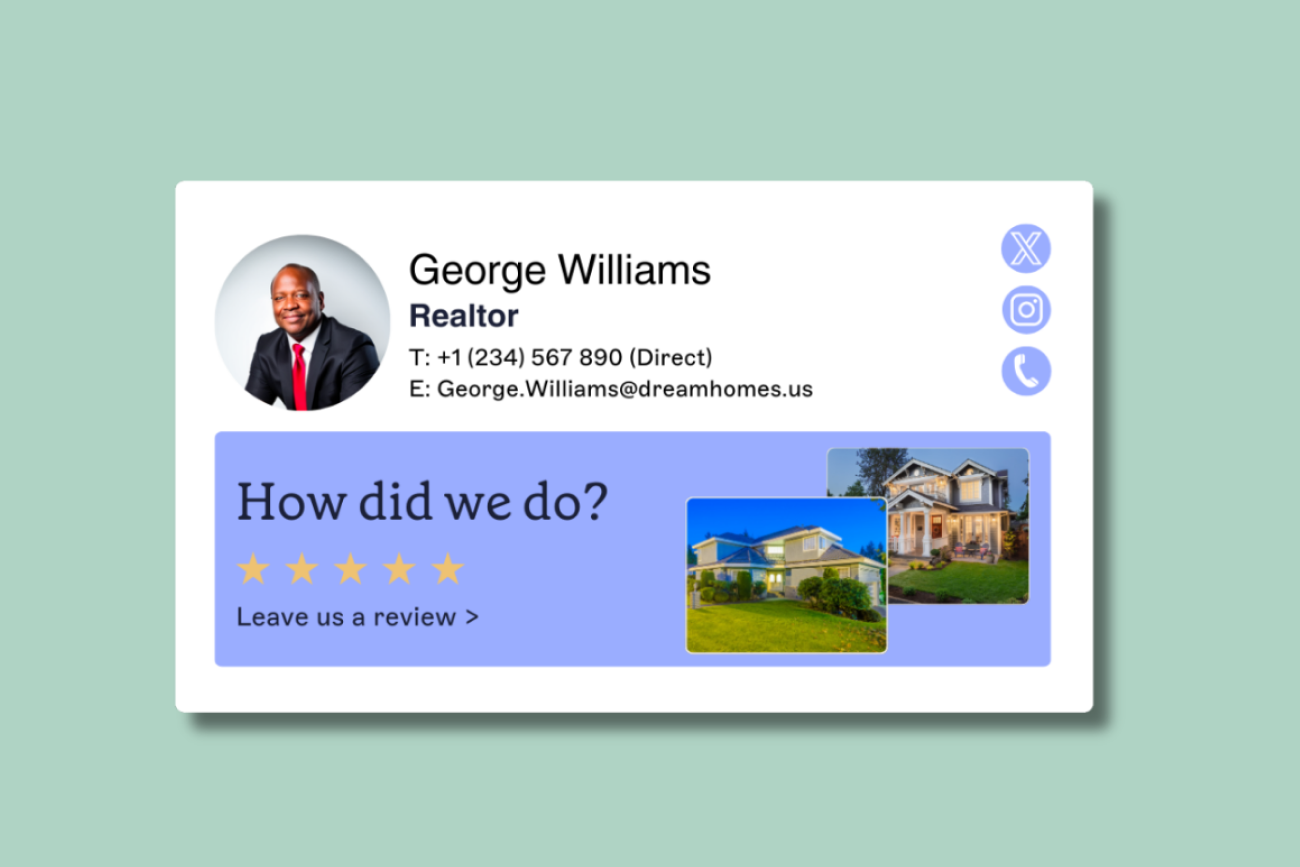
For email signature banners, a width of 300–400 pixels and a height of 70–100 pixels, at roughly 72dpi, works well across desktop and mobile.
For Gmail specifically, go smaller: around 80 pixels in height and up to 200 pixels wide, and keep the file under 15kb for fast loading.

Best font size for an email signature
11–13 points is the readable range for signature text. Keep font size consistent throughout, and avoid mixing multiple fonts or piling on formatting. It reads as cluttered fast.
Best size for social media icons in email signatures
Around 22px x 22px keeps icons recognizable without taking over the layout. Keep them uniform in size and style, and don't overload the signature with more icons than the recipient actually needs.
Why does my signature look different in Gmail, Outlook, or on my phone?
Beyond pixel dimensions, every email client has its own rendering quirks, and some of what looks "wrong" is really just each client interpreting the same signature differently rather than a mistake in how you built it.
Two things drive most of this: how you've attached your images, and hard limits some clients place on signature length altogether.
Character and size limits by client
Some clients cap how long a signature can be, independent of pixel dimensions entirely. A signature that renders fine in one client can be truncated or rejected in another purely for length.
Client | Approximate limit | Notes |
|---|---|---|
Gmail | Up to 10,000 characters | Rarely the limiting factor |
Outlook.com | Around 5,120 characters | The tightest common limit — worth checking with a long disclaimer attached |
Yahoo Mail | Up to 10,000 characters | Similar headroom to Gmail |
How to reduce your email signature size
A large signature slows load times and clutters the message. Here's how to bring it down without losing the professional look:
Optimize your images. Compress signature images with online tools or photo editing software to shrink file size without visibly losing quality.
Simplify the design. Ask whether you actually need every detail (multiple phone numbers, several social icons). A leaner signature is usually both smaller and more professional.
Decide deliberately between embedding and hosting your logo. This isn't a settled question, and the two approaches trade off differently.
Embed | Host | |
|---|---|---|
Always renders | Yes | Depends on the recipient's image-loading settings |
Update centrally | No, requires resending | Yes |
Email file size | Larger | Lighter |
Best for | Recipients you don't control or can't predict | Business accounts on Microsoft 365 or Google Workspace |
"Hosting your logo doesn't mean it shows up correctly for everyone. It means it shows up correctly for whoever's email client actually bothers to load external images, and a lot of default settings just don't. Embed it and it always renders, but now it's stuck in the email forever. Host it and you can update it centrally without touching the recipient's end at all, but you're at the mercy of their settings that day. I don't think there's a clean answer. It really comes down to how much you trust the inboxes you're sending into."
Optimize for retina displays. If you're designing for high-resolution screens, optimize images accordingly so you keep visual quality without inflating file size.
Stick to JPEG or PNG. These compress well while holding up visually. Avoid BMP, TIFF, or other large file formats.

How to resize a logo for Gmail signatures
To resize a logo for Gmail signatures, follow these steps:
Open the Gmail app and go to Settings > See all settings.
Scroll down to the Signature section to customize your email signature size.
Click the image icon in the toolbar to insert your logo.
After uploading the image, resize it by selecting small, medium, or large.
Click Save changes.
How to resize a logo for email signatures in Outlook
To resize a logo for email signatures in Outlook:
Open Outlook and create a new email.
Go to the Insert tab and select Signature.
Choose the signature you want to resize.
Click the image in the signature, then drag the blue corner dot to resize it.
Once resized, press Ctrl + A (or Command + A on Mac) to select all, then Ctrl + C (or Command + C) to copy.
Go to File > Options > Mail > Signatures to open the "Signatures and Stationery" box.
Select the signature, remove the old version in the edit section, and paste the updated one.
Click Save to apply your changes.
Using email signature software to automate the process
Creating and managing email signatures for a whole organization takes time, especially across employees with different contact details. This is where Exclaimer's email signature software comes in.
Exclaimer's cloud solution lets you create and manage professional signatures for your entire team from one central platform. You can resize and customize signatures without needing design or coding skills, and dynamic fields automatically update employee contact details when they change, so signatures stay accurate without manual edits.
Summary
Choosing the right email signature size isn't about hitting one exact number. It's about picking dimensions and a structure that hold up across the devices and clients your organization actually uses.
Get this right and your signature does its job everywhere it's opened, not just on the screen you designed it on.
Before you publish, check:
Every image file matches its display size, not just visually "looks about right"
The signature is built on an HTML table, not a single floating block
Total width is 600px or less for desktop, 320px for mobile
You've tested on an actual phone, not just resized a browser window
Total file size stays under 50kb
You know whether your email client has a character limit that affects you
Start a free trial and see how easy it is to automate and scale email signatures across teams and device.