



Email disclaimers in the UK: Key rules and best practices
20 November 2025
0 min read
TL;DR
- The UK does not require a general email disclaimer, but the Companies Act 2006 mandates that specific company details appear in business emails
- UK organizations use disclaimers to reinforce confidentiality, guide recipients when messages are misdirected, and support consistent communication across teams.
- Laws such as UK GDPR and the Data Protection Act 2018 shape how personal information should be handled, influencing what organizations include in email footers
- Many businesses include registered name, company number, and registered office details in their email footer to meet disclosure rules.
- Exclaimer ensures these details—and any disclaimer text—are applied accurately and consistently across the entire organization
Within the UK, it’s still important for companies to use email disclaimers to protect against corporate damages or other liabilities. In fact, they are seen by some to be as legally binding as any other electronic signature.
An example of this was where an email signature block was deemed legally binding in the UK High Court regarding a land sale in northern England. In the end, it cost a land seller £25,000. If an appropriate email disclaimer had been located at the bottom of the message, this would not have occurred.
This guide looks at how email disclaimers fit into the UK’s regulatory landscape, what businesses are expected to include in their communications, and how organizations can keep their email footers consistent and accurate.
Are email disclaimers legally required in the UK?
UK law doesn't require organizations to include a general email disclaimer in their messages. What is required, however, is that certain company details appear in business correspondence under the Companies Act 2006. This applies to electronic communication, including email.
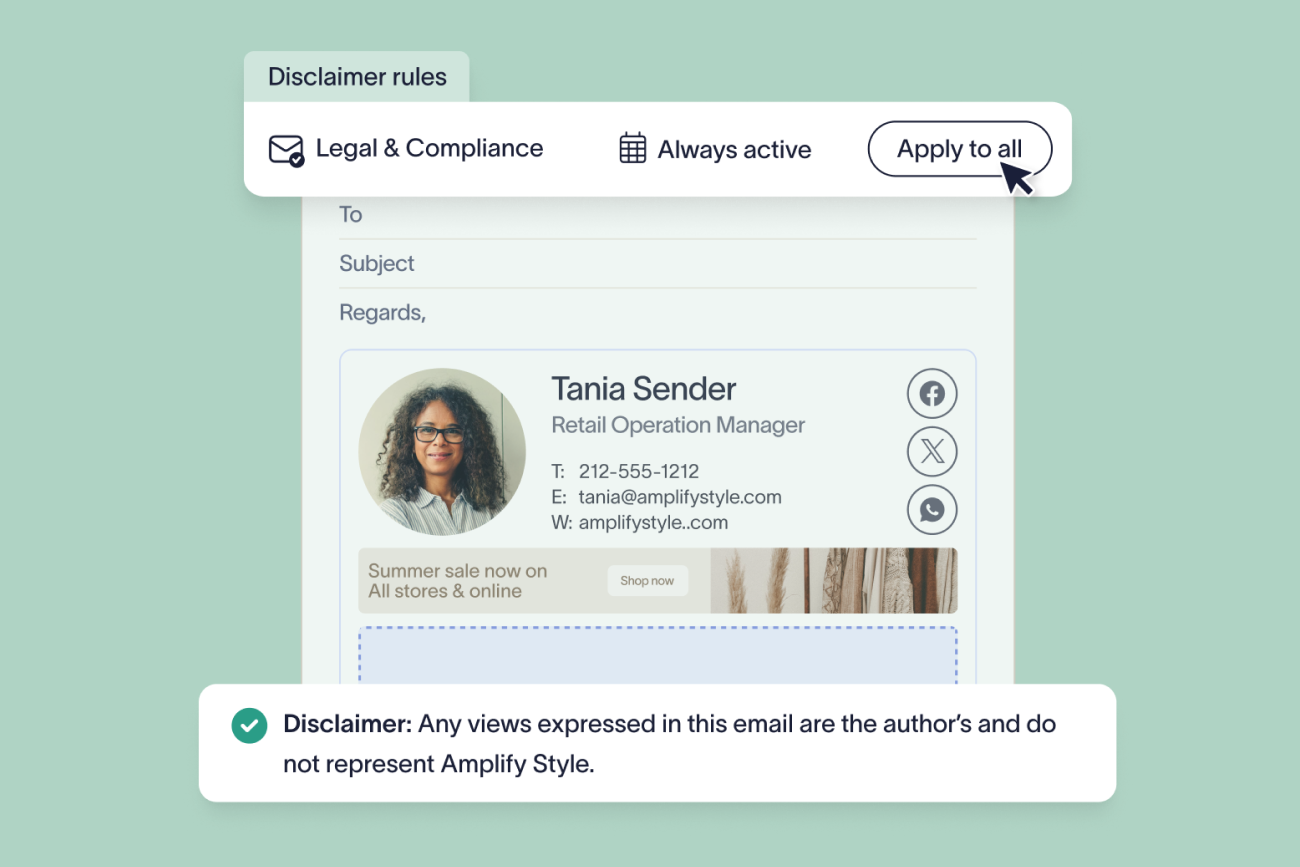
Email disclaimers are widely used in the UK because they help organizations reinforce confidentiality expectations, give clear instructions for misdirected messages, and support consistent communication practices across teams. They also help set the right context when emails include business information, internal documentation, or personal data.
Disclaimers don’t replace any legal obligations under the Companies Act, UK GDPR, or the Data Protection Act 2018, but they complement those requirements by helping organizations ensure clarity and predictable communication standards.
When UK organizations use email disclaimers
UK organizations rely on email disclaimers for practical, operational reasons rather than legal requirements. These notices help clarify how information should be handled, reinforce internal policies, and maintain consistency across teams.
Common situations where UK organizations use email disclaimers include:
1. Sharing information that may be confidential or commercially sensitive
Businesses often send internal updates, financial data, client details, or documents that shouldn’t be shared outside the intended audience. A disclaimer helps signal that the message is meant only for the recipient and shouldn’t be forwarded without authorization.
2. Managing the risk of misdirected emails
Sending an email to the wrong person is common. Disclaimers provide simple instructions, so organizations can handle these incidents responsibly.
3. Supporting personal data handling under UK GDPR and the Data Protection Act
While disclaimers don’t create compliance, they remind recipients that an email may contain personal information and should be handled appropriately. This aligns with expectations for transparency and data protection under UK GDPR.
4. Keeping communication consistent across departments and locations
Large organizations need predictable standards for email content. Disclaimers help ensure that employees across different offices or teams send messages that follow the same expectations and include the same basic information.
5. Operating in sectors with heightened communication standards
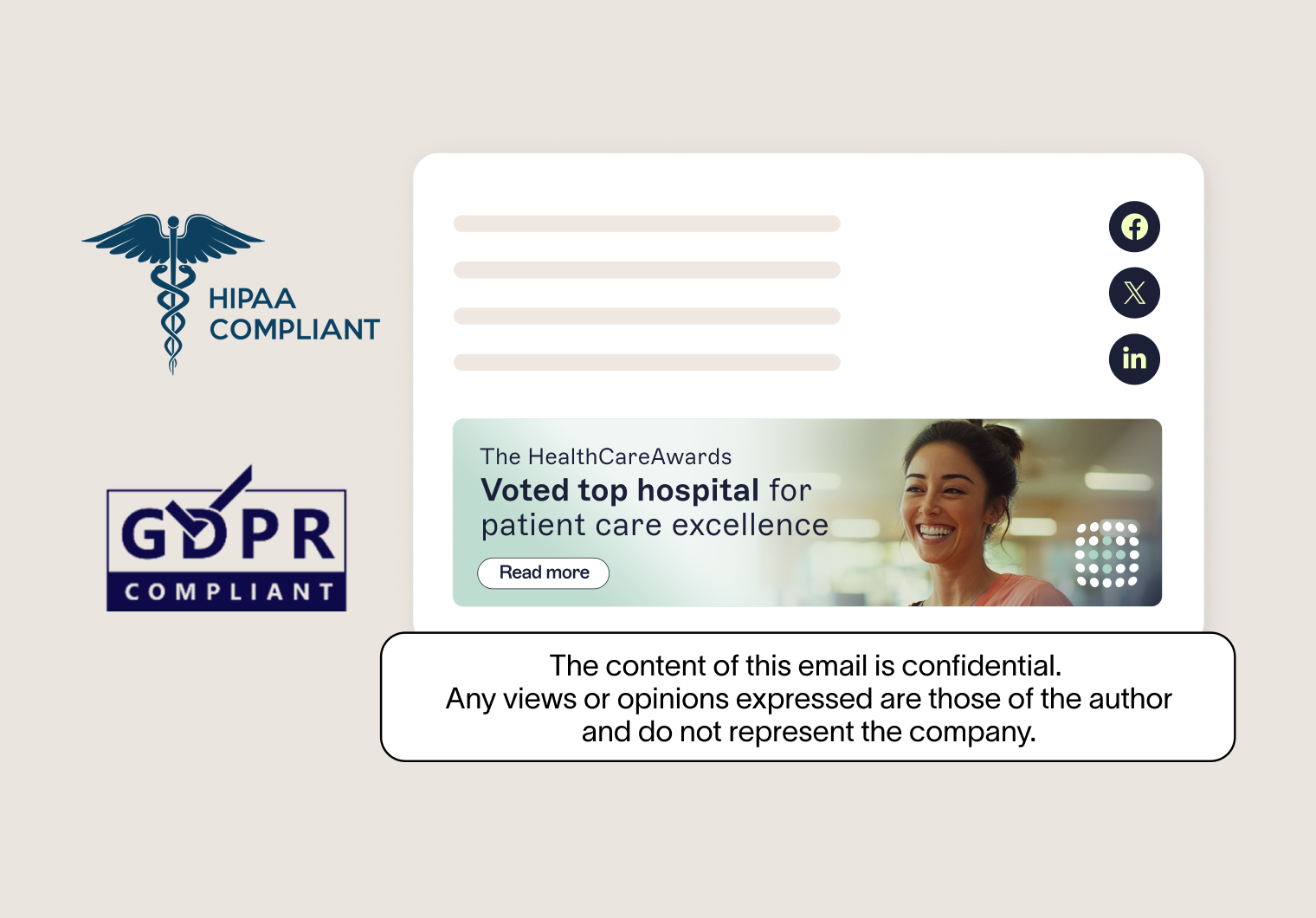
Legal, financial, healthcare, and public-sector teams often use disclaimers to reinforce professional norms, reduce risk, and keep communication clear in regulated environments.
In the UK, disclaimers are less about legal obligation and more about maintaining clarity, consistency, and responsible information handling across the organization.
UK laws that influence the use of email disclaimers
The United Kingdom does not require organizations to use a general email disclaimer. However, several laws determine what information must appear in business correspondence and set expectations for how personal or sensitive information should be handled. These regulations influence the type of content organizations include in their email footers, even though they don’t mandate a traditional disclaimer.
The UK Companies Act 2006 (amended 2007)
The UK Companies Act 2006 (amended in 2007) sets out the information that UK companies must include in business correspondence, including emails. This applies to private limited companies, public limited companies, and LLPs. Required information typically includes:
The company’s registered name
Registered office address
Registration number
Place of registration
For certain entities: details of directors or members
Companies Act example footer text
UK GDPR
UK GDPR governs how personal data is collected, used, and shared. It requires organizations to protect personal information, maintain transparency, and handle data responsibly. This was introduced after Brexit when the UK had already adopted the EU GDPR into its legal framework.
Many British organizations use disclaimers to remind recipients that the message may contain personal information and should be treated with care. This supports the broader principles of data protection.
The Companies Act doesn't require a formal email disclaimer, but many organizations include their required company details within their email footer to ensure accuracy and consistency.UK GDPR email disclaimer (example)
Useful resources:
Data Protection Act 2018 (DPA 2018)
British organizations will often include a short notice to help set expectations around the appropriate use of personal or sensitive information.The Data Protection Act 2018 sits alongside UK GDPR and outlines how personal data should be managed within the UK. It reinforces expectations around safeguarding, transparency, and handling personal information appropriately.
DPA email disclaimer (example)
Useful resources:
Freedom of Information Act 2000 (FOIA)
Public-sector teams often use email disclaimers here to clarify that the message may contain sensitive or official information and to guide recipients in how to handle a misdirected email.FOIA applies to UK public-sector organizations, giving the public the right to request access to certain information held by government bodies. Emails sent by public officials may fall within the scope of a FOIA request.
FOIA email disclaimer (example)
Useful resources:
How Exclaimer helps companies meet UK email disclaimer requirements
Managing email disclaimers in the United Kingdom can be challenging, especially when organizations must follow the Companies Act’s disclosure rules and maintain consistent communication across offices and teams. Relying on employees to manage their own email footers often leads to missing details, outdated information, or inconsistent formatting.
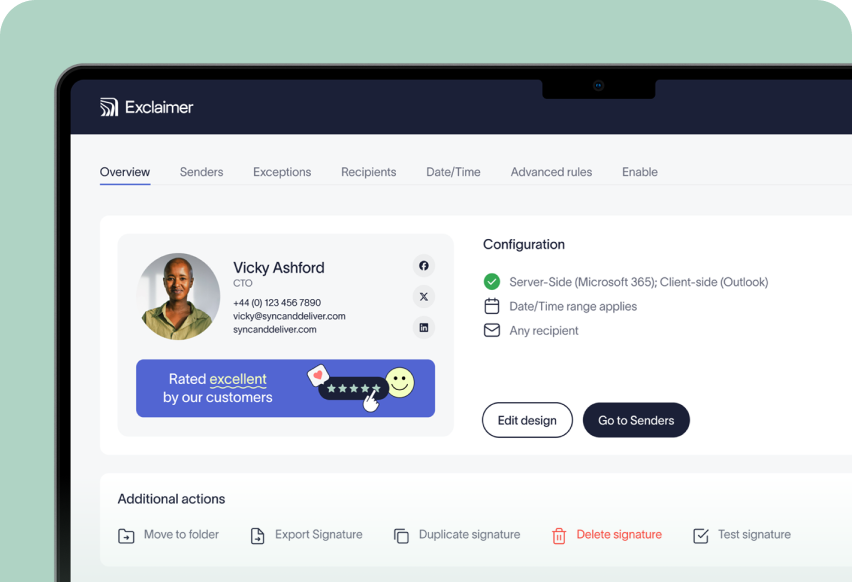
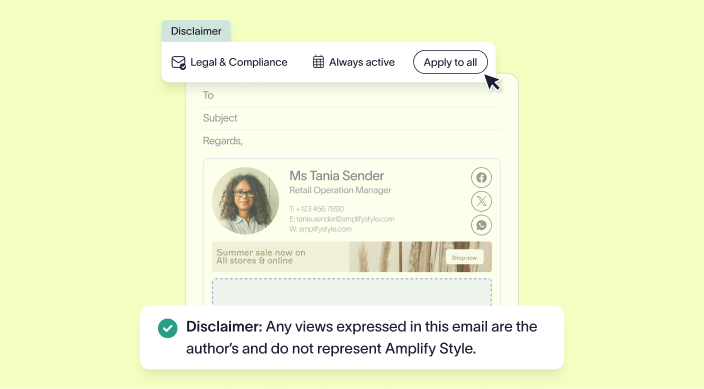 Exclaimer removes this uncertainty by centralizing how disclaimers and required company information are applied. This ensures every email sent across the organization meets internal standards and reflects accurate company details.
With Exclaimer, you can:
1. Automatically apply Companies Act-required company information
The Companies Act 2006 requires specific details to appear in business correspondence. Exclaimer lets you build these details into your signature templates and ensures they appear on every outbound email.
2. Maintain accuracy when your company information changes
If your organization updates its registered office, changes legal form, or undergoes restructuring, Exclaimer pushes the new information to every user instantly. No manual updates. No outdated email footers still in circulation.
3. Support UK GDPR expectations for clear, responsible communication
While disclaimers don’t create compliance, Exclaimer helps organizations standardize the language they use when sharing personal or sensitive information. This reinforces internal data-handling policies across all email communication.
4. Ensure consistency across offices, departments, and user groups
Large UK organizations often struggle with inconsistent signatures and disclaimers. Exclaimer applies the correct version automatically—whether employees work in England, Scotland, Wales, Northern Ireland, or remote teams abroad.
5. Provide tailored templates for regulated sectors
Financial services, legal practices, healthcare providers, and public-sector bodies often rely on disclaimers to support professional and regulatory standards. Exclaimer makes it easy to manage sector-specific variations without losing control or oversight.
Find out how Exclaimer can support your legal compliance and start a free trial today.