



Why your brand strategy isn't working (and what growth leaders do differently)
31 March 2026
0 min read
Your positioning is signed off. Messaging is agreed. The team is briefed. Then six months later, sales is describing the product differently to every prospect, the website says something subtly different from the pitch deck, and customers are raising basic questions in late-stage conversations that should have been resolved at first contact.
The strategy is fine. The problem is in how it gets applied, and that gap is costing you revenue.
Exclaimer's recent webinar brought together Jenny Herbison, SVP of Marketing, and Elisabeth Goossens, Director of Brand and Communications, to examine exactly this: the distance between a brand that looks right on paper and one that actually holds up across the interactions that shape buying decisions. What follows are the key takeaways from that conversation.
The problem usually shows up in your pipeline, not your positioning
Most marketing leaders look for brand problems in the wrong places. They audit campaigns, revisit messaging documents, and refresh the website. What they rarely check is what a prospect actually experiences across a full buying journey, and whether that experience tells a coherent story.
Brand starts affecting growth earlier than most teams expect. By the time it shows up in a slower pipeline or weaker conversion rates, the erosion has been building for months. The signals are easy to overlook because they resemble sales problems: deals stalling without explanation, more stakeholders requiring reassurance, and late-stage questions about what the company actually does.
A fast way to test this is to ask an LLM about your company. These tools draw from your website, review sites, and third-party content, the same sources prospects use to form opinions before they speak to anyone in sales. If the output doesn't reflect your positioning, there's a gap between how you define your brand and how it actually exists externally. That's what your prospects are working with.
Research from Marq shows that consistent brand presentation can increase revenue by up to 23%. When messaging is experienced differently across touchpoints, confidence drops, and confidence is what moves deals forward.
Why the strategy document isn't the problem
Most teams that struggle with brand consistency have a perfectly serviceable strategy, with clear positioning, agreed messaging, and documented guidelines. The issue is what happens once that work leaves the room.
Marketing communicates the brand one way. Sales adapts it for individual conversations. Customer success explains it differently again. Each team works from the same source material but applies it through its own lens. A single buyer can encounter subtly different versions of the same company depending on who they interact with, when, and through which channel.
Jenny described this from her experience joining Exclaimer. Before she knew much about the business internally, she mapped the customer journey from the outside. The website, the sales team, and the channel partner messaging were all saying something different. Each version had its own logic, but none of them were consistent with each other.
When those interactions don't align, it takes longer to build the confidence needed to make a decision. The problem scales with the organization: more people communicating externally means more interpretation, more variation, and more opportunity for the core message to drift.
Edelman's Trust Barometer consistently identifies trust as one of the most significant factors in business purchase decisions. Trust is built through repeated, consistent experiences, and variation works against it.
What brand erosion actually costs
Brand erosion rarely announces itself. It accumulates gradually, in small differences repeated across hundreds of interactions. Inconsistency leads to confusion. Confusion leads to a loss of confidence. By the time that shows up in revenue metrics, it's already well established.
The commercial impact is real, even when the cause is hard to attribute directly. Sales cycles lengthen without a clear reason. Deals require more explanation and reassurance at stages where they shouldn't. Marketing generates interest that doesn't convert at the rate the pipeline suggests it should.
What makes this hard to diagnose is that individual teams are often performing well. The problem sits at the organizational level, in the coherence across teams rather than the performance within them. When everyone is optimizing their own part of the buying journey without a shared view of how it fits together, the customer experience becomes fragmented.
Jenny pointed to a structural challenge common in scaling B2B organizations: siloed teams, each focused on their portion of the funnel, with no single owner of the end-to-end experience. Marketing optimizes the top. Sales drives conversion. Customer success manages retention. Brand governance falls into the gaps.
Research from the LinkedIn B2B Institute highlights that long-term brand investment delivers measurable commercial returns, but only when brand is experienced consistently across the full buyer journey. Short-term performance activity can't compensate for a fragmented brand experience at the organizational level.
What fixing it actually looks like
When Jenny recognized the scale of the brand consistency problem at Exclaimer, the response was to make a structural change to how brand was defined, communicated, and maintained across the organization.
The starting point was customer research. Before looking at positioning or speaking to internal stakeholders, the team needed to understand what customers actually thought Exclaimer did, where they were getting confused, and what mattered most in their decision-making. That research revealed a very real gap between how the company described itself and how customers understood the value being offered.
The findings fed directly into repositioning, shifting from language that reflected internal priorities to language that reflected how customers understood the problem of email signature management. That positioning was then applied consistently across the website, sales conversations, and partner communications.
Critically, none of this happened sequentially, with marketing, product, and sales working in parallel. After all, repositioning without aligning sales enablement means an updated message never reaches prospects. Updating sales without refreshing product marketing means new launches don't reflect the positioning. Each function touches customers differently, and gaps between them show up quickly.
Gartner's CMO Spend research shows that marketing leaders consistently cite internal alignment as one of the biggest barriers to brand effectiveness. Getting product, marketing, and sales to describe a business the same way is harder than it sounds, and it's where the alignment work has the most direct commercial impact.
The other shift was treating brand as continuous rather than episodic. Most organizations approach brand strategy as a project with a defined endpoint: guidelines get published, and teams move on. Jenny's approach at Exclaimer was to build feedback loops into day-to-day operations, monitoring review sites and LLMs, tracking where deals slowed, and testing positioning with the sales team on an ongoing basis. The goal was brand governance built into how the organization runs, rather than a strategy document sitting on a shelf.
Where brand shows up in everyday communication
Strategy and positioning set the direction. What customers actually experience is shaped by the communications they receive each day: the email after a demo, the sales follow-up, the response from customer support.
This is where brand governance becomes a practical operational challenge. Every employee who communicates externally is a brand touchpoint. In a 50-person company, that's manageable. In a 500-person company, it requires structural control.
A brand holds up or falls apart in the small details that most teams don't track. A prospect receives an email after a demo. The signature looks different from the one on the website. The language in the follow-up doesn't quite match what was said in the meeting. None of these are dramatic failures individually, but each introduces a small degree of uncertainty, and that compounds across a buying journey.
The rise of AI-generated content adds further complexity. More content is being produced faster, by more people, with less editorial oversight. Without clear guardrails on how the brand should be expressed, AI tools amplify variation rather than reducing it.
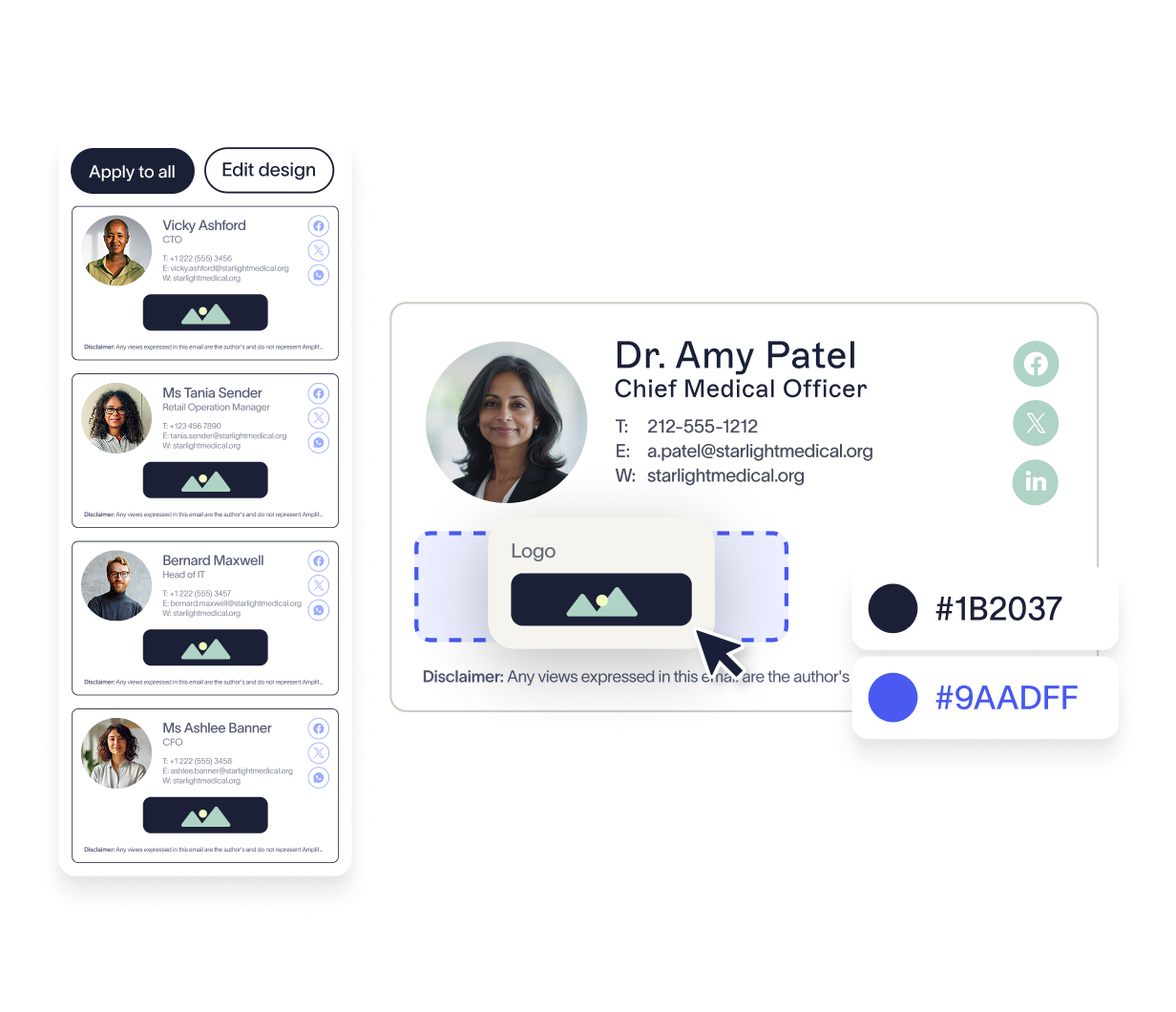
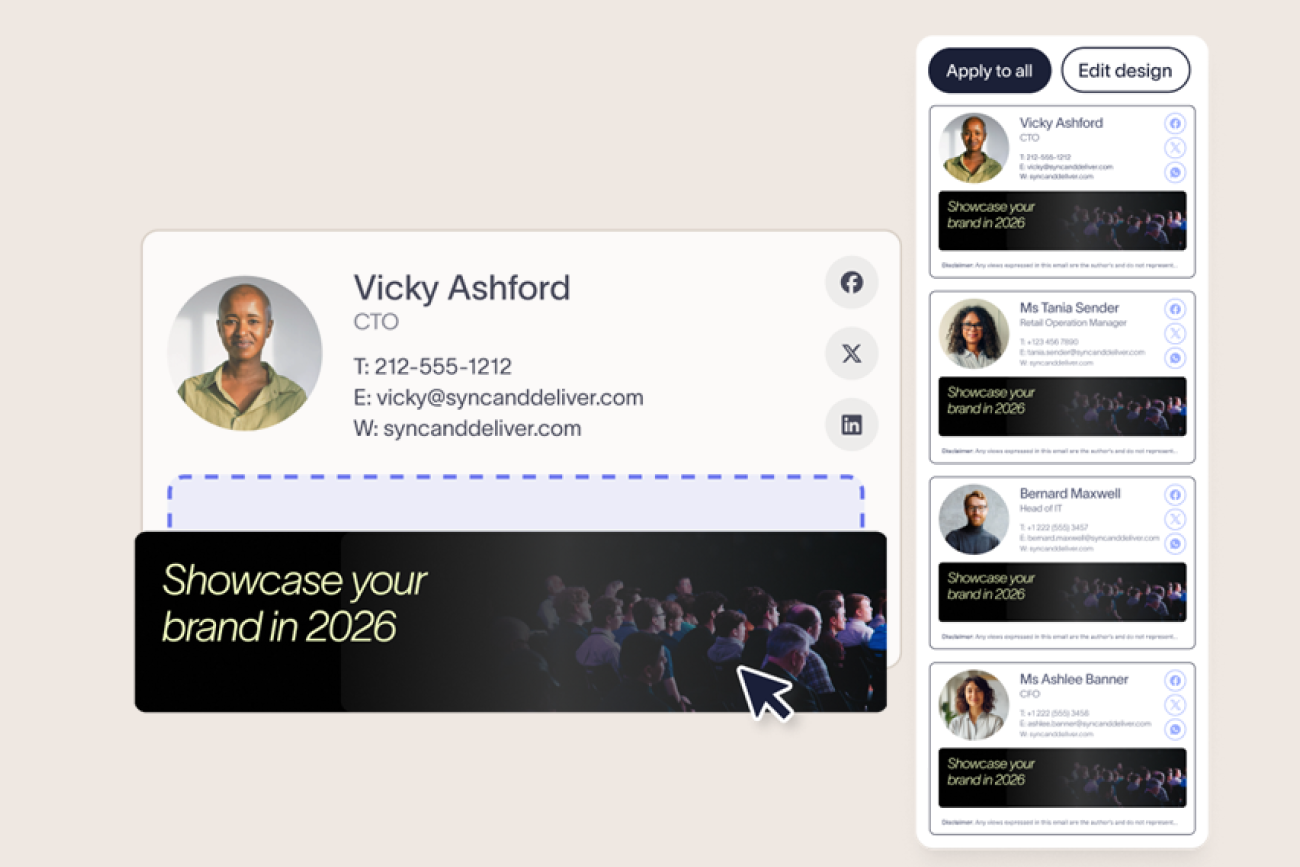
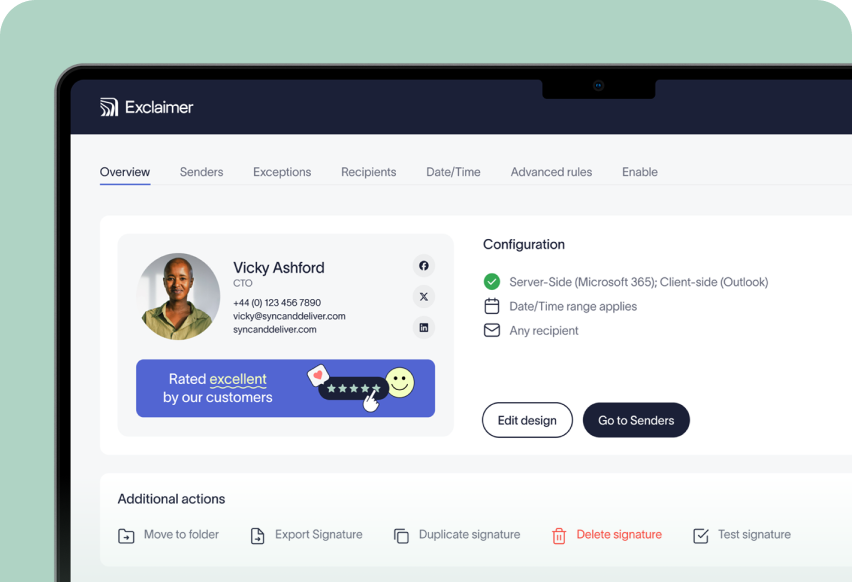
This is the operational problem that Exclaimer is built to solve. Trusted by more than 75,000 organizations worldwide, including Sony, Bank of America, the BBC, and the Academy Awards, Exclaimer gives organizations central control over how they present themselves in everyday business communications. Email signatures and video meeting branding are managed from a single platform, applied automatically across every user and device, with no reliance on individuals to manually apply guidelines.
When brand consistency is built into the infrastructure of how an organization communicates, it doesn't depend on everyone following the rules. It's simply what gets sent.
Watch the full conversation
Jenny and Elisabeth go deeper into the practical steps behind building brand as a growth driver in the full webinar, including how to run an honest brand audit, how to reposition around customer understanding, and how to build the operational structures that keep brand consistent as the organization scales.
Watch the webinar on demand to get the full session, or find out how Exclaimer helps organizations maintain consistent, on-brand communications across every touchpoint.