



U.S. email disclaimers: What organizations need to know
19 November 2025
0 min read
TL;DR
- Email disclaimers aren’t legally required in the United States, but they’re widely used to reduce risk and support internal governance
- U.S. organizations use disclaimers to clarify confidentiality, guide handling of misdirected messages, and protect sensitive information
- Different industries rely on disclaimers in different ways, especially healthcare, finance, legal, and government
- A good U.S. email disclaimer is short, clear, and includes confidentiality wording, guidance for unintended recipients, and links to relevant policies
- Centralized tools like Exclaimer ensure every user gets the correct disclaimer automatically, without relying on manual updates
Email remains a primary communication channel for U.S. organizations, especially when sharing sensitive or regulated information. Because of this, many businesses add an email disclaimer to clarify confidentiality, reduce risk, and set expectations for how the message should be handled.
Unlike some regions, the United States doesn’t have a single law that requires a general email disclaimer. But several federal and state regulations—along with industry-specific governance requirements—make it important to use clear, consistent wording in business email. This helps organizations reduce accidental disclosure, support compliance workflows, and protect sensitive data.
This guide explains how email disclaimers are used across the United States, how they relate to key regulations, and what U.S. organizations should include to stay consistent and reduce legal exposure.
Are email disclaimers legally required in the United States?
In short, no. There is no federal or state law in the United States that requires a general email disclaimer. Businesses aren’t legally obligated to add one to everyday email communication.
Even so, many U.S. organizations use disclaimers as a practical way to:
Reduce the risk of accidental disclosure
Clarify confidentiality
Reinforce how sensitive information should be handled
Support internal policies around data protection
Guide recipients if an email is sent to the wrong person
In regulated industries such as healthcare, financial services, legal, and government—email disclaimers are widely used. They help create consistency in how organizations communicate and provide an additional reminder to treat certain information carefully.
When U.S. organizations use email disclaimers
Even though email disclaimers aren’t legally required in the United States, many organizations use them as part of their communication standards. They provide clarity around how information should be handled and set expectations for both employees and external recipients. In practice, U.S. businesses typically add an email disclaimer when:
1. Sharing sensitive or regulated information
Teams working with financial data, health information, or internal documents often include a short notice to reinforce that the content shouldn’t be shared outside its intended audience.
2. Reducing risk from misdirected emails
Accidental sends are common. A quick instruction for unintended recipients, such as deleting the message, helps demonstrate that the organization takes responsible steps to limit exposure.
3. Clarifying confidentiality or privilege
Legal teams, government bodies, and professional services firms frequently add disclaimers to show that certain emails should be treated as confidential or privileged.
4. Supporting internal governance policies
Large organizations use disclaimers to keep communication consistent across departments. This helps avoid one-off variations that could open the door to ambiguity or misuse.
5. Operating across multiple states with varying privacy expectations
While no U.S. state requires a disclaimer, recipients in privacy-forward states (like California or Colorado) expect clear communication around how personal information is handled.
6. Communicating with customers or the public
Disclaimers can supplement customer-facing messages by pointing recipients to relevant policies. Examples include privacy notices or ways to manage communication preferences.
In short, U.S. organizations rely on disclaimers not because the law demands them, but because they bring clarity, reduce risk, and make communication more consistent.
U.S laws that include the use of email disclaimers
Because there’s no single legal standard in the United States, the content of an email disclaimer depends on the type of information being shared and who is receiving it. Most U.S. organizations focus on clarity, risk reduction, and setting expectations for how the message should be handled. A practical U.S. email disclaimer generally includes some of the following elements:
Federal Information Security Management Act (FISMA)
The Federal Information Security Management Act (FISMA) sets the security standards federal agencies and their partners must follow when handling sensitive government data. Its core focus is risk management, secure data handling, and maintaining strong controls across all information systems. This includes email.
FISMA doesn’t require a specific email disclaimer. But many government agencies use disclaimers as part of their wider information-security policies. These notices help clarify confidentiality, reduce the risk of accidental disclosure, and reinforce that messages may contain regulated or sensitive information.
For teams operating under FISMA, the priority is clear: protect data, document controls, and maintain secure communication practices. Adding a consistent email disclaimer supports these internal policies and helps ensure staff treat email content appropriately.FISMA email disclaimer (example)
Federal Rules of Civil Procedure (FRCP)
The Federal Rules of Civil Procedure (FRCP) outline how electronic information must be managed and produced during civil litigation in the United States. The 2006 amendments brought email and other electronic records directly into scope, making eDiscovery a standard part of legal proceedings.
FRCP doesn’t require an email disclaimer. But what it does require is clarity, consistency, and the ability to retrieve electronic communications when requested. Many organizations use email disclaimers to reinforce that messages may contain privileged or confidential information and should be handled accordingly. This helps reduce the risk of misuse or unapproved distribution—issues that often become relevant in discovery.
For U.S. businesses, FRCP compliance depends on good data management, not just disclaimer text. A clear, consistent email disclaimer can support internal governance, but it doesn’t replace the need for strong retention and eDiscovery processes.FRCP email disclaimer (example)
Freedom of Information Act (FOIA)
The Freedom of Information Act (FOIA) gives the public the right to access federal government records. Because email is a primary communication channel for agencies, messages can become part of the public record if they fall within the scope of a FOIA request.
Many agencies use FOIA email disclaimers to remind recipients that emails may contain sensitive or confidential information, and to encourage proper handling if a message is misdirected. This helps reduce the risk of accidental disclosure before a request is formally reviewed.
For teams handling FOIA-related correspondence, a consistent disclaimer supports good communication hygiene and reinforces that messages may be subject to public disclosure laws. It’s a simple way to reduce confusion and ensure recipients understand the sensitivity of the information they’re receiving.FOIA email disclaimer (example)
Gramm-Leach-Bliley Act (GLBA)
The Gramm-Leach-Bliley Act (GLBA) sets strict requirements for how U.S. financial institutions handle consumer data. Banks, credit unions, insurance companies, and other financial service providers must protect non-public personal information and give customers clear privacy notices.
GLBA does not mandate the use of email disclaimers. However, many organizations include them as part of their broader privacy and communication policies. A well-written disclaimer helps reinforce that emails may contain sensitive financial information and shouldn’t be shared or forwarded without care. It also reminds customers not to include account numbers or other personal data in unsecured email replies.
For U.S. financial institutions, the value of an email disclaimer is straightforward: it supports good data-handling practices and helps reduce the risk of accidental disclosure. It’s a practical addition to a GLBA compliance program, even though it isn’t a legal requirement.GLBA email disclaimer (example)
- Gramm-Leach-Bliley Act guidance from the Bureau of Consumer Protection
- Full Gramm-Leach-Bliley Act Text (PDF)
Health Insurance Portability & Accountability Act (HIPAA)
The Health Insurance Portability and Accountability Act (HIPAA) sets the national standards for protecting patient health information in the United States. Any organization that creates, receives, transmits, or stores protected health information (PHI) must follow strict rules to keep that data secure.
This law strongly recommends that healthcare organizations in the U.S. use email disclaimers to emphasize patient confidentiality in all email communications. While HIPAA email disclaimers are not legally binding, they play an important role in patient communication and demonstrate the organization’s commitment to HIPAA compliance.
Healthcare organizations often include a disclaimer to:
Remind recipients that email is not a fully secure communication channel
Highlight that the message may contain confidential health information
Instruct unintended recipients to report or delete the message
HIPAA email disclaimer (example)
Texas Public Information Act
The Texas Public Information Act gives individuals the right to access public records held by state and local government bodies. Because email is a common communication tool across agencies, many messages can be subject to disclosure if they fall within the scope of a request.
The law doesn’t require the use of email disclaimers. However, Texas agencies often include them to signal that a message may contain sensitive or confidential information, and to guide proper handling if it’s sent to the wrong person. This helps reduce the risk of accidental exposure before a record is formally reviewed.
For teams operating under the Texas Public Information Act, a consistent email disclaimer supports good communication hygiene and reinforces that data must be handled carefully—especially when it relates to individuals, government operations, or protected information.Texas Public Information Act–aware disclaimer (example)
California Consumer Privacy Act (CCPA)
The California Consumer Privacy Act (CCPA) igives California residents more control over how businesses collect, use, and share their personal information. It requires clear explanation of data practices and gives consumers rights such as access, deletion, and the ability to opt out of data sales.
CCPA doesn’t require organizations to include an email disclaimer. Compliance depends on transparent privacy notices, internal controls, and honoring consumer rights. Even so, many U.S. businesses add a short disclaimer to reinforce their privacy practices and remind recipients how their information is handled.
A typical CCPA-aligned email notice might:
Point recipients to the company’s privacy policy
Explain how to manage data preferences
Remind users they can unsubscribe from marketing messages
CCPA email disclaimer (example)
Sarbanes-Oxley (SOX)
The Sarbanes-Oxley Act (SOX) was introduced to improve corporate accountability and protect investors after major financial scandals. It sets strict requirements for how public companies manage financial records, internal controls, and reporting processes.
While SOX doesn’t require email disclaimers, many U.S. organizations use them to reinforce good communication practices—especially when email is used to share financial information or internal updates.
A SOX-aligned email disclaimer typically helps to:
Clarify that the message may contain confidential or company-sensitive information
Indicate that the email is an official communication from the organization
State that the content should not be forwarded or shared without authorization
Remind employees to follow internal policies when handling financial data
SOX email disclaimer (example)
State privacy laws and email communication
Several U.S. states now have their own consumer privacy laws, each designed to give residents more control over their personal information. These laws focus on transparency, data rights, and responsible handling of personal information.
Some examples include:
Virginia Consumer Data Protection Act (VCDPA)
Colorado Privacy Act (CPA)
Connecticut Data Privacy Act (CTDPA)
Utah Consumer Privacy Act (UCPA)
Oregon Consumer Privacy Act (OCPA)
None of these state laws require organizations to include an email disclaimer. Compliance relies on clear privacy notices, proper data governance, and honoring consumer rights. Even so, many businesses add short email notices to reinforce transparency and direct recipients to relevant policies.
How Exclaimer helps U.S. organizations manage email disclaimers
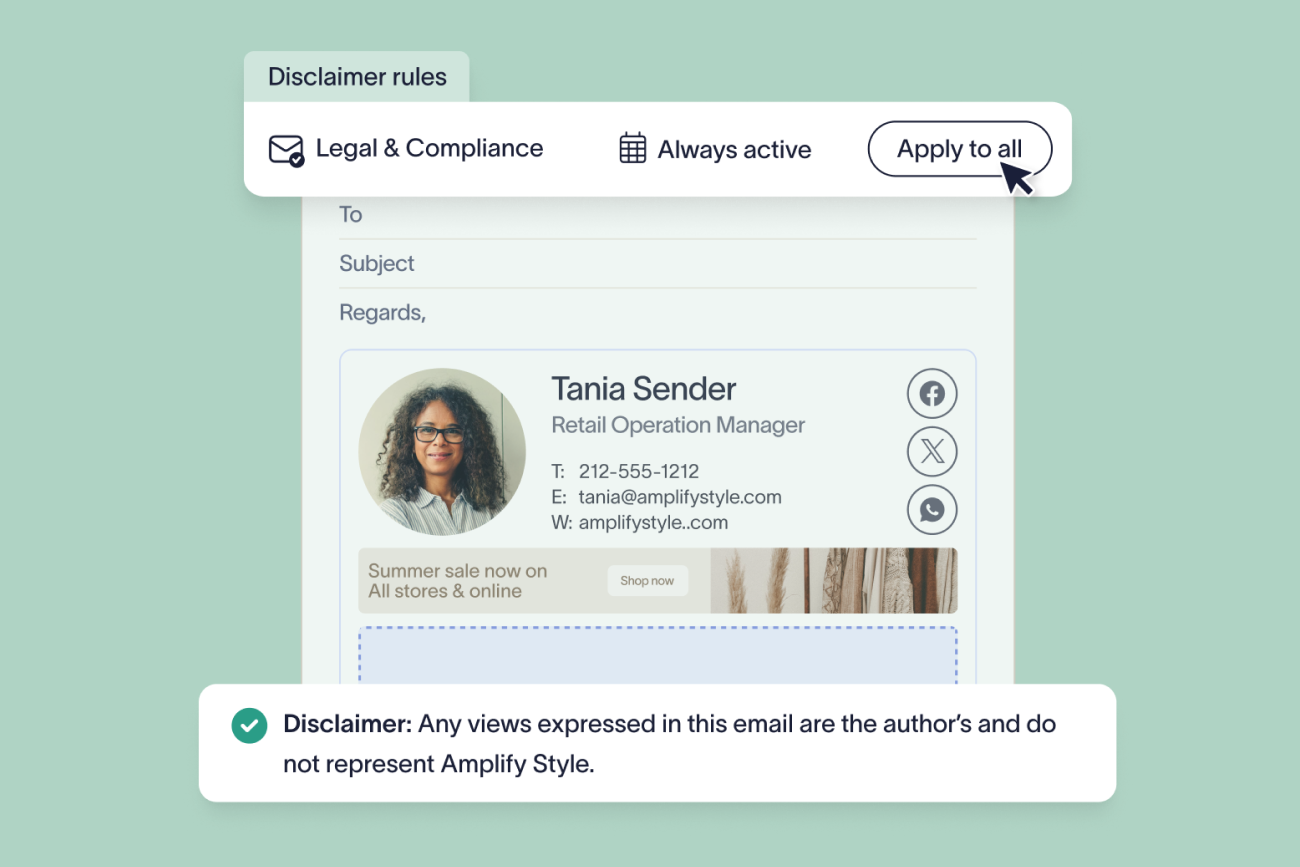
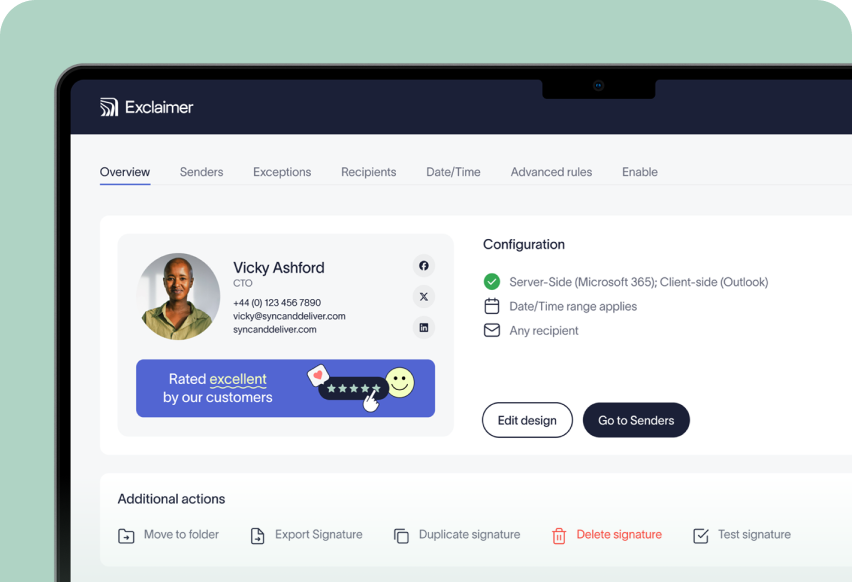
Email disclaimers only work when they’re consistent. Relying on employees to add or maintain them leads to mistakes, outdated text, and uneven formatting across teams. Exclaimer removes that burden by managing disclaimers centrally and applying the right version to every outgoing email—no manual updates required.
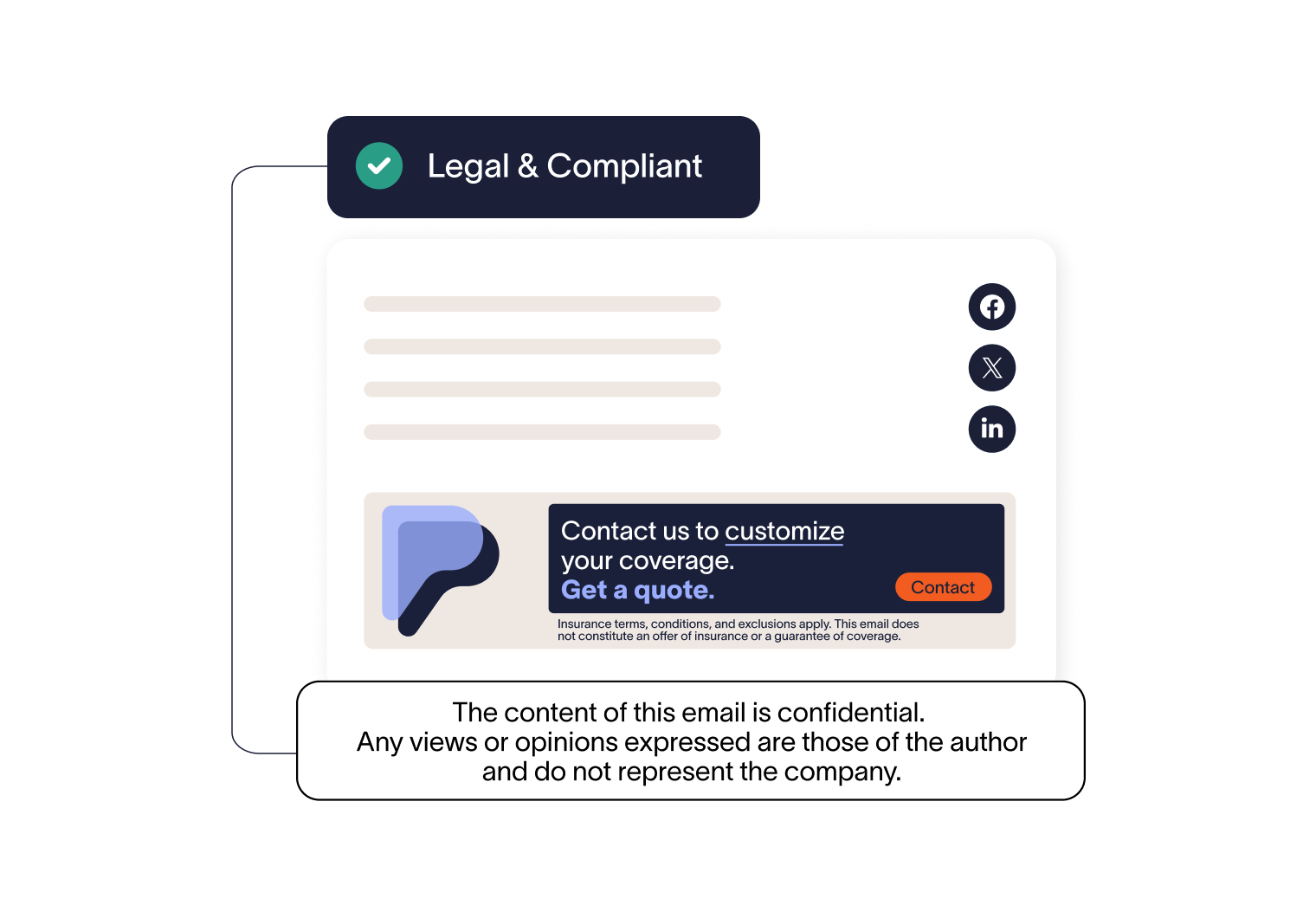 With Exclaimer, you can:
Standardize disclaimers across all users to ensure every email includes the correct wording
Create variations for different teams or regions while keeping full administrative control
Update language instantly when policies change, without relying on staff to make edits
Keep branding and formatting consistent using a single, centrally managed design
Support governance and risk reduction by ensuring the right message is applied every time
Exclaimer doesn’t replace legal or compliance frameworks, but it helps organizations stay consistent, reduce avoidable errors, and maintain a professional communication standard
If you want a simpler way to manage disclaimers across your organization, you can try Exclaimer and see how centralized control makes email governance easier. Start a free trial today.