




Regulators are tightening digital governance—and email signatures are next
2 February 2026
0 min read
Email signatures rarely get much attention from IT. They’re small, familiar, and often treated as a personal detail employees can manage themselves. But in regulated organizations, that assumption no longer holds.
Every email your organization sends is an official business communication. And every signature attached to those messages carries legal, brand, and compliance implications. When signatures are unmanaged, the risk multiplies across users, devices, and departments at scale.
Expectations around digital communications are tightening. Organizations that wait for email signatures to be explicitly regulated may find themselves reacting under pressure rather than preparing on their own terms.
What digital communications governance really means
Digital communications governance is about controlling how an organization communicates externally and internally through official channels. It’s not limited to websites or applications. Email has long been subject to retention rules, discovery obligations, and audit requirements, especially in regulated environments.
Email signatures sit inside that same communication stream. They can include legal disclaimers, required company information, branding, and even promotional content. Yet they’re often excluded from governance conversations because they feel informal or cosmetic.
That gap is where risk takes hold. Signatures may not always be called out by name in regulations, but they are part of regulated communications all the same.
The risks of decentralized email signatures
When email signatures are managed by users or loosely maintained templates, control breaks down quickly. What looks like a minor administrative detail becomes a systemic issue once it scales across devices and departments.
The risks of decentralization tend to show up in a few predictable ways:
Compliance and legal exposure increase quietly
Required disclaimers, company details, and accessibility considerations are easy to overlook when ownership is fragmented. Over time, variations creep in as templates age or users make local changes.
The result is uneven application of legal requirements, with limited visibility for IT into where email compliance gaps exist or how widely they’ve spread.
Accessibility risk spreads without visibility
Accessibility requirements increasingly apply to digital communications, not just public-facing websites. Email signatures often include visual elements such as logos, icons, links, and layout choices that must meet these standards.
Without centralized control, inaccessible elements can be repeated across thousands of messages a day. Issues surface late, often during reviews or after complaints, when remediation is harder and more disruptive.
Brand and trust erode at scale
Inconsistent signatures introduce outdated titles, off-brand designs, and conflicting messages that weaken credibility and business reputation.
In regulated environments, these inconsistencies raise questions about control and reliability, even when the underlying issue is simple to fix.
IT absorbs the work without gaining control
Decentralized signatures create operational drag. Manual updates, repeated user requests, and one-off fixes consume IT resources while offering no lasting control.
The result? IT is forced to spend time reacting to individual issues, and the underlying lack of governance remains unchanged.
Why action is urgent now
Regulations rarely start by naming every artifact they affect. Instead, they define broad principles for organizations to apply across their operations. As enforcement matures, areas that may have been previously overlooked come into scope.
Accessibility rules are a clear example. ADA Title II updates and WCAG 2.1 standards focus on ensuring digital channels, like websites and mobile apps, are accessible. While email signatures aren’t explicitly singled out, they are undeniably part of digital communication. That scrutiny will only increase.
Some governments are already acting. Arkansas Executive Order 25-10 requires standardized, centrally managed email signatures across state agencies. That move removes individual discretion and places ownership squarely with IT and governance teams. It’s a clear signal of where expectations are heading.
Other regulated sectors are moving in similar directions, even if the language differs. Waiting for explicit mandates puts organizations in a reactive position, often under audit timelines or enforcement pressure.
What good email signature governance looks like
Governing email signatures doesn’t demand complex workflows or constant oversight. It simply requires ownership, visibility, and policy-based control.
Good governance starts with centralization. IT needs a single place to manage signatures across the organization, regardless of device or email client.
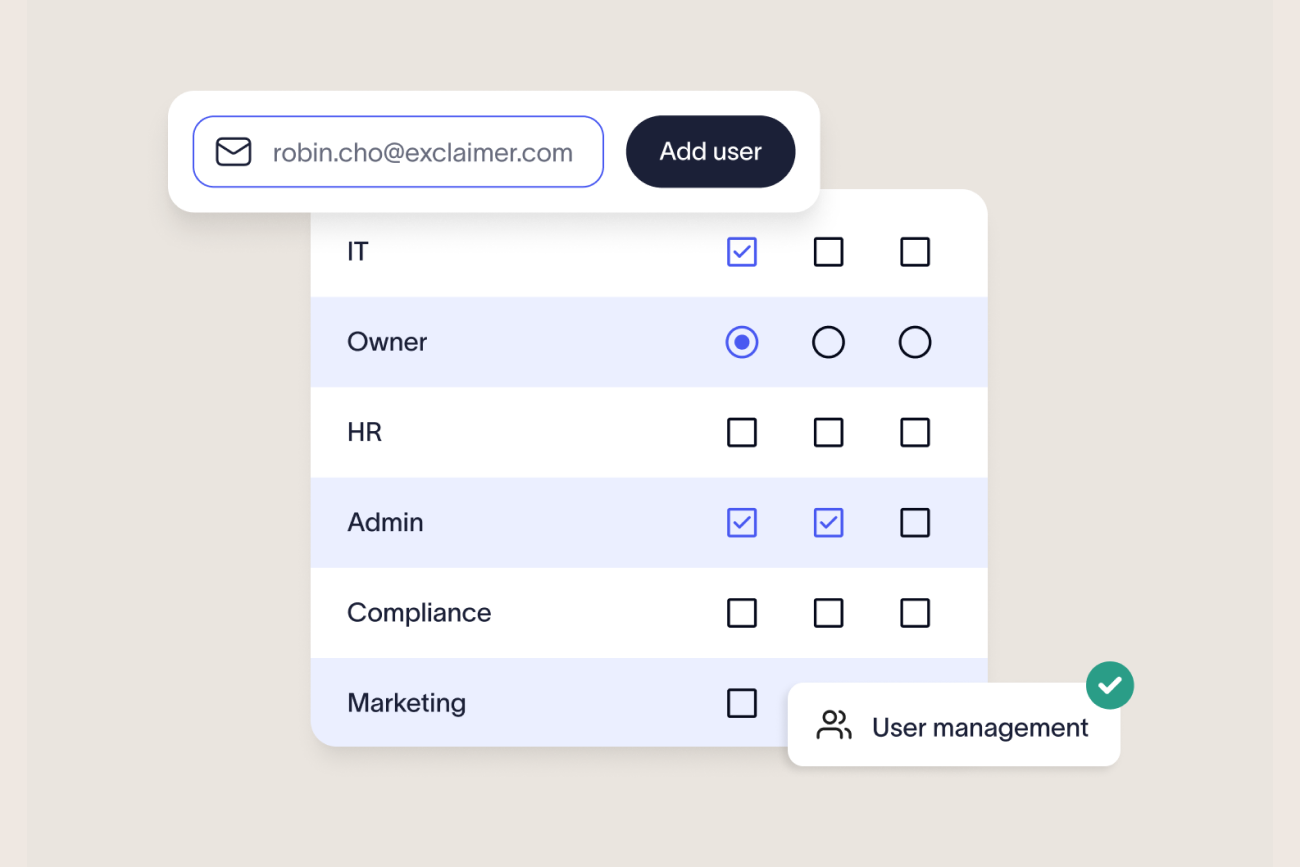
From there, role-based access allows marketing, legal, or HR teams to contribute within defined boundaries, without bypassing governance. Approval workflows, audit logs, and version history provide the accountability regulators expect.
Well-governed signatures also adapt to reality. Different roles, regions, or departments may require different disclaimers or formats. Accessibility standards must be supported by design, not enforced manually after the fact. Policy-based variation allows email signatures to reflect real-world requirements without countless one-off exceptions or manual work.
Most importantly, this level of control removes reliance on end users to “do the right thing.” Policy is enforced automatically, consistently, and at scale.
Take control before requirements tighten
Email signature governance is easier to implement before it’s mandated. Acting early gives IT teams time to establish control, reduce risk, and prepare for future scrutiny without disruption.
For a deeper look into how accessibility and governance requirements are evolving, grab our guide to U.S. accessibility mandates.
If you’re ready to centralize and govern email signatures now, start a free trial of Exclaimer and take control before the rules get stricter.