



Tax season reminds us that email is also a compliance channel
27 March 2026
0 min read
Tax season puts accounting and financial services firms under pressure. Deadlines tighten. Inboxes fill up. And large volumes of sensitive data move between firms, clients, and partners.
At that point, email becomes more than a day-to-day communication tool. It becomes part of your compliance process.
For regulated firms, every client-facing email must be clear, professional, and aligned with internal policy. That includes the little details many teams overlook, such as sender information, legal language, and disclaimers.
When those elements are handled inconsistently, especially during tax season, firms create avoidable risk—right when scrutiny is at its highest.
Why email deserves more attention during tax season
Most firms already invest in secure file sharing, document systems, and access controls. But those controls don’t remove the need to manage email properly.
Email is still where trust is formed—or lost. Clients use it to judge whether a request looks legitimate. Internal teams depend on it to move quickly without making preventable mistakes. Regulators may view it as part of the firm’s communication controls, expecting policy enforcement and auditability.
Centralized control helps apply those standards to every message, without relying on employees to get it right. Signatures and disclaimers may seem like small details, but they play an important role in supporting consistency and compliance, helping firms present a clear, professional front.
Five ways to keep email communications compliant during tax season
With higher email volumes and tighter deadlines, small inconsistencies can quickly turn into bigger issues. Focusing on these five areas helps keep communication clear, controlled, and compliant.
Make every client email easy to identify
During tax season, clients may receive dozens of messages from accountants, advisors, and support staff. If those emails are missing clear sender details, they can look informal or suspicious.
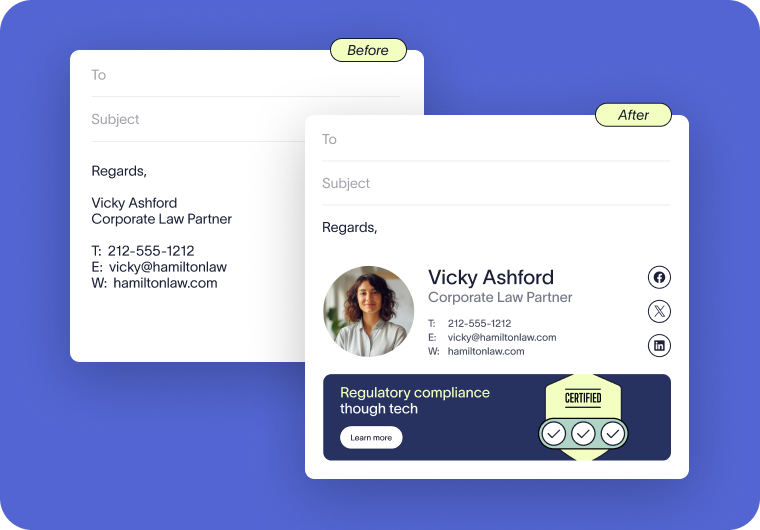
A standardized email signature removes doubt. It gives recipients an immediate way to confirm who the message is from and which firm sent it. Name, title, company, and direct contact details all help. So does consistent branding.
Apply required disclaimers and compliance language automatically
Tax season is not the time to rely on manual processes. Staff are busy, temporary support may be involved, and even small errors can slip through.
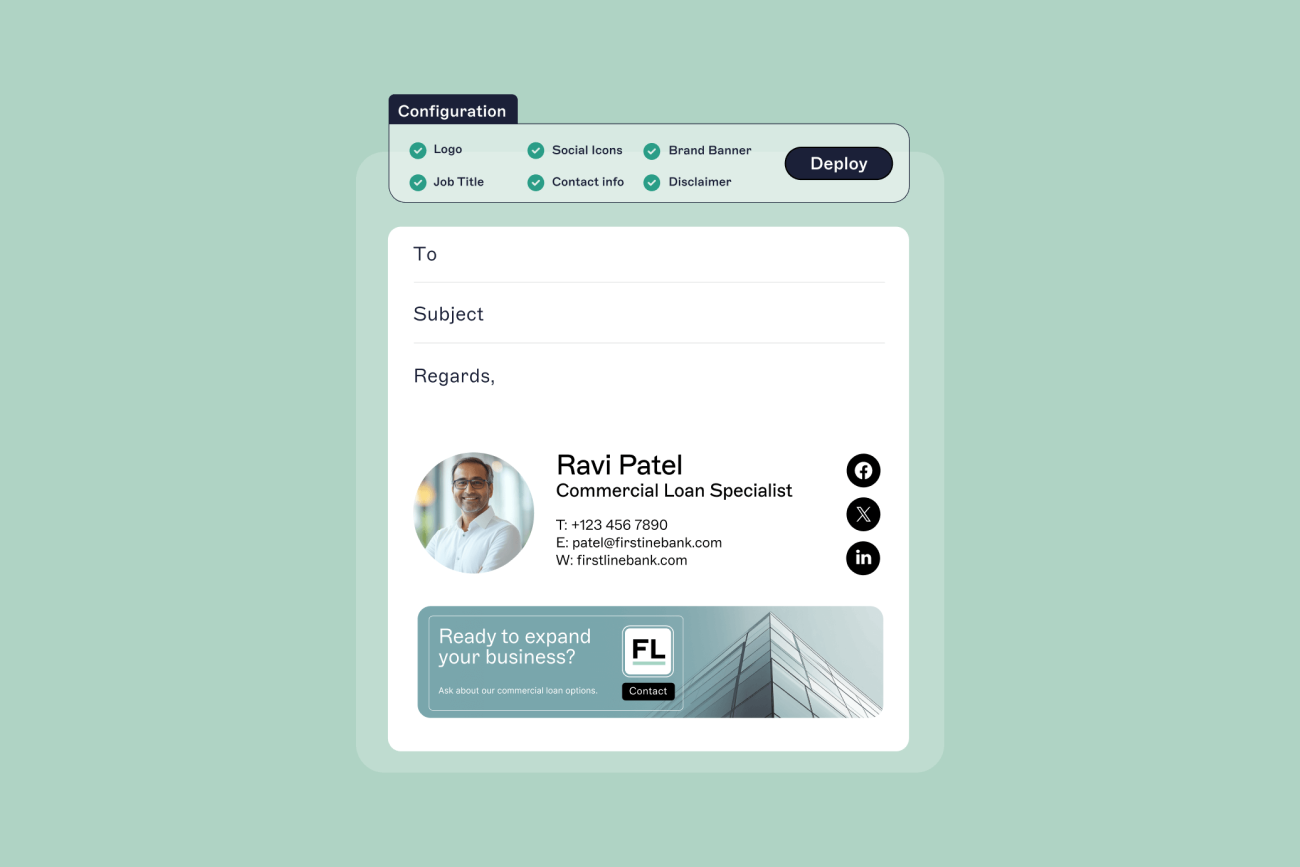
Many accounting and financial services firms need specific language in outbound email. That may include confidentiality notices, licensing information, privacy language, or region-specific legal text. If employees are expected to add that by hand, consistency drops fast.
Automating disclaimers ensures the correct language is applied across users and devices—without relying on individuals to get it right.
Keep communication consistent across the whole firm
Clients expect a consistent, professional experience when communicating with your firm—regardless of which employee they’re speaking with. And when different team members use different colors, fonts, and logos in their email signatures, that expectation is undermined.
Inconsistent signatures create confusion. They can also weaken trust, especially in high-stakes periods where clients are sharing financial records and personal data. Standardization ensures that every email reflects the same trusted identity.
Reduce manual errors when teams are under pressure
Tax season often requires firms to scale their operations to handle increased demand. Staff responsibilities shift. Temporary workers may come in. Contact details have changed.
Managing this one inbox at a time creates unnecessary admin for IT—and leaves too much room for error. A missed update can leave outdated job titles, old phone numbers, or missing compliance text in circulation long after changes should have been made.
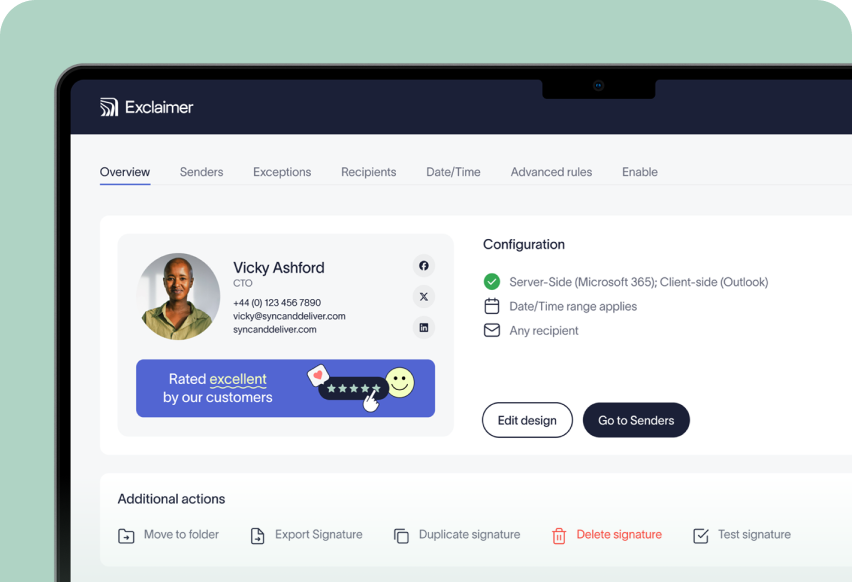
With centralized control of email signatures, this issue disappears. Update once, apply everywhere.
Treat email as a managed communication channel
Tax season makes one thing clear. Email is not just a tool for individuals—it’s a firm-wide communication channel that needs oversight.
Treating email as a managed channel means setting clear standards and applying them centrally. Signatures, disclaimers, and sender details are controlled at an organizational level, not left to individual interpretation. This practice makes it easier to demonstrate compliance when it matters.
Why disclaimers matter more than many firms think
Disclaimers are often treated as boilerplate. In regulated environments, that’s a mistake.
A disclaimer can help clarify confidentiality, data handling expectations, legal ownership, and intended use. It can also help firms meet regional or industry-specific requirements. The challenge is keeping that language current and applying it consistently.
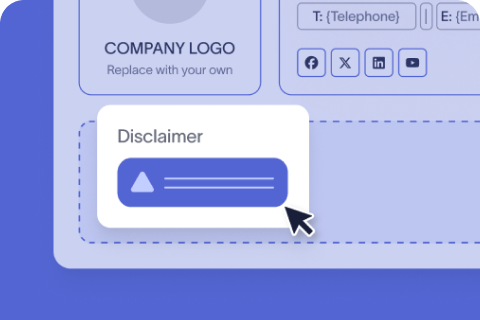
That is why disclaimers should be centrally managed, not copied and pasted into templates or left to end users. If your firm has different offices, service lines, or jurisdictions, rule-based disclaimer control becomes even more important.
Where Exclaimer can help
Exclaimer helps firms bring control to an essential task that is often still handled manually.
With centralized email signature management and disclaimer controls, firms can apply the right signature and legal language across the organization from one place. That means:
Consistent compliance at scale
Professional client-facing communications
Less pressure on IT
Centralize what should be controlled. Automate what needs to be applied. Make sure every outbound message reflects the standards clients and regulators expect. Get a free trial today.