Karl heads up Information Security at Exclaimer, where he’s focused on keeping data secure and ensuring compliance with standards like ISO 27001 and SOC2. With years of hands-on experience, Karl is dedicated to simplifying security processes and staying ahead of potential threats. He’s passionate about using automation and smart practices to strengthen security without adding unnecessary complexity.
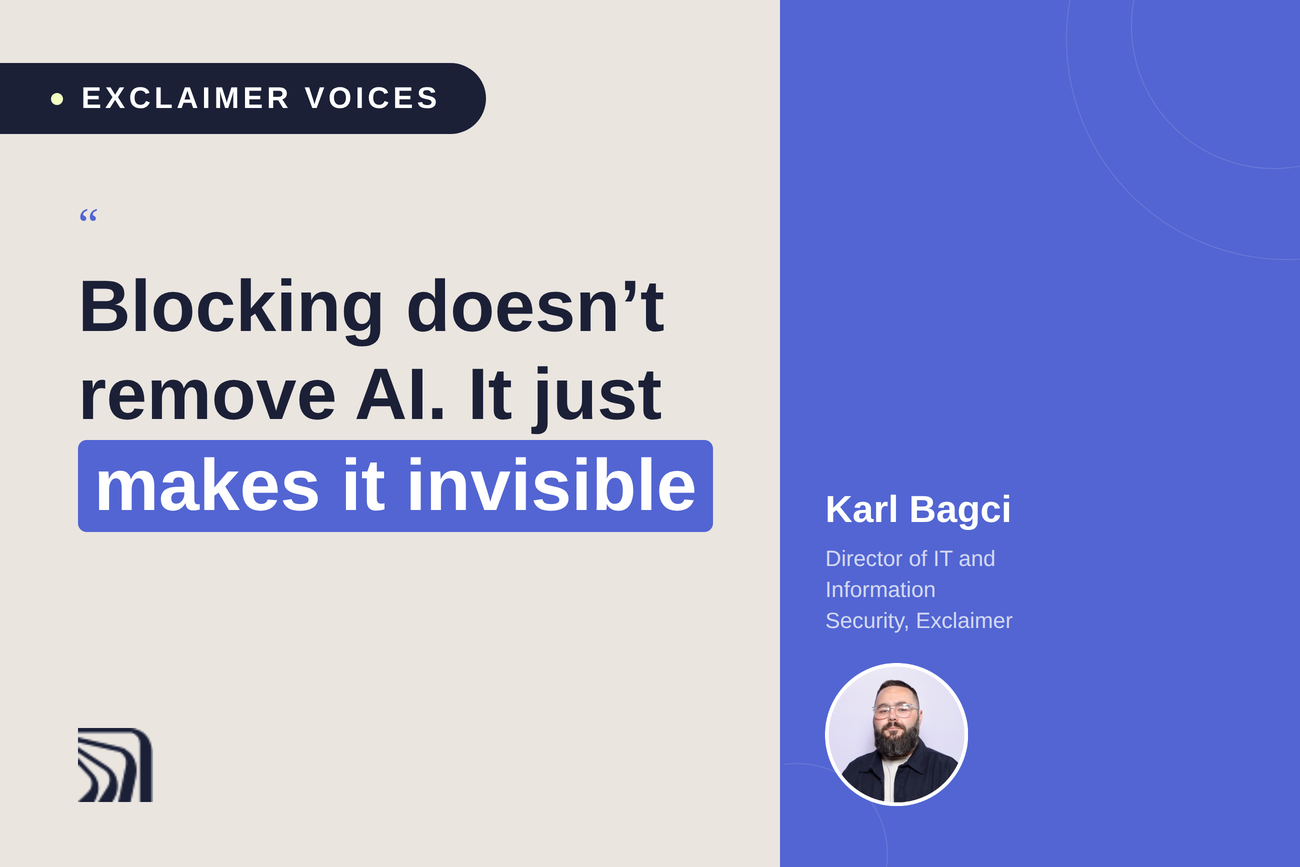
Your governance gap didn't start with AI. AI just made it visible at scale.
Key takeaway
AI hasn't created new governance problems, it's accelerated existing ones past the point where inconsistency stays invisible
43% of IT decision-makers list AI-driven email automation among their top strategic priorities, while governance hasn't caught up
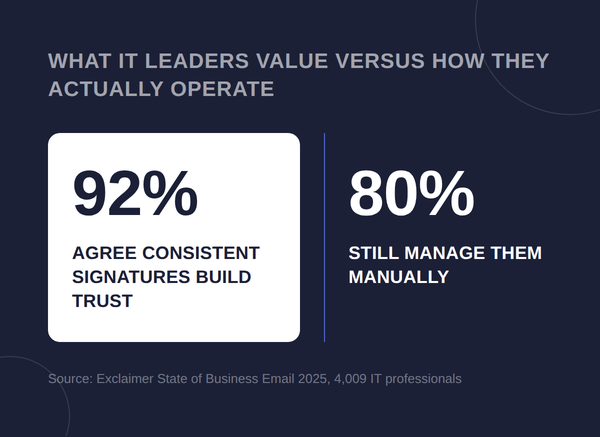
92% of IT leaders agree consistent, well-managed signatures build trust, yet 80% still manage them manually, exactly the gap AI is about to make unmanageable at scale
In regulated industries, a missing disclaimer in one message is a mistake, the same gap in an AI-enabled workflow generating thousands of messages is a different category of exposure
Governance should be automated. Accountability for what that governance requires should not be
The right question before adopting any AI communication tool isn't “how much faster,” it's “what standard does this have to meet, and how is that enforced”
Think of inconsistent communication governance the way you'd think of unsecured technical debt. At low volume and low speed, it's manageable, a disclaimer missed here, a template drifting there, caught eventually, fixed quietly. Nobody notices the interest accruing because the volume is too low for it to compound into anything visible.
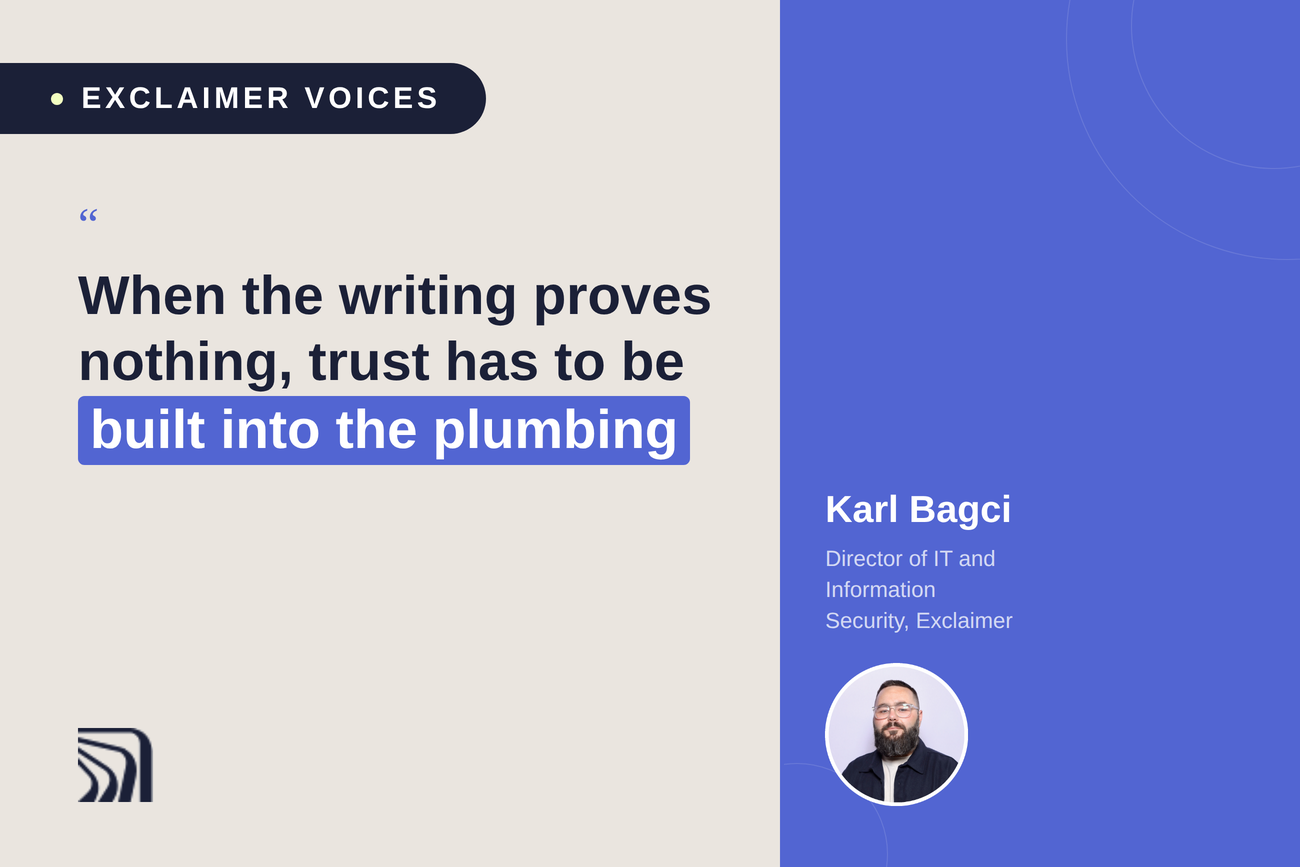
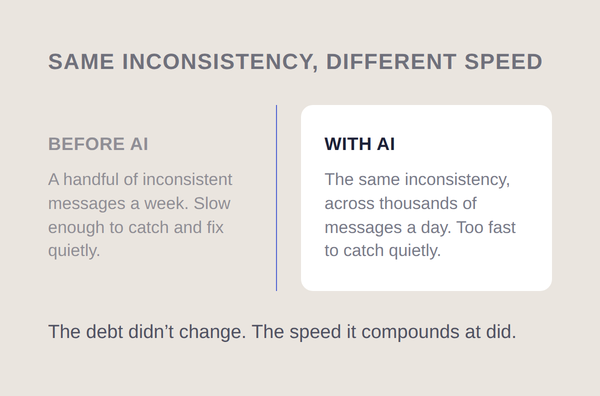
AI removes the thing that kept that debt invisible, which was time. The same inconsistency that used to show up in a handful of messages a week now shows up across thousands of AI-generated messages a day. The debt doesn't change. The speed at which it compounds does.
Why does AI adoption expose governance gaps that already existed?
Because AI doesn't introduce a new kind of inconsistency, it just removes the delay that used to keep existing inconsistency small. Brand standards get interpreted differently by department. Legal disclaimers get applied unevenly. Templates evolve without anyone centrally tracking the drift. None of that is new, and none of it was caused by AI.
What's new is scale and speed. 43% of IT decision-makers now list AI-driven email automation among their top strategic priorities, and that number is only going up.
A governance problem that used to need months to become visible can now show up across an entire organization's outbound communication within days. The organizations most exposed aren't necessarily the ones adopting AI fastest. They're the ones who already had unmanaged inconsistency before AI arrived, and are about to find out what that inconsistency looks like at ten times the volume.
Why does this matter more in regulated industries?
Because in financial services, healthcare, insurance, and legal, communication is part of the compliance record.
A missed disclaimer in one manually-sent email is a correctable mistake. The same gap in an AI-enabled workflow generating hundreds of similar messages an hour is an exposure of an entirely different scale, and it's the kind that shows up in a regulatory review long after the messages have gone out.
The standard that matters here has to attach to the communication, not the person or system that created it. Whether a message is drafted by an employee, assisted by AI, or generated entirely automatically, the disclaimer, the branding, and the retention requirement should be identical, enforced at the infrastructure level rather than depending on whoever or whatever happened to write that particular message.
Does a well-managed signature actually matter here, or is that a smaller problem?
It matters, in a specific and limited way worth being precise about. 92% of IT leaders agree that consistent, well-managed email signatures build trust and professionalism.
Yet 80% still rely on manual updates or leave employees to manage their own. That gap between what organizations value and how they actually operate is a good small-scale preview of the exact governance failure AI is about to make much larger.
A governed signature isn't a security control, and it shouldn't be sold as one. What it does is keep brand, contact details, and disclaimers current and consistent, which makes anomalies easier to notice and gives auditors and compliance teams something stable to check against. That's a real, useful function. It's just not the whole governance answer, and treating it as sufficient on its own is part of how organizations end up exposed.
Where does human judgement still belong in all this?
In setting the standard, not in applying it message by message. AI is well suited to drafting content, accelerating workflows, and handling repetitive communication tasks.
People remain responsible for deciding what the policy actually requires, managing exceptions, and owning the consequences when something goes wrong.
Most organizations focus energy on keeping a human reviewing AI-generated content. Fewer focus on keeping a human accountable for the governance decisions underneath that content, which is actually where the legal and reputational risk sits.
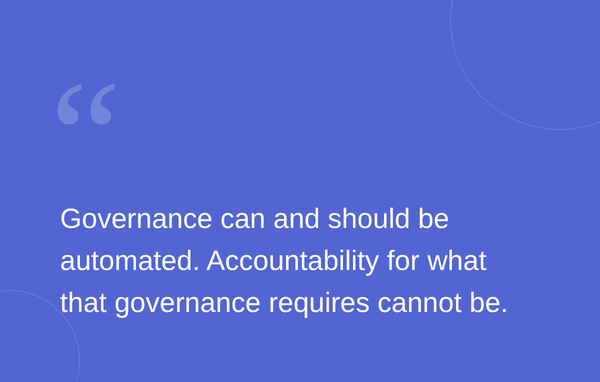
Governance can and should be automated. Accountability for what that governance requires cannot be, the same principle that applies to AI agents being given too much access without anyone deciding it on purpose applies here too: automation should remove delay, not remove the human decision about what the standard is.
What should IT leaders actually do before rolling out AI communication tools?
Ask the governance question before the productivity question. What standard applies to this communication? How is that standard documented and enforced? What audit trail exists once a message leaves the organization?
If those answers aren't clear before AI gets deployed, the deployment just makes the gap grow faster.
Communication controls, disclaimers, branding, retention, and policy enforcement, need to sit in the infrastructure itself, independent of whether a human, an AI assistant, or a fully automated workflow produced the message. Get that right, and AI adoption becomes a genuine productivity gain. Skip it, and AI adoption just finds your existing governance debt faster than anything else could have.