



Gmail read receipts: How they work and when they don’t
2 March 2026
0 min read
TL;DR
Gmail read receipts are available only for Google Workspace accounts, not personal @gmail.com users.
An administrator must enable the feature before users can request a read receipt.
Recipients can decline the request, so confirmation isn't guaranteed.
If your Gmail read receipt isn’t working, it’s usually due to admin settings, external email systems, or recipient choice.
Read receipts confirm an email was opened, not that it was read or acted upon.
For business-critical communication, organizations often rely on structured policies and centralized controls, not open tracking alone.
Gmail read receipts are available only for Google Workspace accounts, not personal Gmail accounts. To request one, your administrator must first enable the feature in the Google Admin console. Even then, recipients can choose to decline the request.
If you’ve ever asked, “Does Gmail have read receipts?” or “Why isn’t my Gmail read receipt working?”, the answer usually comes down to account type and admin settings. This guide explains who can use Gmail read receipts, how to request them, what limitations apply, and where they may fall short for business use.
Before requesting a read receipt, it’s important to confirm whether your Gmail account supports the feature in the first place.
Are Gmail read receipts available for personal accounts?
No. Gmail read receipts aren't available for personal @gmail.com accounts. Only Google Workspace accounts can request read receipts, and only after an administrator enables the feature. Personal Gmail users can't turn on read receipts in settings, and the option will not appear in the compose window.
Here’s the difference:
Personal Gmail: No native read receipt feature.
Google Workspace: Read receipts available, but admin-controlled and recipient approval is required.
Because the setting is controlled at the administrator level, users can't enable Gmail read receipts themselves.
How to request a read receipt in Gmail (Google Workspace)
You can request a read receipt in Gmail only if:
You’re using a Google Workspace account.
Your administrator has enabled read receipts in the Google Admin console.
If both conditions are met, follow these steps:
Step-by-step instructions
Open Gmail.
Click Compose.
Add your recipient and message.
Click the More options menu (three dots) in the compose window.
Select Request read receipt.
Click Send.
When the recipient opens the email, they’ll be asked whether they want to send a read receipt. They can approve or decline the request.
Why the option may not appear
If you don’t see “Request read receipt,” it usually means:
Your admin hasn’t enabled the feature.
You’re using a personal Gmail account.
You’re composing the message from a mobile app where the option isn’t available.
If you’re searching for how to turn on read receipts in Gmail, remember that this is not a user-level setting. Only Google Workspace administrators can enable or disable the feature.
Why Gmail read receipts don’t always work
Even when properly configured, Gmail read receipts don’t function like automatic email tracking.
If you’ve searched for “Gmail read receipt not working,” the issue usually comes down to how the feature is designed. Gmail read receipts are conditional and rely on both system configuration and recipient approval.
Common reasons you may not receive a read receipt include:
The recipient declined the request. When the email is opened, they can choose whether to send confirmation.
Admin restrictions. Your administrator may have disabled read receipts or limited them to internal users.
External email systems. Some organizations block or ignore read receipt prompts.
Mobile limitations. The request option may not appear when composing from certain mobile environments.
Distribution lists or aliases. Read receipts may not function as expected when sending to group addresses.
It’s also important to understand that a read receipt confirms that a message was opened and approved for confirmation. It doesn't confirm that the message was read carefully or acted upon.
Because of these limitations, Gmail read receipts should be viewed as conditional confirmation rather than definitive proof of engagement.
Alternatives to Gmail read receipts
If consistent confirmation is essential to your workflow, Gmail’s built-in feature may not be sufficient.
Because Gmail read receipts rely on recipient approval, some organizations look for more consistent visibility into email activity.
Third-party email tracking tools
Many Gmail extensions use tracking pixels to notify senders when an email is opened. Unlike Gmail’s native feature, these tools do not require recipient approval.
However:
Tracking pixels can be blocked by privacy settings.
Some organizations automatically disable image loading.
Use of tracking software may conflict with internal communication policies or data protection standards.
For regulated industries, visibility must be balanced with privacy expectations and compliance requirements.
CRM-based email tracking
CRM platforms often include built-in email tracking tied to customer records. This can provide broader engagement insights, including opens and link clicks.
This method is typically more structured than browser extensions, but it still depends on technical factors such as image loading and user interaction.
Understanding the limits of open tracking
It’s important to separate three concepts:
Delivery confirmation: The message reached the recipient’s mail server.
Open confirmation: The message was opened.
Acknowledgment or response: The recipient actively replied or confirmed receipt.
Gmail read receipts attempt to confirm opens. They don't guarantee acknowledgment or action.
If communication accountability is critical, organizations often combine technical features with clearly defined communication processes rather than relying on open tracking alone.
When to rely on Gmail read receipts
Gmail read receipts can be useful in controlled Google Workspace environments where administrator oversight is in place.
However, because they depend on both configuration and recipient approval, they are best viewed as a limited confirmation tool.
For business communication where compliance, documentation, or accountability matters, relying solely on open confirmation may not be sufficient.
Understanding the limits of Gmail read receipts in business communication
Gmail read receipts can help confirm that an email was opened in Google Workspace environments. But because they rely on administrator settings and recipient approval, they should be viewed as limited confirmation rather than guaranteed accountability.
For organizations where communication standards, compliance, and professionalism matter, technical features alone aren’t enough. Consistency, oversight, and brand control across every email play an equally important role in maintaining trust.
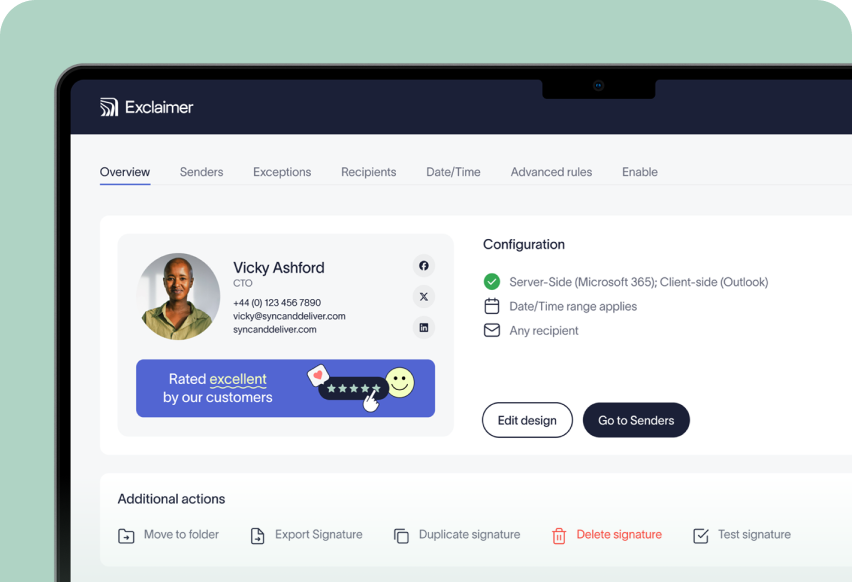
Exclaimer helps organizations standardize Google Workspace email communications at scale. From centralized signature management to consistent branding and policy-aligned messaging, every email becomes a controlled, professional touchpoint.
Explore how Exclaimer supports consistent, compliant email communication with a self-guided product tour to see how it works.