Naimh is a seasoned marketer of 12 years, including in SaaS and tech. She’s an expert at simplifying complex technology concepts, bridging the gap between IT and marketing. Naimh specializes in turning tech speak into actionable insights, helping marketers get the most out of their tools and technology.
How to create an email template in Gmail
TL;DR
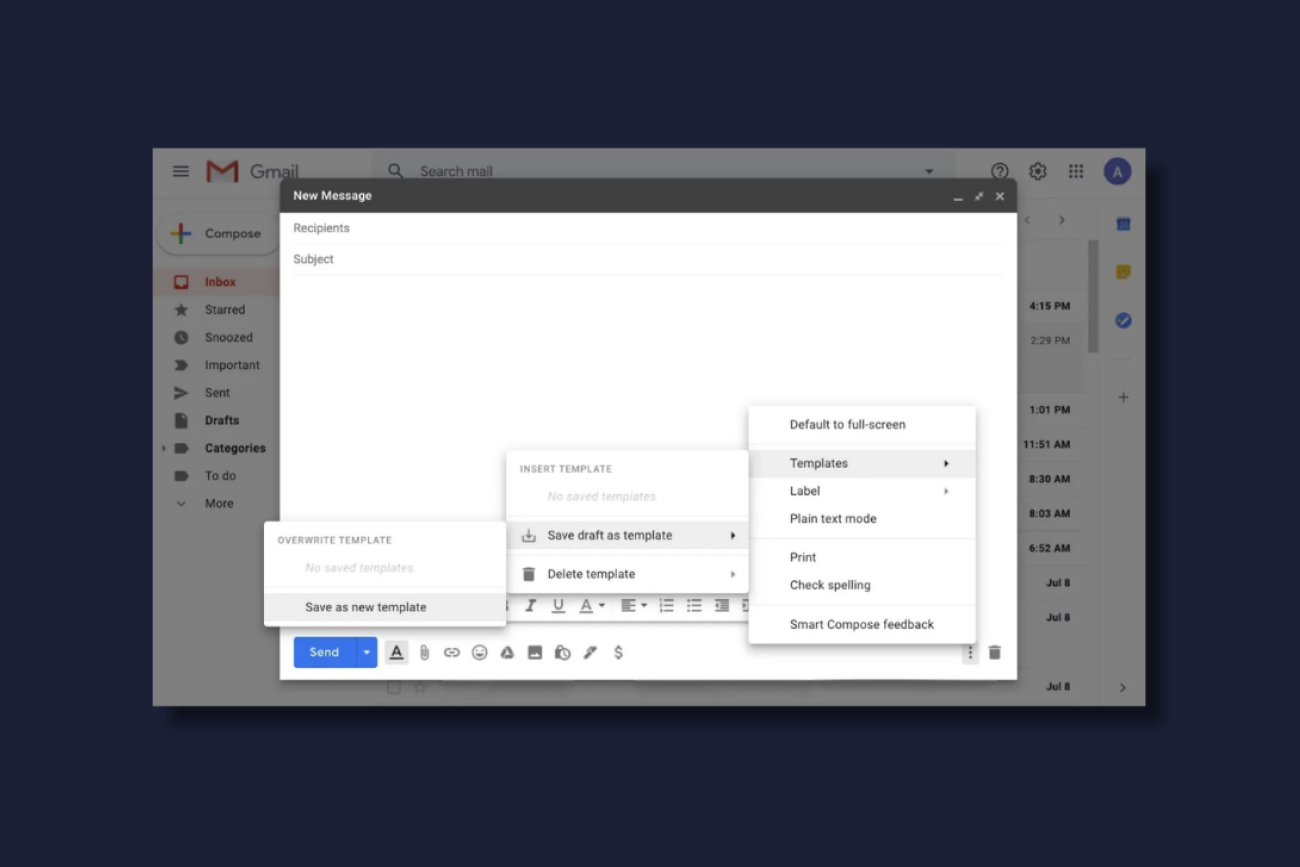
Gmail's built-in Templates feature lets you save and reuse email content. Enable it once in Settings, then Advanced, then save any draft as a template.
Insert a saved template into a new message or a reply in seconds, and edit or delete it from the same three-dot menu.
Templates live at the individual Gmail account level. There's no shared library and no way to see who's using which version.
It works well for one person, but breaks down the moment a team needs the same message applied consistently across everyone who sends it.
Many business emails follow the same pattern. Customer replies, meeting confirmations, and sales follow-ups often contain the same information sent again and again.
A Gmail email template saves a message so you can reuse it whenever you compose a new email. Instead of rewriting the same response, you insert a saved template in seconds.
What is a Gmail email template?
A Gmail email template is a saved message you can reuse when writing emails. Gmail's built-in Templates feature lets users create and store reusable responses that can be inserted directly from the compose window.
Templates help individuals and teams respond faster while keeping communication consistent. Because email remains one of the most widely used channels for business communication, reusable messages can save real time across daily workflows.
In this guide, you'll learn how to:
Enable templates in Gmail
Create an email template
Insert a template into a message
Edit or delete existing templates
Does Gmail have email templates?
Yes. Gmail includes a built-in Templates feature that lets users save and reuse email messages. The feature is available in both personal Gmail and Google Workspace accounts, but it must be enabled in settings before use.
Once enabled, Gmail templates let you:
Save a draft email as a reusable template
Insert a template into a new message
Update or delete saved templates
Reuse standard replies without rewriting them
Gmail templates were previously known as “Canned Responses” in older versions of Gmail.
Gmail templates are commonly used for repetitive emails such as customer support replies, sales outreach, appointment confirmations, and internal updates. They cut down on writing time while keeping responses consistent.
Templates are managed at the individual account level, though, which limits visibility and control across a team.
How to create an email template in Gmail: A step-by-step guide
Creating email templates in Gmail can save you time and streamline your communication. Follow this simple guide to enable, create, and use email templates effectively.
Step 1: Enable templates in Gmail settings
To start using email templates, you first need to enable this feature in your Gmail settings.
Open your Gmail account and click the gear icon in the top-right corner.
Select See all settings from the dropdown menu.
Go to the Advanced tab.
Find the Templates section and click Enable.
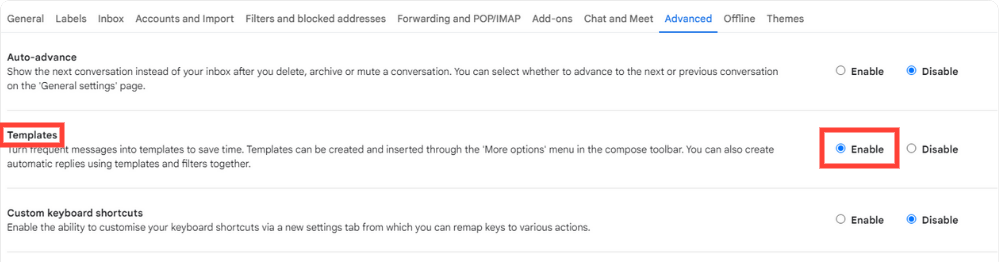
Scroll down and click Save Changes to apply your settings.
Step 2: Create your first Gmail email template
Now that you've enabled templates, it's time to create your first one.
Click Compose to open a new email window.
Write your email content, including any placeholders for personalization such as [Name] or [Date].
Click the three dots in the bottom-right corner of the compose window.
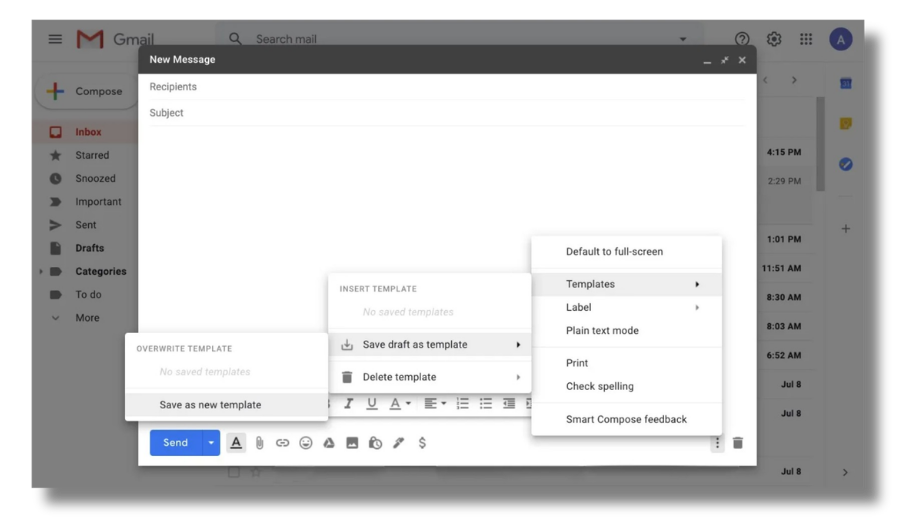
Hover over Templates, select Save draft as template, then choose Save as new template.

Give your template a name and click Save.
Step 3: How to use your Gmail email template
Using a saved template takes a few seconds:
Click Compose to start a new email.
Click the three dots in the bottom-right corner.
Hover over Templates and select the one you want.

Customize any placeholders to fit the recipient.
Send your email.
How to manage and edit Gmail email templates
You'll likely want to modify or delete your Gmail email templates over time. This section covers both.
How to edit an existing Gmail template
Open Gmail and click Compose to start a new email.
Insert the template you want to edit from your saved templates.
Make the changes you need in the email body.
Click Save draft as template, then choose the existing template name to overwrite it.
How to delete a Gmail template
Click Compose to open a new email window.
Click the three dots in the bottom-right corner of the compose window.
Hover over Templates, click Delete template, and select the one you want to remove.
Where Gmail templates hit a ceiling for growing teams
Gmail templates work well for individual productivity. They get harder to manage as a team grows or as more people need the same message to go out the same way.
Exclaimer's VP of Engineering, Phillip Vetter, walked through this as a five-level maturity model in a 2026 webinar:
Fragmented. Relying on individuals to do the right thing. Communication may be fine, but it's inconsistent, and success can't be repeated when someone new joins.
Templates. Bringing in templates so the process and the communication can be replicated across teams as an organization scales.
Monitoring. Watching communication for consistency, learning what works and what doesn't.
Optimizing. Refining templates and presenting one clear, connected brand across the communication stack, which builds trust.
Strategic. Communication as a competitive advantage that makes the organization recognizable and memorable.
"The maturity model has five levels, starting at fragmented, everyone doing their own thing, and moving up to using communication as a strategic tool."

Gmail's native Templates feature gets a team to stage two and stops there. Moving further is a governance job, and the tool was never built to do it.
Templates are controlled by individual users
Each person creates and manages their own templates. Gmail doesn't offer centralized sharing or enforcement, which makes it hard to standardize messaging across departments or roll out an update to everyone at once.
No centralized governance
Nobody can monitor or manage templates across accounts from one place. Required content such as email disclaimers or other regulated wording has to be updated manually by each person every time it changes.
Limited automation
Gmail templates are static. They can't adjust based on department, location, role, or recipient type, which limits how useful they are once an organization has more than one of any of those.
No built-in analytics
Gmail doesn't report on template usage or engagement, so there's no way to measure which templates work or optimize the wording based on real data.
Device limitations
Templates are managed mainly through Gmail's desktop interface, which creates inconsistency when people move between a laptop and a phone through the day.
Common use cases for Gmail email templates
Gmail email templates are built to save time on repetitive messages. They work best where the structure of an email stays consistent, even if small details change.
Below are common ways individuals and teams use email templates in Gmail.
Customer support responses
Support teams often answer the same questions several times a day. Templates let them:
Give consistent answers
Cut response time
Skip rewriting standard instructions
Placeholders such as "Hi [Customer Name]" can be added and personalized before sending.
Sales outreach and follow-ups
Sales teams use Gmail templates to keep outreach moving. Templates can cover:
- Introduction emails
Follow-up messages
Meeting confirmations
Resource links
This keeps the core message consistent while still leaving room to personalize.
Appointment confirmations and scheduling
Teams often send confirmation emails that include:
Meeting details
- Calendar links
Next steps
A reusable Gmail email template keeps these messages structured and professional.
Internal communication
HR, operations, and management teams often send:
Policy updates
Onboarding instructions
Event announcements
Templates help standardize this kind of communication across departments, up to the limits described above.
Project updates
Project managers often send recurring updates that follow a set format. Templates let them reuse the structure while adjusting timelines or milestones.
Tips and tricks for setting up Gmail templates
1. Customize placeholders for personalization
Add custom placeholders alongside standard ones like [Name] and [Date]. This adds a personal touch and makes the email feel like it was written for that specific person.
2. Personalize your emails
Templates save time, but personalize where it counts. A generic message can come across as impersonal, and a little extra personalization can improve engagement.
3. Organize your templates
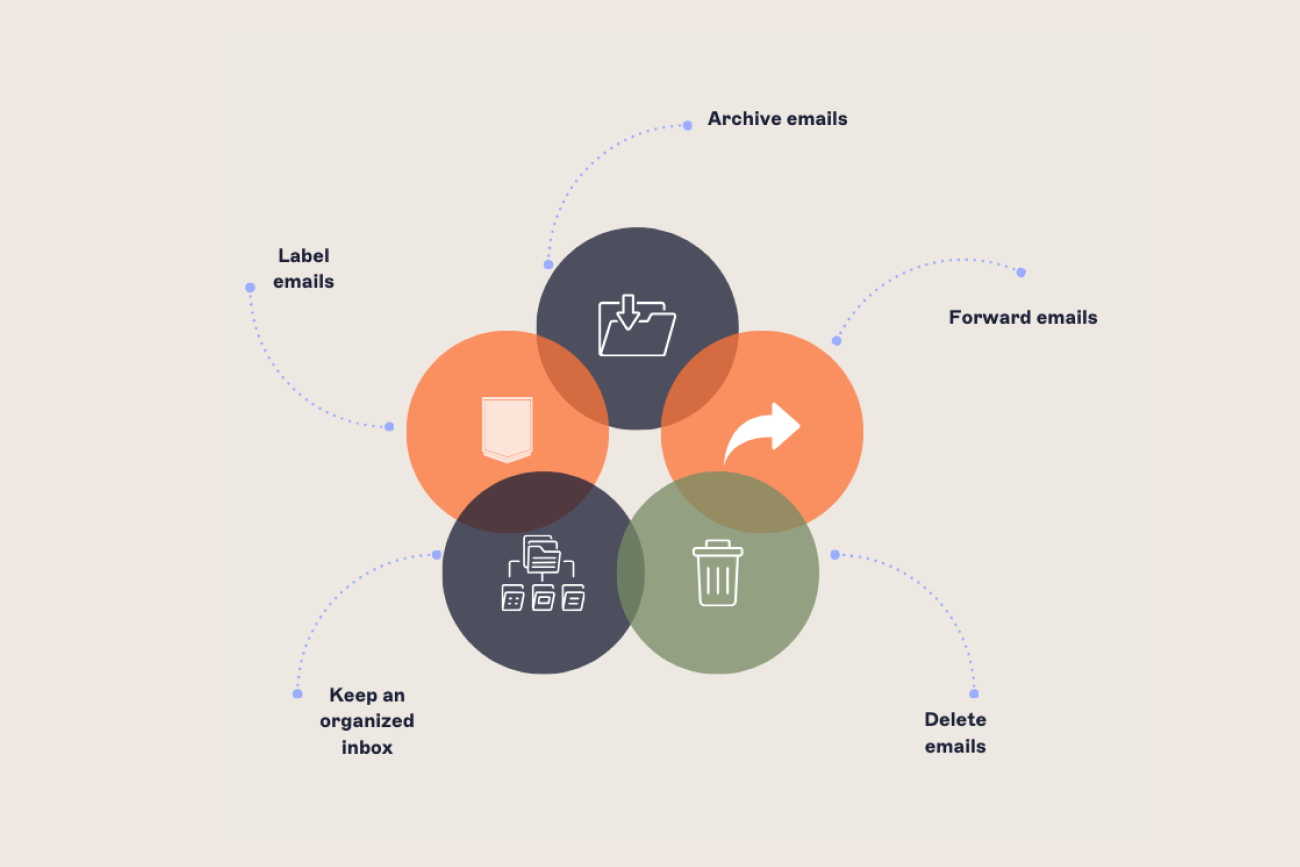
Use clear, specific names for each template so their purpose is obvious, and consider grouping them with labels or folders for quick access.
4. Regularly update your templates
Review your templates on a schedule so the wording stays current and accurate.
5. Automate responses with filters
Set up filters in Gmail so a matching email automatically triggers the right template response.
6. Add an email signature to your Gmail templates
If you already have an email signature set up in Gmail, it appears automatically in your templates. To customize it further, click More options (the three dots) and select Edit as new.
The governance layer Gmail templates don't cover
Templates get a team to stage two of the maturity model above. Stages three and beyond need something that applies consistently no matter which template or device sent the message, and Gmail templates weren't built to provide that.
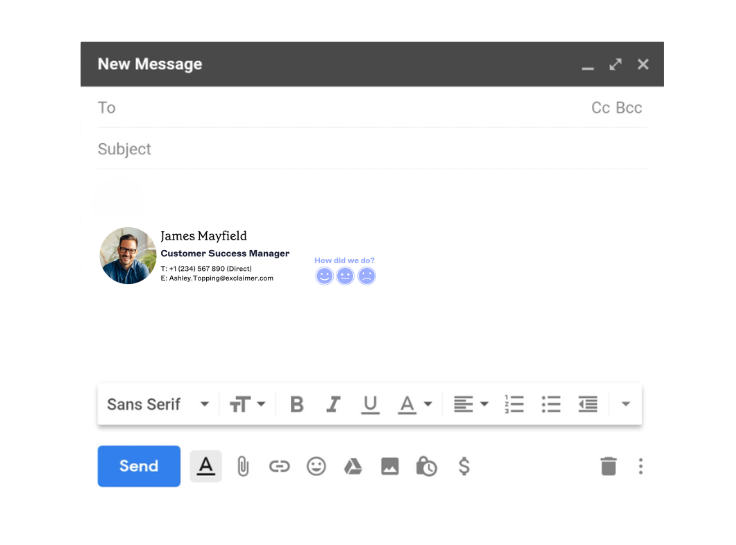
Email signature governance is that layer, which is why Exclaimer has helped thousands of companies manage email signatures since 2001.
Today, Exclaimer's Google Workspace solution applies the approved email signature automatically to every message sent, whether it started from a Gmail template, a blank compose window, or a reply.
That means the right disclaimer and the right branding go out on every message a team sends. Nobody has to remember, and nobody has to overwrite a saved template by hand when something changes.
Get yourself a fully-featured free trial or sign up for an online demonstration to see how it works.