Elisabeth leads Exclaimer’s global brand narrative, thought leadership, and research-led storytelling. With over 15 years’ experience in PR and B2B technology marketing, she is known for turning complex ideas into clear, compelling communications that resonate with global audiences.
UK vs U.S. email communication preferences: Why Brits choose email over phone
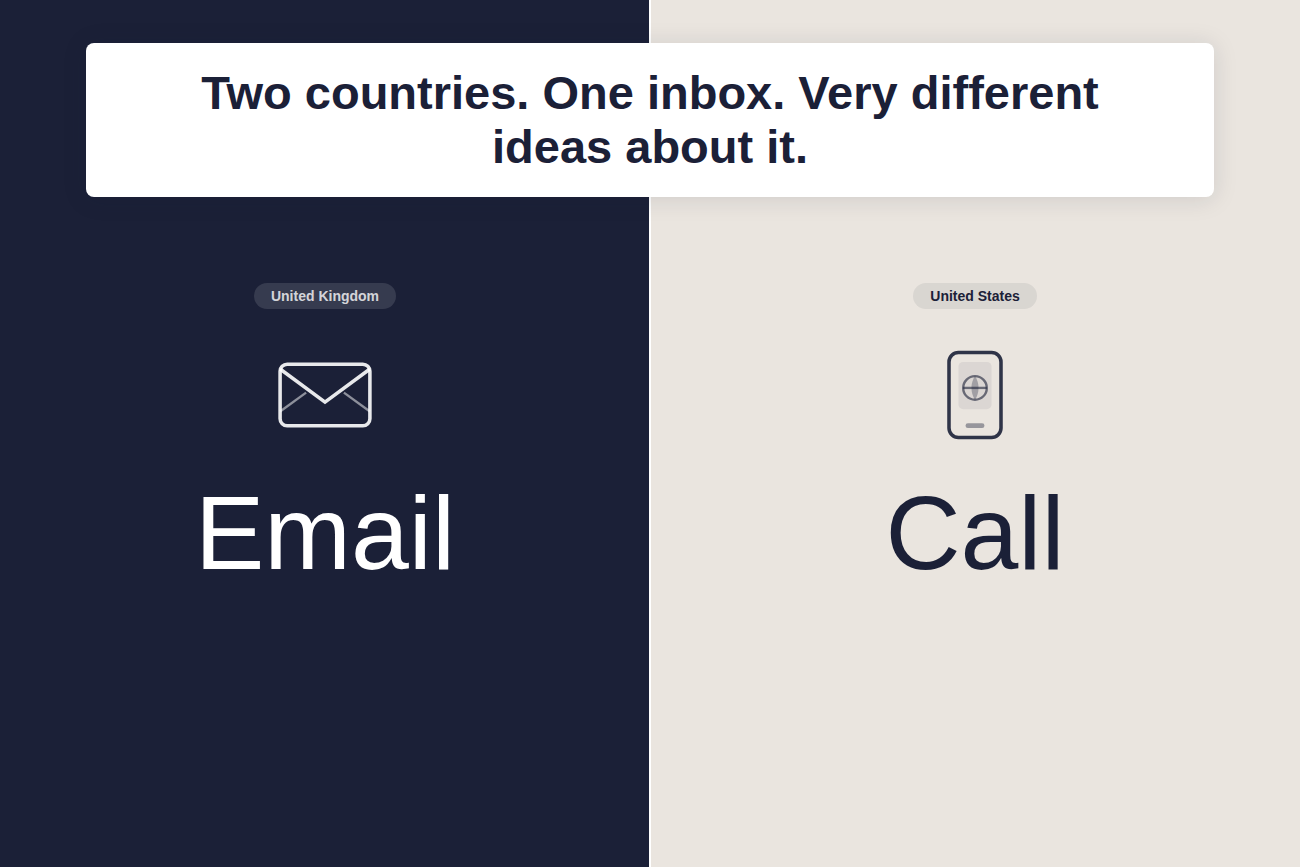
Quick answer: British people use email roughly twice as often as Americans across every formal communication scenario. Complaints, record-keeping, job applications, and employer updates.
Exclaimer's When It Matters research, which surveyed 2,000 adults across the UK and U.S., found that in the UK, email carries institutional weight it simply doesn't have in the same way on the other side of the Atlantic. For organizations managing email across both markets, that difference has direct implications for how professional and consistent those emails need to be.
How do UK and U.S. email preferences compare?
Exclaimer surveyed 2,000 adults, 1,000 in the UK and 1,000 in the U.S., on how they communicate, when they do it, and which platforms they trust. Same questions. Same methodology. Dramatically different answers.
Across every formal communication scenario tested, UK respondents chose email at roughly twice the rate of their U.S. counterparts: .
Situation | UK | U.S. |
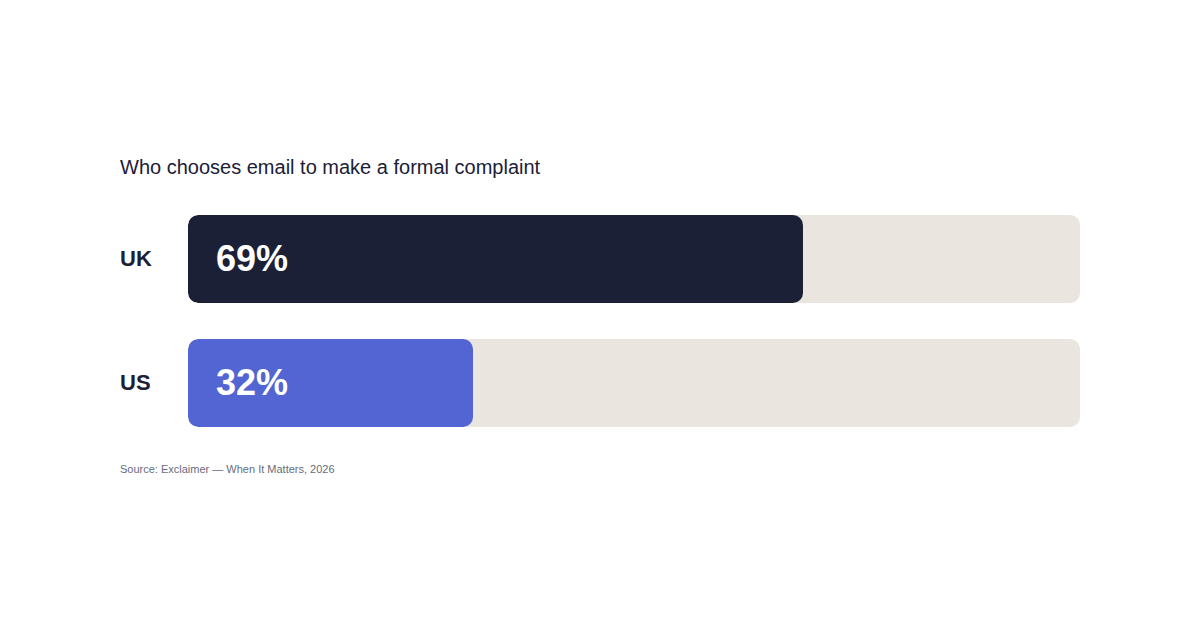
Lodging a formal complaint | 69% | 32% |
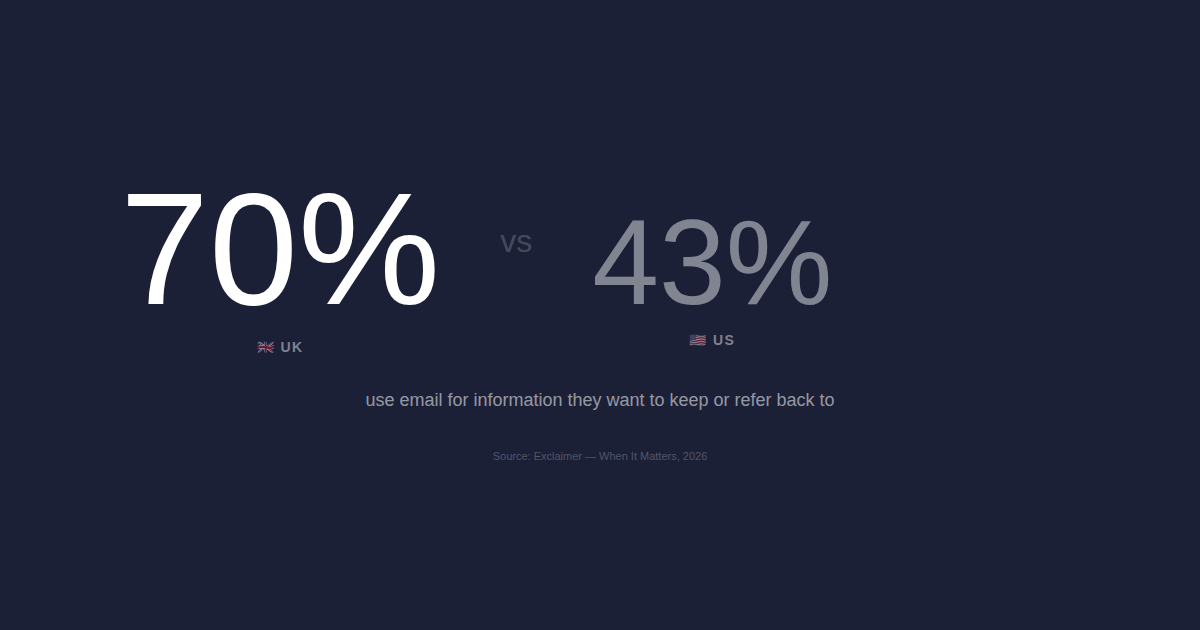
Information to refer back to | 70% | 43% |
Employer HR or policy update | 58% | 35% |
Job application | 44% | 21% |
The gap is consistent. It holds across formal, semi-formal, and consequential communication scenarios alike.
Why do British people prefer email for formal communications?
The size of the gap matters less than where the gap is widest. Formal complaints and record-keeping aren't casual communication choices. Choosing to email a complaint means you want a paper trail. Something you can quote, forward, and escalate. You want evidence.
That instinct is stronger in the UK. In Britain, email carries a kind of institutional weight that it doesn't carry in the same way in the U.S. It's a record, not just a message.
This has real implications beyond consumer behavior. If your employees, customers, and prospects in the UK are using email as a formal record, the email itself becomes part of the documentation. The email signature at the bottom of that message carries the same weight. An inconsistent or missing signature on a formal communication creates a gap in the professional record and for UK recipients, that gap is more likely to be noticed.
Does channel affect trust?
Yes. Especially the UK.
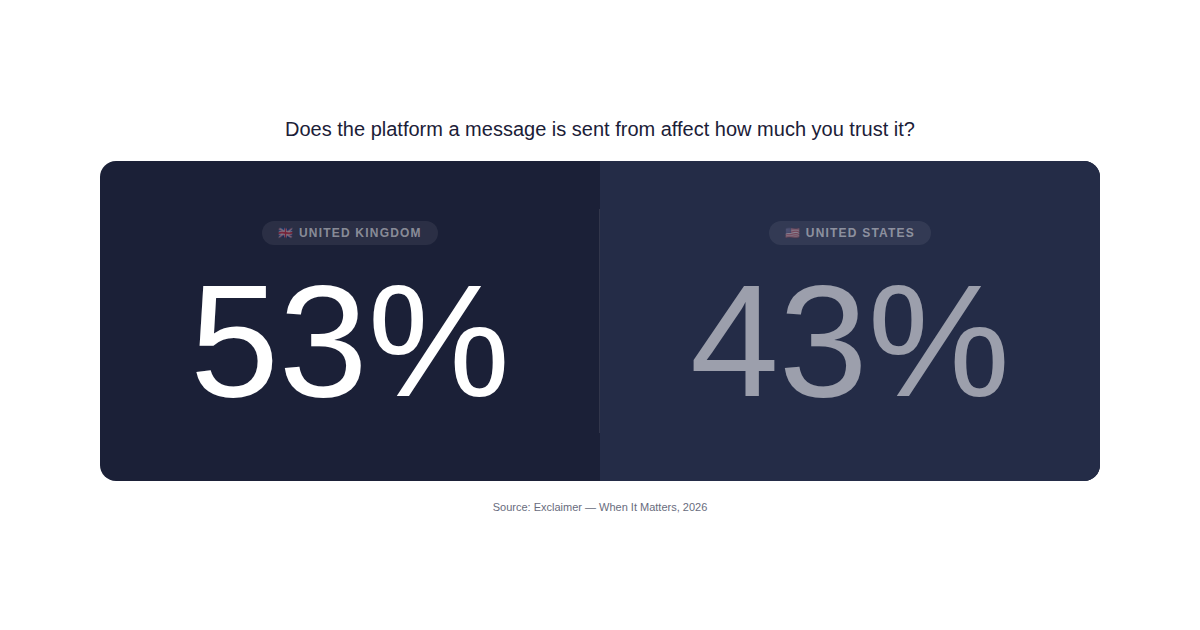
53% of UK respondents said the platform a message was sent from affected how much they trusted it. In the U.S., 43% said the same. The gap is even wider on professionalism: 54% of UK respondents said the channel affects how professional a message feels, compared to 39% in the U.S.
Those impressions are shaped by specific, visible signals. When asked what makes a business email trustworthy, 23% of respondents globally cited a professional, branded email signature, rising to 29% among Gen Z and Millennials. For the generations most likely to be evaluating business emails on behalf of their companies, a consistent signature isn't incidental. It's part of how they decide whether to take the message seriously.
For IT and communications teams managing email at scale, that means signature consistency matters more in the UK than it does in the U.S. Inconsistency that might go unnoticed in an American inbox is more likely to register as a credibility problem in a British one.
Exclaimer's Signature Rules let IT teams centrally control and enforce signature templates across the organization, so every email, from a formal complaint response to a routine update, presents the same professional, consistent identity.
How do UK and U.S. attitudes to AI in communications differ?
The two markets diverge here as well.
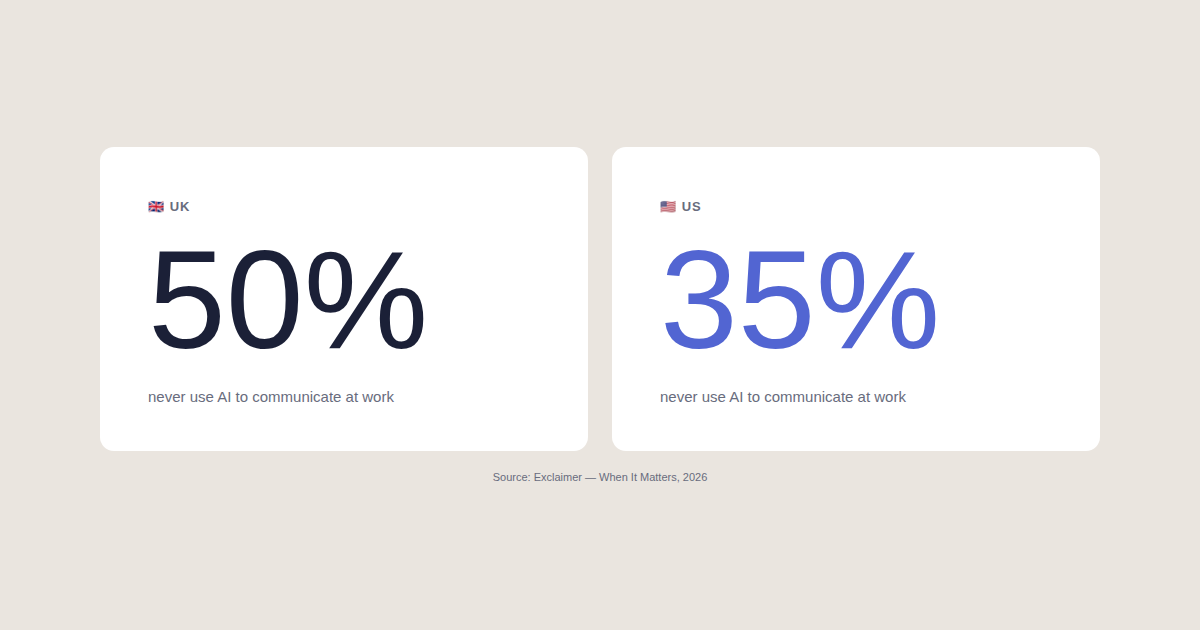
50% of UK respondents said they never use AI to help them communicate. In the U.S., that figure drops to 35%.
U.S. audiences are more open to AI-assisted communication. For organizations operating across both markets, that gap has implications for AI governance in communications: the audience receiving your emails may or may not know AI helped write them, but they do form impressions based on how those emails read and how they look. A polished, on-brand signature anchors AI-generated content in a professional frame. Particularly important for the UK audience, which is more skeptical of AI involvement.
What does this mean for organizations operating across both markets?
The instinct to standardize everything to a single approach is understandable. This research suggests it's worth questioning.
Key differences between UK and U.S. email behavior, based on Exclaimer's research:
Email as formal record: UK audiences use email to create records, make formal requests, and document communication. U.S. audiences are more likely to call, text, or use an alternative channel for the same task.
Platform as trust signal: UK recipients are more likely to judge credibility by how a message is presented, including the email signature.
AI adoption: U.S. communicators are more comfortable using AI to help write messages; UK communicators are more likely to rely on traditional methods.
A single approach to email governance doesn't serve both audiences equally. The bar for professional, consistent, and trustworthy email is higher in the UK, at least according to the people receiving it.
For organizations managing email communications across the UK and U.S., Exclaimer provides centralized control over every employee's email signature, applied automatically regardless of device or location. Read the full When It Matters report or explore the UK data and U.S. data in detail.
This post is part of a series drawing on Exclaimer's When It Matters: How People Really Communicate research. A survey of 2,000 adults across the UK and the U.S.