Elisabeth leads Exclaimer’s global brand narrative, thought leadership, and research-led storytelling. With over 15 years’ experience in PR and B2B technology marketing, she is known for turning complex ideas into clear, compelling communications that resonate with global audiences.
Email is where people put the messages that matter
Ask someone how they communicate and they'll probably say WhatsApp, Slack, or just their phone. They won't say email. But watch what they actually do when something important comes up, and email appears almost every time.
We surveyed 2,000 adults across the UK and US in our latest research When it matters: How people really communicate, asking them a simple question: for 11 real-life situations, which communications platform do they prefer to use?
The results tell a story most respondents probably couldn't have put into words. But once you see the data, it's hard to argue with.
People instinctively have different places for different messages
Casual, fleeting moments like running late, sharing a joke, or passing on exciting news are usually communicated in the fastest and most familiar way. Phone calls lead for running late (34%). WhatsApp dominates for sharing updates in the UK (36%). Text messages win for anything quick and informal in the U.S.
But when the stakes are raised, email comes into play. Not gradually. Decisively.
56% of adults choose email when they need to send or receive important information they might need to refer back to later. That's more than double the second-place platform (text message, at 12%).
For making a formal complaint to a company, 51% choose email globally, rising to 69% in the UK. For receiving an important update from an employer, 47% choose email. For applying for a job, it’s 32%, more than any other single platform.
Situation | Top platform | Email share |
Running late | Phone call 34% | 5% |
Sharing a joke or update | WhatsApp/ text 37% | 7% |
Exciting personal news | In person 28% | 7% |
Job application | 32% | |
Employer HR update | 47% | |
Formal complaint | 51% | |
Info to keep or refer back to | 56% |
Why email holds its ground
It's easy to read this as professional inertia, people using email for work because that's what they've always done. But the data doesn't support that. Email holds its position wherever people feel they might need to prove something, reference something, or come back to something later.
Email leads in healthcare information, contract negotiations, financial decisions, and personal situations.
What the data shows is something more fundamental: people understand, consciously or not, that email is where things last. WhatsApp and text aren't replacing email for the things that matter. They're handling everything email was never really for.
The generational picture is more nuanced than you'd expect
This isn't a story about older generations clinging to email while younger ones abandon it. The pattern holds across age groups, with some notable variations.
Gen Z is actually more likely than Baby Boomers to choose email for job applications: 36% versus 23%. For formal complaints, 42% of Gen Z reach for email, which is only nine points behind Millennials (51%). The generational divide is real, but it's about the degree of email preference, not whether it exists.
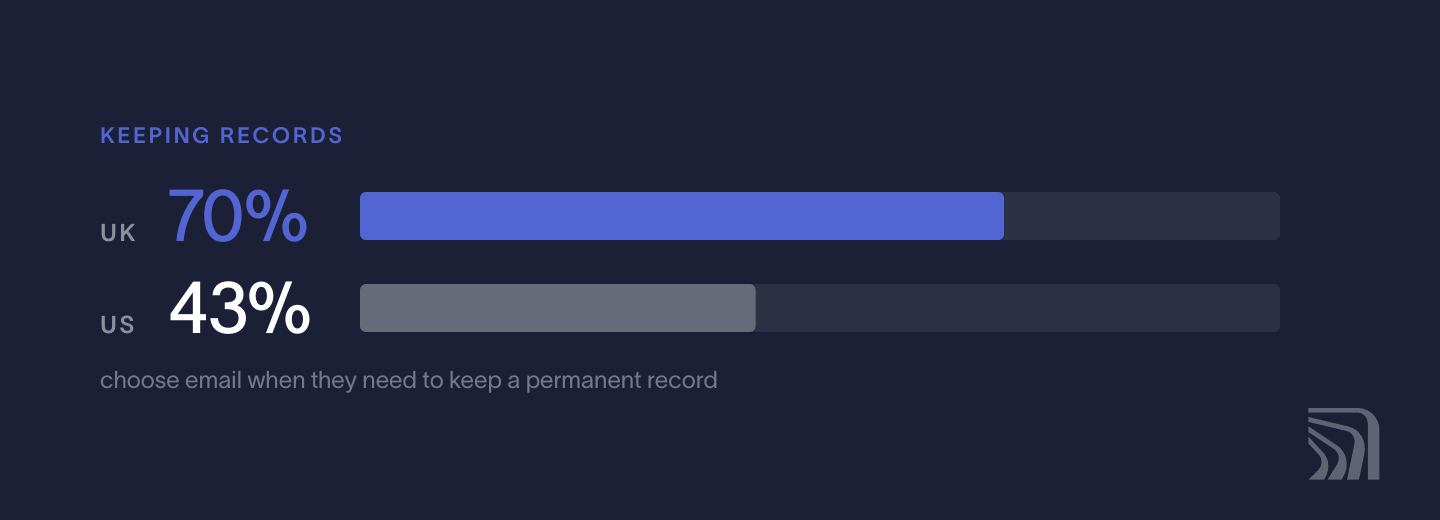
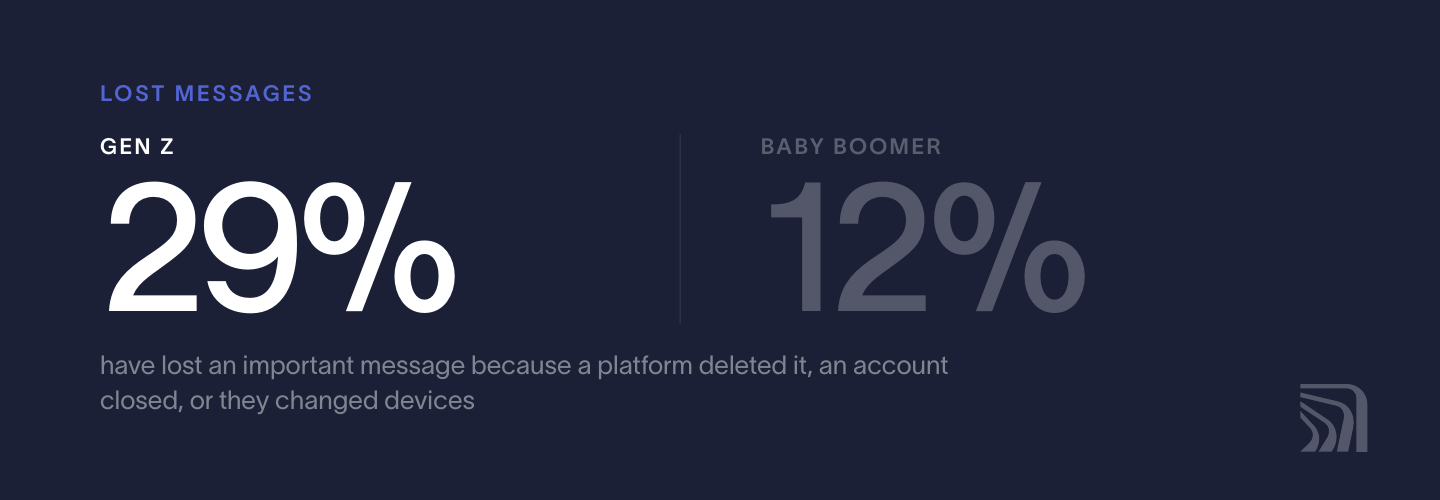
Where the generations diverge most sharply is at the extremes. Baby Boomers (70%) and Gen X (59%) are most likely to use email for keeping and referring back to information, compared to 37% of Gen Z. That gap reflects something real: the generation that grew up on the most ephemeral platforms is also the one most likely to have lost a message that mattered.
What this means for your business
If people instinctively route their most important communications to email, then every business email you send lands in someone's inbox as something they consider worth keeping.
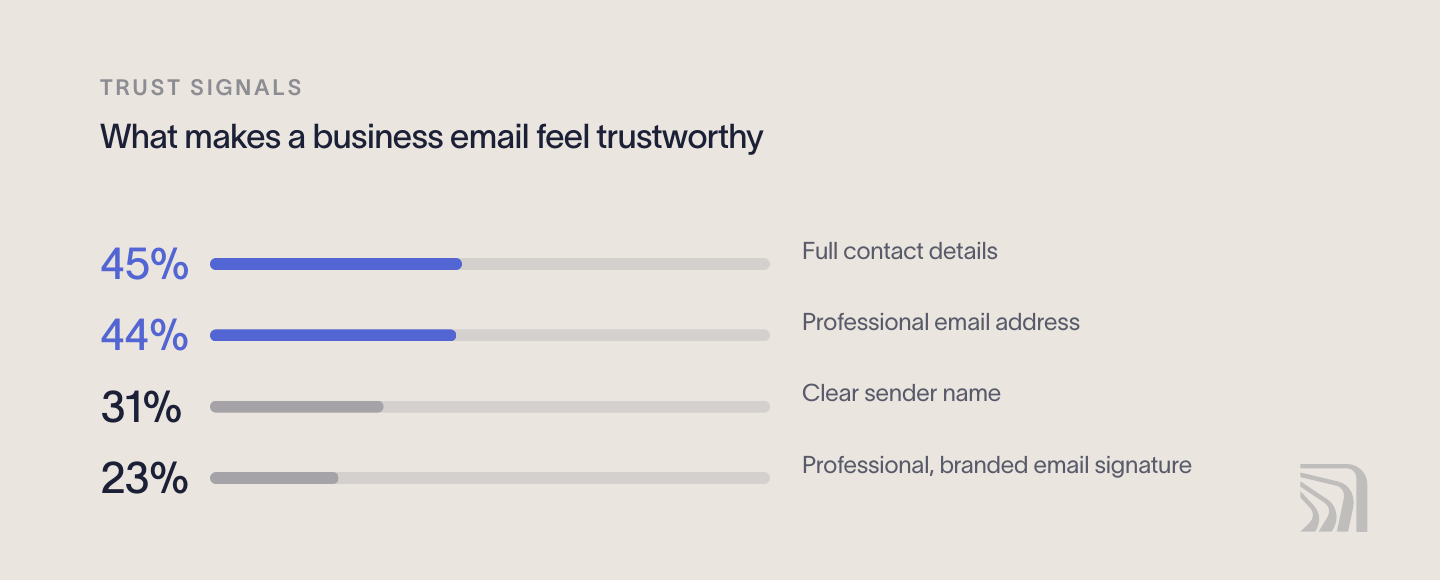
They judge it accordingly on what it says, how it looks, who it appears to come from, and whether it carries the visible signals of a brand that takes itself seriously. Nearly half of respondents (44%) say a professional email address is one of the first things they look for when deciding whether to trust an email. A further 23% specifically cite a professional, branded email signature.
People reach for email when something matters. Every email your business sends is part of that picture.
The signals that build that trust are within a business's control: a consistent sender identity, company branding, and accurate contact details. Exclaimer applies professional, on-brand signatures automatically across every email, without relying on individual users to get it right.
This blog is part of the When it matters: How people really communicate report 2026, based on a survey of 2,000 adults in the UK and US conducted by OnePoll, May–June 2026. Read the full report.