Two rules make it work: only East Anglia, so winners show up, and only three finalists per category, so women genuinely believe they could win.
When I was 18, I walked into a tech networking event, looked around a room of about 80 people and counted three women. I’m a lead engineer now, and tonight 200 to 250 people will fill a room in Bury St Edmunds for the eleventh DevelopHer Awards. Getting women into tech is the half people like to celebrate. Keeping them in the industry, and keeping them visible, takes years, and an awards night is one way I’ve found to do it.
Why did I swap monthly meetups for an awards night?
After that first event I started running monthly meetups for women in tech. They were good, but I kept getting the same 10 women every month, and it wasn’t having the impact I wanted.
In 2015 I founded the awards. People ask where I got the idea and I honestly have no idea. I think someone suggested it and I ran with it. What I do know is why it works. Someone gets nominated, they tell someone else, and it snowballs. Every year it reaches women who have never heard of us.
It’s still mostly just me. A few volunteers help on the day and on the night, and I’m usually having a panic about something at some point.
Why only East Anglia?
In the early years anyone could be nominated. We had winners from Liverpool and from Germany, and they often didn’t come. That defeated the point, which is putting role models on a stage in front of the next generation. Limiting it to the region means far more winners turn up. Not all of them (two aren’t coming this year), but most.
The region brings its own headaches. We used to rotate between Norwich, Ipswich and Cambridge, until Cambridge priced us out. The venue there has roughly tripled in price, so this year we’re at The Apex in Bury St Edmunds.
I skipped 2020 rather than go online, as being in the room is the whole point.
Why only three finalists in each category?
Every year I email the finalists to say they have a one in three chance of winning. This isn’t a ceremony with 12 finalists per category. Statistically, your chances are quite good, so please prepare something. And every year, without fail, at least one or two winners get on stage and say they were so sure they wouldn’t win that they wrote nothing.
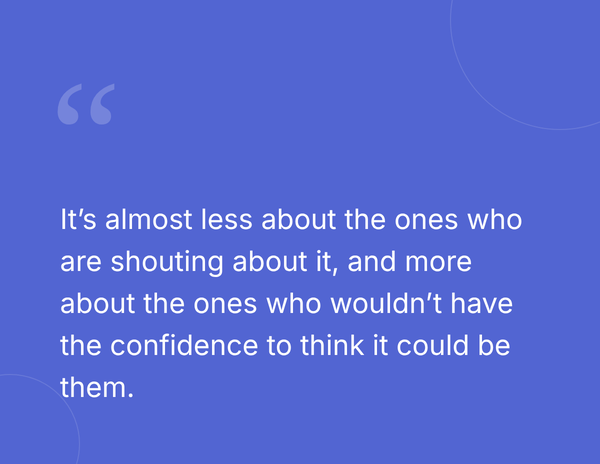
That is what it’s all about for me. Plenty of women are doing amazing things and shouting about it. I care more about the ones who would never think it could be them.
It matters for retention too. Plenty of women come in at the bottom of tech and many leave mid-career. I can’t quote the exact figures off the top of my head, but I know the pattern. An award, and someone telling you that you’re doing a great job, is one small way of keeping them.
What has got harder?
Money. In the early years I’d email a few companies and they were throwing money at me. Now it feels like I email them 400 times. Google, Microsoft and Oracle all had women-in-tech sponsorship programmes I could apply to, and I haven’t had anything from them for about five years.
I can’t officially link that to any one cause. I know budgets have been cut for a number of reasons, and sponsors I’ve worked with for years now tell me they just don’t have the budget.
The awards are not-for-profit and run on sponsorship, so the sponsors who stay matter enormously. I work at Exclaimer, which is sponsoring two awards this year, Unsung Hero and User Experience, and it has made a real difference. Exclaimer has also written about how it measures its own diversity and inclusion work.
What actually helps women stay in tech?
If an employer asked what I’d change tomorrow, I’d start with salaries on job adverts, because otherwise applying is often a waste of time. I’d keep flexible working, which has helped everyone since COVID, and women in particular. I’d also stop the glue work, like organising events and booking meetings, falling to women by default.
And I’d want men to call things out. I’ve worked in places where I said something and was told no, then a man said the same line and everyone agreed. I used to joke about borrowing my boss’s Teams account for the week. Looking back, he should have done something about it.
Things are better than when I started. There are far more women in tech initiatives now, and bootcamps are opening less traditional routes in. I’ve heard lots of stories of women who were the only one on their computer science course and ended up switching to something else.
Should I still be telling women to go into tech?
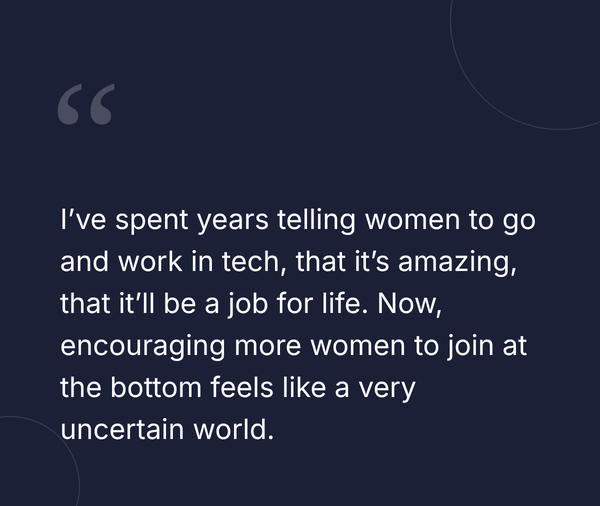
I’m less sure than I used to be. I’ve spent years telling women to go and work in tech, that it’s amazing, that it’ll be a job for life. With AI and so little hiring at the bottom, encouraging women to join now feels uncertain. Guilty isn’t quite the right word. My own job is unrecognizable from a year ago.
My advice hasn’t changed, though. Believe you deserve to be there as much as anyone else. Find your people. If you’re not in the right place, other places will value you more.
What would success look like?
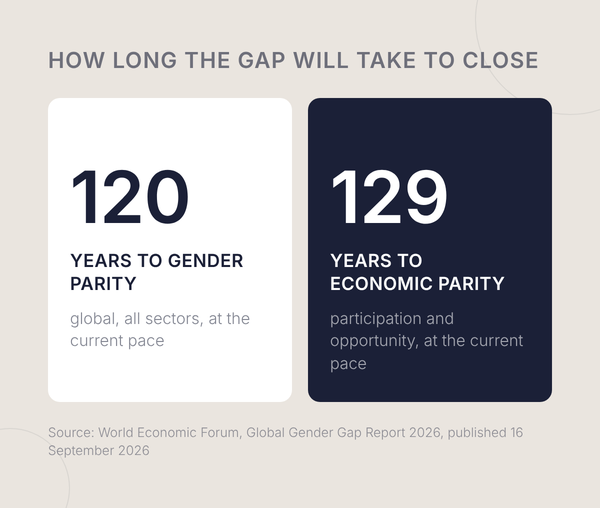
If the awards did their job well enough, we wouldn’t need them. The World Economic Forum’s latest Global Gender Gap Report puts full gender parity 120 years away at the current pace, and economic parity 129 years away. That covers every sector, not just tech. Either way, it isn’t going to be an issue in my lifetime, so I’ll carry on.
I’m building a system so that if I got hit by a bus tomorrow, someone else could pick it up. It wouldn’t be the same event, but they’d have the building blocks, and one day it could run in another part of the country.
If you manage a team, think of the woman who would never put herself forward, and nominate her next year.