Elisabeth leads Exclaimer’s global brand narrative, thought leadership, and research-led storytelling. With over 15 years’ experience in PR and B2B technology marketing, she is known for turning complex ideas into clear, compelling communications that resonate with global audiences.
Why customers doubt your emails, and what earns their trust

Most people don't open a business email ready to believe it. New research into how 2,000 adults across the UK and US communicate found that 41% have questioned whether a message they received was genuine, and in the UK that rises to 46%.
For a business, that means a large share of your audience reads what you send with a quiet question already in mind about whether it really comes from who it claims to. People surveyed also share exactly what settles that question, and every signal they name is one you can control.
Key findings
41% of people have questioned whether a message they received was genuine, rising to 46% in the UK
48% say the platform a message arrives on affects how trustworthy it feels
44% name a professional email address on a company domain as a top trust signal
45% say full contact details make an email more trustworthy
51% of Boomers have doubted a message's legitimacy, the most suspicious of any generation
Nearly half your audience starts from doubt
Suspicion is now the default setting for a lot of inboxes.
41% of people have questioned whether a message they received was genuine or legitimate. That climbs to 46% in the UK, against 36% in the US, and it rises steadily with age, from 28% of Gen Z to 51% of Boomers. The older your customer, the more likely they are to be looking for a reason to doubt you.
This is not a rejection of email itself. Only 11% say they don't find business emails trustworthy. What people bring instead is caution, applied message by message until something tells them the sender is real.
The channel shapes trust before a word is read
How a message reaches someone impacts how much they trust it.
48% of people say the platform a message arrives on affects how trustworthy it feels. Similar numbers say it shapes how professional a message seems (46%) and how authentic it feels (43%). Judgment starts forming from the medium and its presentation, before the reader has weighed a single line of what you actually wrote.
For businesses, that means the way an email presents itself is part of the message, not a wrapper around it.
What actually earns trust
When people decide whether to believe a business email, they look for visible proof.
Asked what makes an email feel trustworthy, people name concrete, checkable signals rather than anything about the writing itself.
What makes an email feel trustworthy | Share who say so |
|---|---|
Full contact details | 45% |
A professional email address (company domain) | 44% |
A clear sender name | 31% |
Company logo or branding | 24% |
A professional, branded email signature | 23% |
Consistent formatting across emails | 21% |
Full contact details and a professional email address on a company domain sit at the top, ahead of a clear sender name, company branding, and a professional, branded email signature. Every one of these is a marker of a legitimate, identifiable sender: evidence the email comes from a real organization that can be recognized and reached. They are the reassurances a cautious reader is scanning for.
“People decide whether to trust an email in seconds, from a handful of visible cues, before they've read a word. A recognizable sender name, a company domain, full contact details, a consistent signature. Get those right on every email and you answer the doubt before it forms. Leave them out and you've given a cautious reader a reason to hesitate.”
— Elisabeth Goossens, Director of Brand Communications, Exclaimer
What this means for businesses
You won't win a cautious reader over with words. What earns their trust is proof they can see.
The signals people rely on are the same ones a business controls: a consistent sender name, a company domain, full contact details, and a professional, branded email signature on every message. The hard part is consistency.
When signatures are managed manually, those details inevitably drift. A signature goes missing, an old job title lingers, and branding varies from one person to the next. Each small lapse removes a reassurance at the exact moment someone is deciding whether you are legitimate.
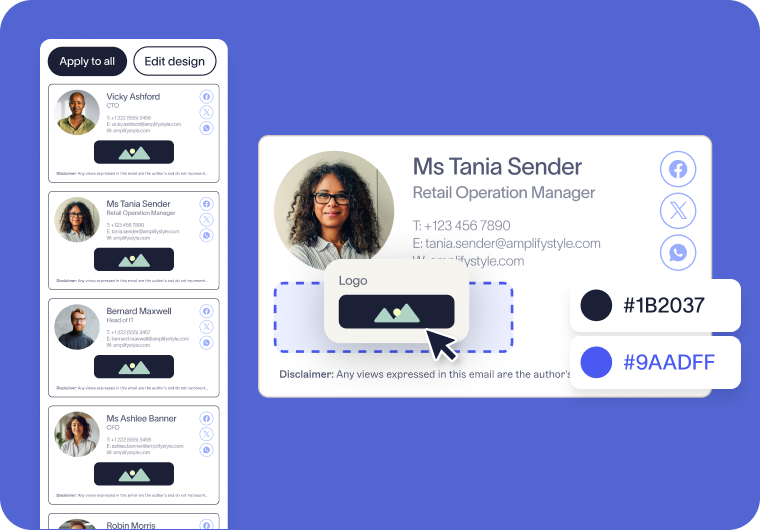
Exclaimer applies professional, on-brand email signatures automatically across every email your organization sends, so the signals of a real, identifiable sender are there every time, without relying on individual employees to add them.