


7 steps to turning business email into a one-to-one marketing channel
15 October 2025
0 min read
TL;DR
- Every one-to-one email your employees send is a direct, personal marketing touchpoint.
- Centralized email signature management turns those messages into a measurable 1:1 marketing channel.
- IT keeps control and compliance, while Marketing gains flexibility to update designs and campaigns instantly.
- Automation removes manual work and applies consistent branding, disclaimers, and contact details across every device.
- With analytics, you can track engagement and refine your email marketing with real data, not guesswork.
Individuals are exposed to up to 10,000 ads daily. It's understandable why there's now such a demand for personalized experiences over generic messages that often miss the mark. To address this, businesses must find creative ways to capture attention and personalize marketing on a large scale.
Employees send thousands of one-to-one emails each year to customers, partners, and prospects. Each one represents a unique, trusted touchpoint that cuts through crowded inboxes and delivers real connection. But most companies treat these messages as routine communication rather than a strategic 1:1 marketing channel.
That’s where the opportunity lies. By turning ordinary one-to-one emails into marketing assets, businesses can easily amplify their campaign reach.
This guide outlines seven practical steps for IT and Marketing teams to collaborate, automate, and gain full control over how every employee email reinforces your brand, supports campaigns, and builds trust at scale.
Moving away from mass marketing
Traditional mass marketing involves sending the same message to a large audience through different channels. The hope is that some will respond just because so many people are "targeted.
However, these "spray and pray" methods are becoming less effective. Customers today are more aware of common marketing tactics and often ignore mass communications. With countless messages vying for their attention, your outreach can easily get overlooked.
Even if people are part of your target audience, they might miss your messages if they don't stand out. This highlights the reduced impact of traditional mass marketing.
What is one-to-one marketing (and why business email matters)
One-to-one marketing, or 1:1 marketing, is focuses on creating personalized experiences for individual customers. Instead of sending out generic messages to a wide audience, one-to-one marketing engages on an individual level. This involves tailoring messaging and content specifically to their needs and preferences.
 By using data and technology, businesses can adapt their messages and offers to align with customers' preferences and behaviors, making the experience more relevant and engaging. This builds trust between the customer and the brand, leading to a stronger relationship and higher conversion rates.
Personalization in one-to-one marketing taps into what psychologists refer to as the "cocktail party effect." Think of something like a crowded room with many people talking. Even with lots of background noise, you can listen to one specific voice, especially if it's personally relevant.
This shows the brain's selective attention as it filters out unimportant noise to focus on what's important. It's a common example of how we manage competing sounds and is closely related to cognitive processes like attention and perception.
The advantages of one-to-one marketing
With 71% of consumers now expecting companies to deliver personalized interactions by default, one-to-one marketing can have a significant impact on a company's performance. Some of the key advantages include:
Increased ROI: As messages are tailored to each individual, they’re more likely to resonate and drive meaningful action. This results in a higher ROI compared to mass marketing. When customers feel like they’re being spoken to directly, they’re more likely to act.
Stronger customer relationships: By delivering personalized experiences, businesses build trust with their customers and create stronger relationships. Customers are more likely to feel valued and understood when they receive relevant messages.
Improved brand image: Personalization shows that a business cares about its customers. It also shows a willingness to go the extra mile to provide valuable and tailored experiences. This improves overall brand perception.
Reduced marketing costs: One-to-one marketing can be achieved at a lower cost compared to traditional mass marketing tactics. By targeting specific individuals with tailored messages, businesses reduce unnecessary spending on broad campaigns that may not resonate.
Cross-sell and upsell opportunities: Personalized marketing lets businesses collect valuable insights into customer preferences and behaviors, identifying opportunities for cross-selling or upselling.
Using business emails in one-to-one marketing
Business email is a key communication tool for many professionals. It offers a great chance to connect directly with customers. This approach allows for personalized interactions, letting businesses address specific client preferences and concerns.
 Unlike mass campaigns or digital ads, business emails are personal, expected, and trusted. Every reply, update, and follow-up carries your brand. When managed centrally, each email can become a small but powerful marketing impression. This drives awareness, engagement, and consistency.
It's important to note that direct marketing messages shouldn't appear in the main body of a business email. The main goal of business emails is effective communication, not overwhelming recipients with promotions.
Instead, marketing messages can be subtly included at the bottom of the email, in the signature. This allows businesses to promote their brand and services without taking away from the email's main purpose, ensuring a professional and respectful interaction with the recipient.

Learn how to turn business email into a one-to-one marketing channel
Download Email Signatures for Dummies® today.
Read nowThe role of email signatures in one-to-one marketing
So, why are email signatures so effective when compared to other advertising channels? Here are a few reasons:
1. Targeted marketing
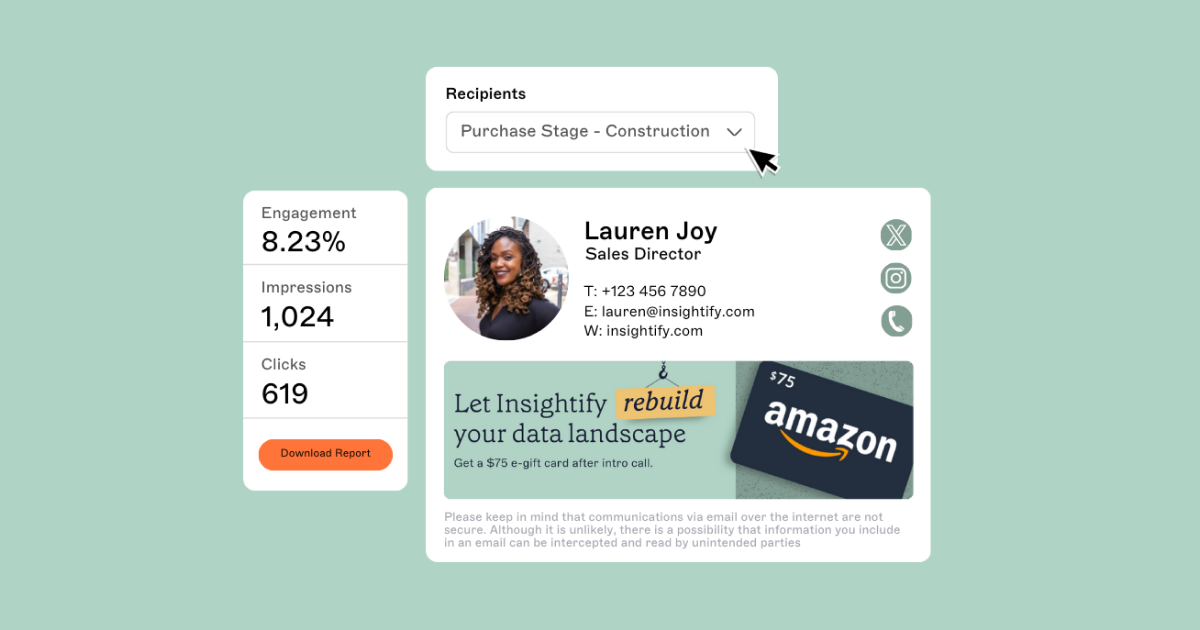
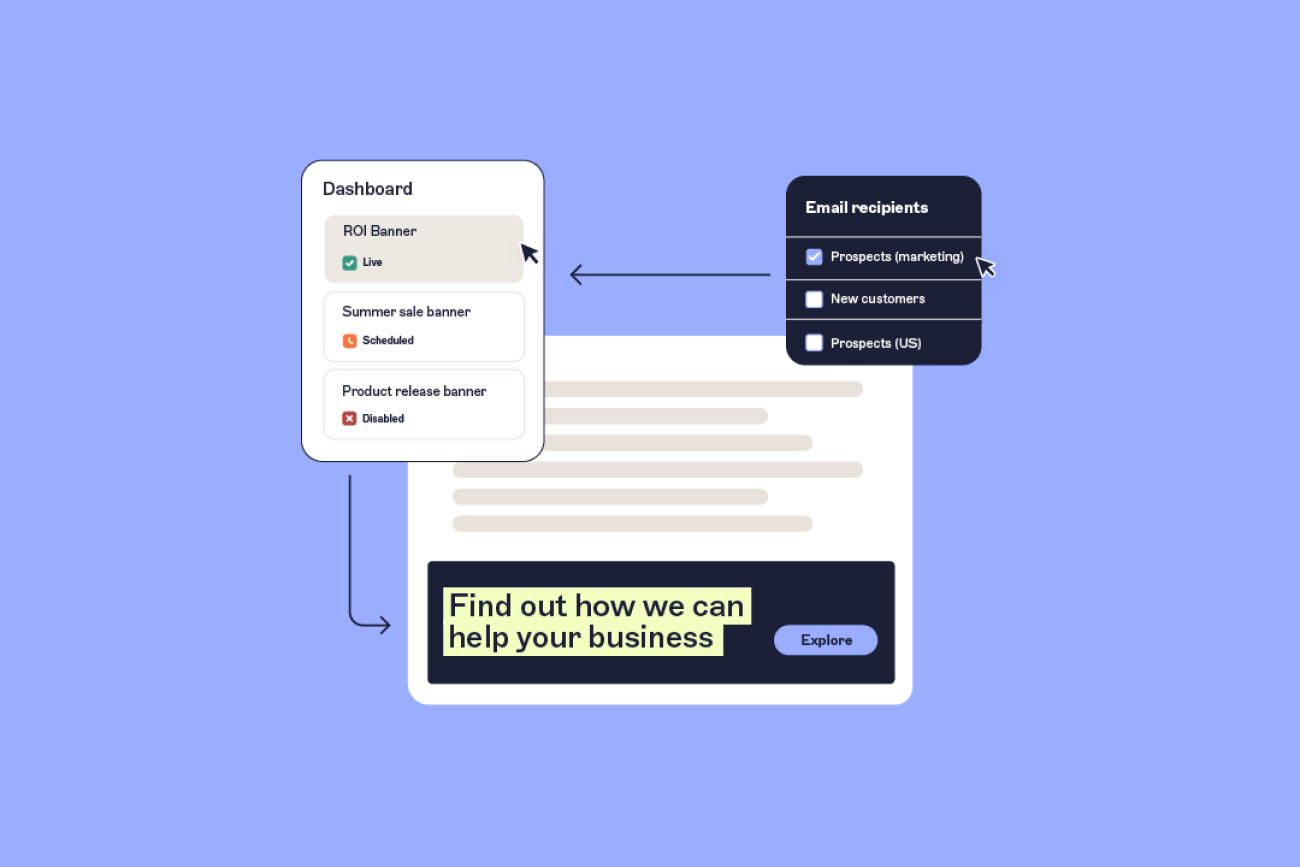
By adjusting your email signature messaging according to the recipient's profile, context, and timing, you can effectively segment your audience. This approach allows you to target specific groups, like new customers or specific industries, with content that matches their interests.
For instance, you could include a demo invite in your email signature for those who recently attended a webinar. You could also offer a special promotion to customers who abandoned items in their cart.
2. Enhanced brand visibility
Every email you send helps reinforce your brand's message and values. This is particularly effective when combined with relevant, targeted messaging, creating a strong emotional connection with your audience. You build trust with your audience by regularly introducing them to you and your brand.
A consistent, personalized signature also can set your brand apart in a crowded marketplace.
3. Increased trust and credibility
People are more likely to buy from familiar sources. When people open a business email from someone they already know and trust, they’re more likely to engage with marketing messages within the email signature.
A consistent email signature helps recipients quickly identify your business and connect it with your value. Including social proof, like customer reviews or industry awards, can further build trust and credibility with potential clients.
4. Increased exposure
Email signatures offer ongoing exposure, ensuring your brand stays visible repeatedly. This repetition helps with brand recall, making it easier for recipients to remember your business when they need your services. It's a cost-effective way to keep promoting your brand.
5. Subtle engagement
In professional communication, email signatures offer a simple way to share extra information. They fit seamlessly into emails, encouraging recipients to explore the details without interrupting the conversation. This makes them perfect for sharing updates or special offers.
6. Multiple touchpoints
Email signatures offer multiple opportunities to engage your audience. By varying the marketing messages in each signature, businesses increase the chances of getting a response. This varied approach ensures that even if a message doesn't initially connect, it might capture attention later.
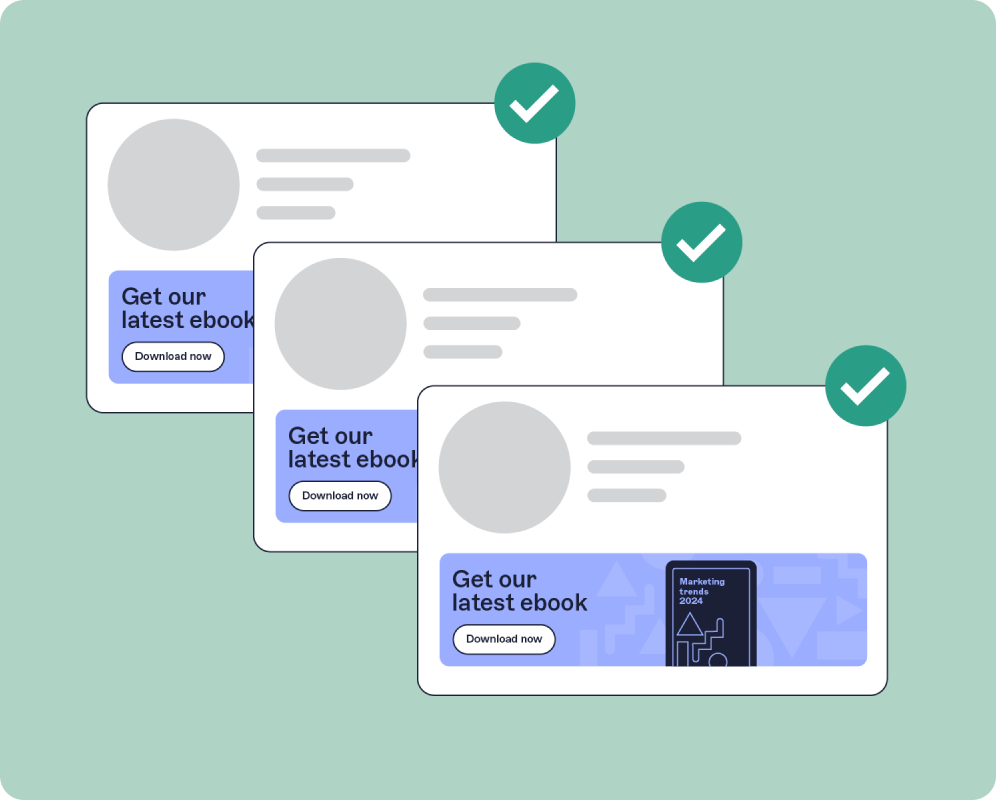
As prospects move down the buying funnel, you can introduce automated signature variations. During the awareness stage, share thought leadership content. In the decision phase, offer direct links to product demos and free trials.
This approach guides prospects through the funnel without being intrusive, allowing them to progress at their own pace.
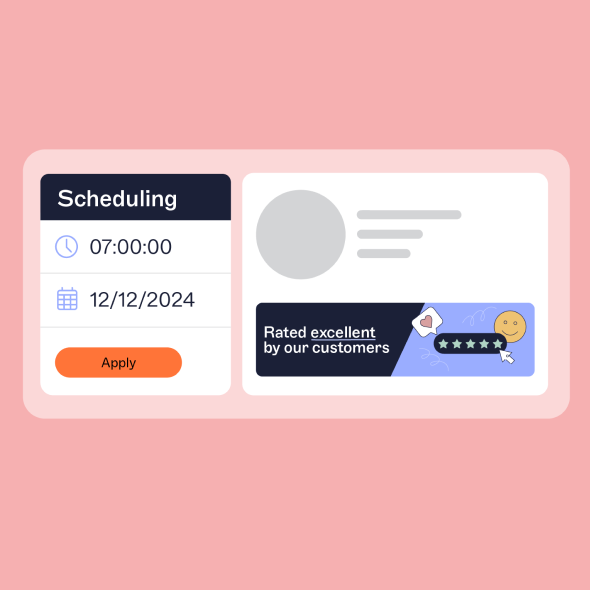
7 steps to turn one-to-one emails into a 1:1 marketing channel
Incorporating email signatures into your one-to-one marketing strategy might seem challenging, but it doesn't have to be.
Here are some tips to help you get started:
1. Decide on your goals
Before diving into one-to-one marketing with email signatures, determine your objectives. What do you want to achieve through this approach? Is it to increase brand awareness, drive engagement, or improve conversions? Defining clear goals will help you create targeted and effective campaigns.
2. Gather customer data
One-to-one marketing relies on personalized data, so gather as much information as possible about your customers. This could include demographics, purchase history, online behavior, or previous interactions with your brand.
Gather customer data through surveys, website analytics, and other sources. This will help you understand your customers better and tailor messaging to their preferences.
3. Develop customer personas
Leverage the collected data to develop ICPs (Ideal Customer Personas) that reflect your target audience's characteristics. These personas allow you to gain a deeper insight into your audience, enabling you to create content that resonates more effectively with them.
4. Tailor your approach
Break your audience into specific segments based on shared interests, needs, or behaviors. This targeted approach allows you to customize your messaging for each segment. As a result, you can increase the impact of your email signature campaigns and avoid one-size-fits-all communication.
5. Design a professional email signature
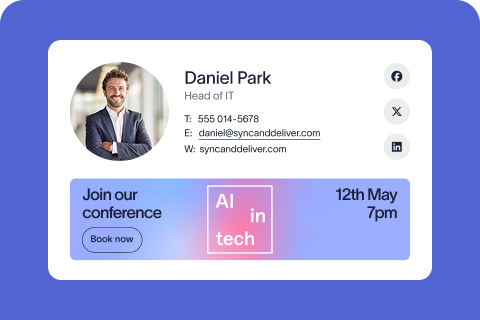
A professional email signature should be consistent with your brand identity and visually appealing. Use a clean layout, include your logo, and keep the content concise. You can also incorporate visual elements such as images or icons to make it stand out.
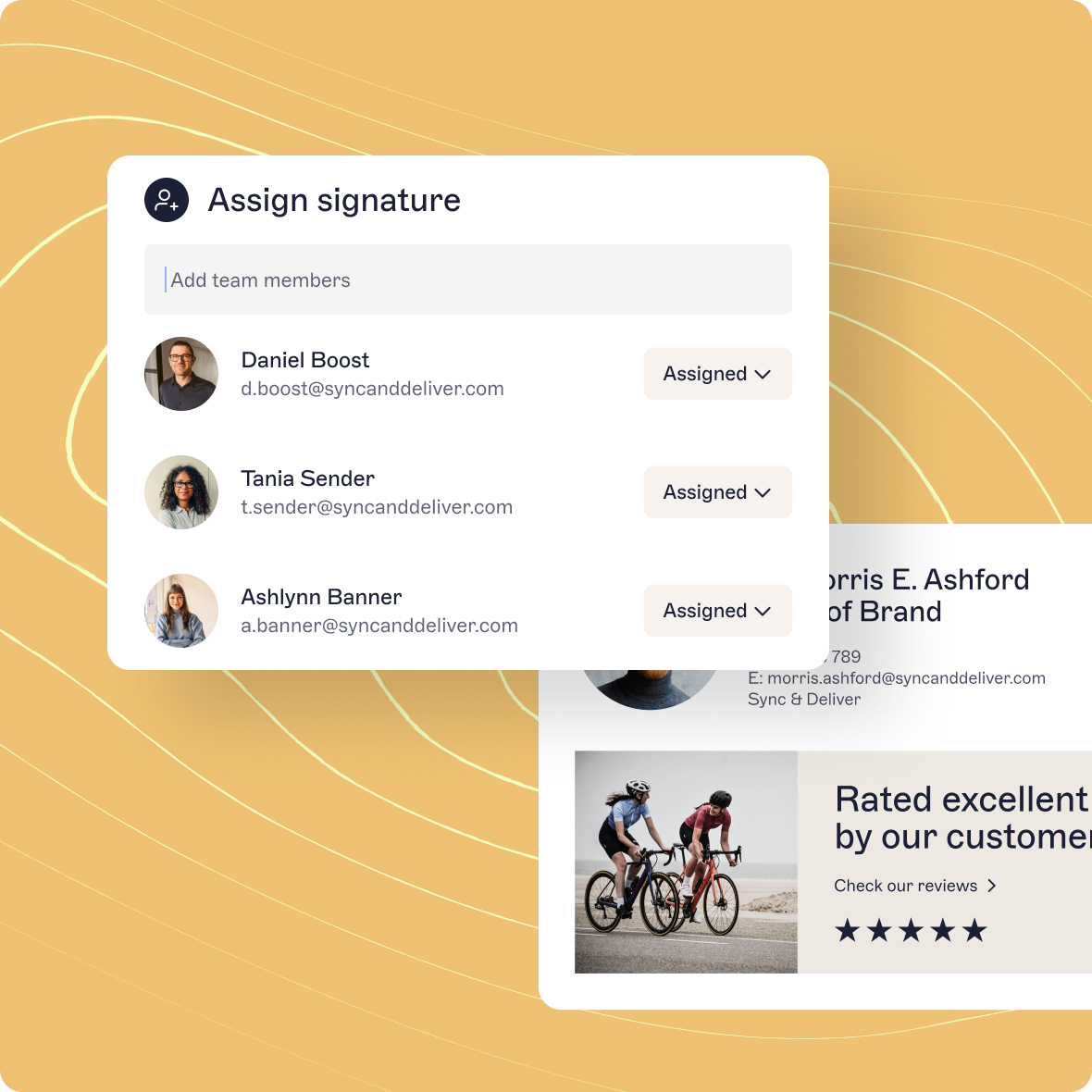
6. Customize signatures for different segments
Create multiple email signature templates tailored to each audience segment. This could include different call-to-action buttons or email signature banners promoting specific products or services.
7. Test and analyze
Like any marketing strategy, one-to-one marketing with email signatures requires testing and analysis.
Experiment with different designs, messaging, and calls-to-action to see which ones resonate best with your audience. Use analytics tools to track the performance of each signature and make adjustments accordingly.
Making a lasting impression with every email send
Every one-to-one email your employees send is a moment of connection. It’s where your brand lives, and where your reputation grows—one conversation at a time.
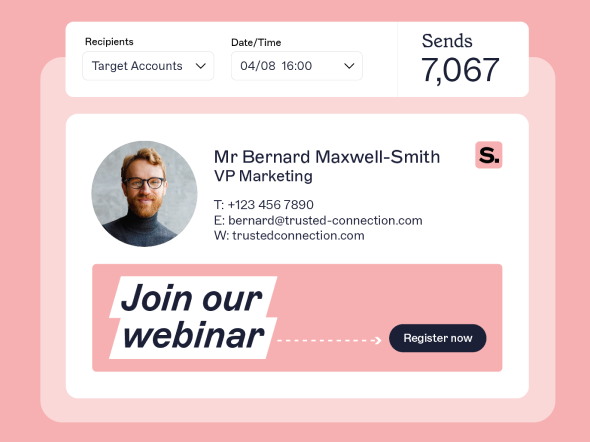
When managed centrally, those everyday emails become an always-on marketing channel. They build trust, reinforce your brand, and support compliance. And all without extra effort from IT or Marketing.
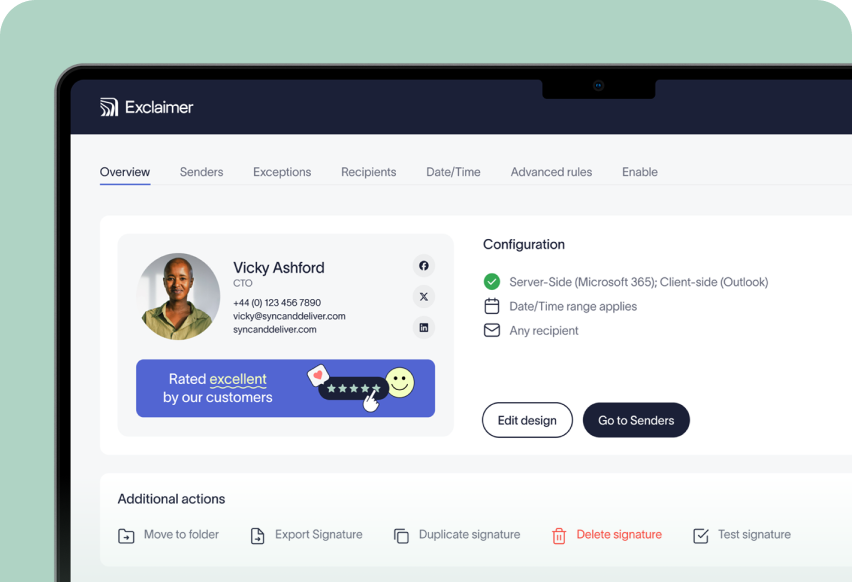
Exclaimer offers a platform for managing email signatures, easily turning business emails into personalized marketing tools. Companies can design and manage targeted email signatures for different audience segments, ensuring each email is distinctive. You can also run ABM campaigns targeting accounts by contact, job title, industry, language, location, opportunity stage, or account maturity.
Exclaimer's analytics also offer valuable insights into how email signature marketing performs. Companies can track engagement metrics, run A/B tests, and identify areas for improvement, enabling data-driven strategy adjustments.
Learn about Exclaimer today and discover how it can help you deliver personalized marketing at scale using business emails.