



What is a reply email signature? Best practices and examples
22 October 2025
0 min read
Email threads can get messy fast—long chains, repeated logos, and bulky banners that bury the actual message. That’s where a reply email signature makes the difference.
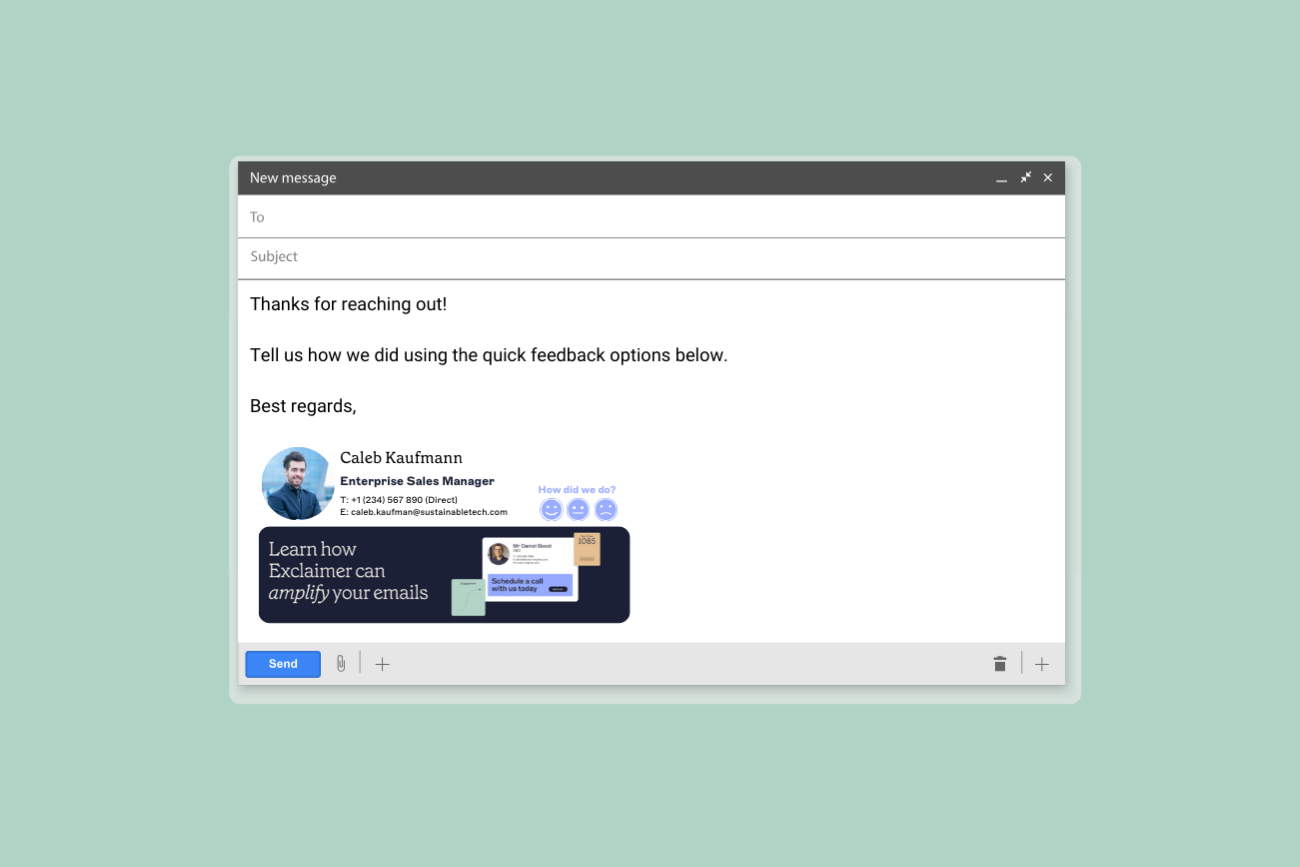
A reply email signature is a simplified version of your main company signature, used for replies and forwards. It keeps ongoing conversations professional and readable without overwhelming recipients.
In this guide, we’ll cover what a reply email signature is, why it matters for IT and business teams, and how to design one that stays consistent, compliant, and on-brand across every device.
What does a reply email signature look like?
A reply email signature should strike the right balance between professionalism and readability. It’s not a full signature repeated at the end of every message. Instead, it's a concise version designed to keep threads clear while still reinforcing your brand.
 Here are some best practices for designing and managing reply email signatures across your organization.
1. Keep it short and consistent
Reply email signatures work best when they’re simple. Include only the essential details:
Full name
Job title
Company name (optional if already clear in the thread)
Direct phone number
Email address (optional)
Avoid banners, long disclaimers, or images that can make email threads look cluttered. The goal is to maintain a professional impression without adding unnecessary noise.
2. Maintain brand recognition
Even a short reply signature should look like it belongs to your organization. Use your company’s approved fonts, colors, and layout to maintain brand continuity between your main signature and your reply version.
3. Use smaller logos or no images at all
Large images and banners quickly inflate email size and can appear repetitive in long conversations. If you choose to include your company logo, use a smaller version or host it online to prevent attachment bloat.
For most organizations, a clean text-based signature is enough for replies.
4. Keep disclaimers concise or conditional
Email disclaimers don’t always need to appear on every reply. If they’ve already been included in the initial message, that's enough.
5. Test across devices and clients
Reply signatures can behave differently across platforms. Test how they appear in Outlook, Gmail, Apple Mail, and on mobile to ensure proper formatting and spacing.
6. Automate updates to reduce IT workload
Manually maintaining signatures across hundreds or thousands of employees is inefficient. Centralized management ensures that every reply signature stays compliant and up to date without IT intervention.
7. Use a different format for internal replies
Internal conversations often don’t need a full external-facing signature. Consider a lighter internal reply signature with just a name and title to make internal threads cleaner and easier to follow.
Quick takeaway: Think of your reply email signature as the lighter version of your main signature. It should reinforce your brand while making ongoing communication effortless for both senders and recipients.
Full vs. reply email signature: What’s the difference?
Your full email signature and your reply email signature serve different purposes. Knowing the difference keeps your messages looking professional and uncluttered.
| Full email signature (new messages) | Reply email signature (replies & forwards) |
|---|---|
| Includes full contact details, job title, company logo, and promotional banner | Keeps only essential details: name, title, company, and a short contact line |
| May include legal disclaimer and campaign banner | Usually omits banner and shows disclaimer only when required |
| Designed to introduce your brand to new contacts | Designed to maintain clarity in ongoing conversations |
| Usually includes links to website, socials, or booking pages | Focuses on quick readability and professionalism |
| Deployed to all outbound first-contact messages | Deployed automatically on replies and forwards |
Tip for IT teams: With Exclaimer, you can automate both versions from one platform. That's across Outlook, Gmail, and mobiles without end-user configuration.
How to set up a reply email signature
Every email platform handles reply signatures a little differently. Here’s how to create and manage them in the most common environments.

How to add signatures in replies on Outlook and Microsoft 365
In order to add email signatures to replies on Outlook, you just need to set it up. This can save you a lot of time because you only need to click a few buttons to get started.
Open Outlook › File › Options › Mail › Signatures.
Under Choose default signature, select the account you want to edit.
Create a new signature (for replies and forwards) with a shorter layout.
In the dropdown menus, set your New messages signature to the full version and Replies/forwards to your new condensed one.
Save and test your changes by sending yourself a thread with several replies to confirm formatting.
Admin note: If you’re managing hundreds of users, configuring these manually isn’t scalable. Exclaimer’s platform applies the correct signature automatically, including shorter reply templates, for every user in Microsoft 365 or Exchange, with no end-user setup required.
How to add signatures in replies on Gmail and Google Workspace
Doing something similar on Gmail isn't that difficult either. If you want to add signatures to your Gmail replies, you can follow these steps:
In Gmail, go to Settings › See all settings › General › Signature.
Create a new, simplified version of your signature for replies.
Use the Signature defaults dropdown to assign one signature for new emails and another for replies or forwards.
Save changes, then send a few test emails to verify spacing and logo alignment.
Tip for IT admins: For organization-wide consistency, Google Workspace doesn’t offer detailed rule-based deployment natively. Exclaimer connects directly to Google Directory to enforce consistent reply email signatures automatically across users and departments.
How to add signatures in replies in the Gmail app (Android & iOS)
Open the Gmail app.
Tap your avatar (top right) › Gmail settings.
Choose the account.
Tap Mobile signature (Android) or Signature settings (iOS).
Add a short, text-only reply signature (name, title, phone).
Save and send a test reply.
Tip for IT admins: Mobile Gmail signatures are plain text and single-use per account (no separate “reply” vs “new” setting). Use a short, readable format and rely on server-side stamping (below) if you need branding or logic.
How to add signatures in replies on Apple Mail (macOS)
Open Mail.
Go to Mail › Settings… › Signatures.
In the left column, select All Signatures, then click + to create:
Full signature (for new emails)
Reply signature (short, text-first; no banner)
Drag each signature to the email account you use (middle column).
In the right column, set Choose Signature to your Full signature as the default.
Close Settings.
When replying: in the compose window, use the Signature dropdown (above the message body) to switch to your Reply signature for that message.
Note: macOS Mail doesn’t auto-swap a different signature just for replies. You’ll either pick it per message (as above) or manage it centrally.
How to add signatures in replies on iPhone and iPad
Open Settings.
Tap Mail › Signature.
Choose Per Account (if you have more than one account).
Enter a short, text-only reply signature for each account (e.g., name, title, phone).
Send a test reply to check line breaks and spacing.
Note: iOS/iPadOS Mail only supports one default signature per account and doesn’t auto-switch for replies vs new messages.
Reply email signature checklist
| Checklist Item | Details |
|---|---|
| ✔ Keep it short | Name, title, phone, and company name are enough. |
| ✔ Stay on-brand | Use consistent fonts, colors, and spacing. |
| ✔ Skip the extras | No banners, marketing images, or long disclaimers. |
| ✔ Optimize for mobile | Test readability across devices and dark mode. |
| ✔ Apply intelligently | Use conditional rules to add disclaimers only when needed. |
| ✔ Automate management | Centralize updates to reduce IT workload and errors. |
| Pro tip: With Exclaimer, you can build both full and reply email signatures once and deploy them automatically. | |
Implementing reply email signatures with Exclaimer
Instead of maintaining separate signatures across devices, Exclaimer lets IT teams manage reply signatures from a single, secure web platform.
 With Exclaimer, you can:
Create both full and reply signatures using the drag-and-drop designer.
Use rules to apply the right version automatically (new messages vs replies).
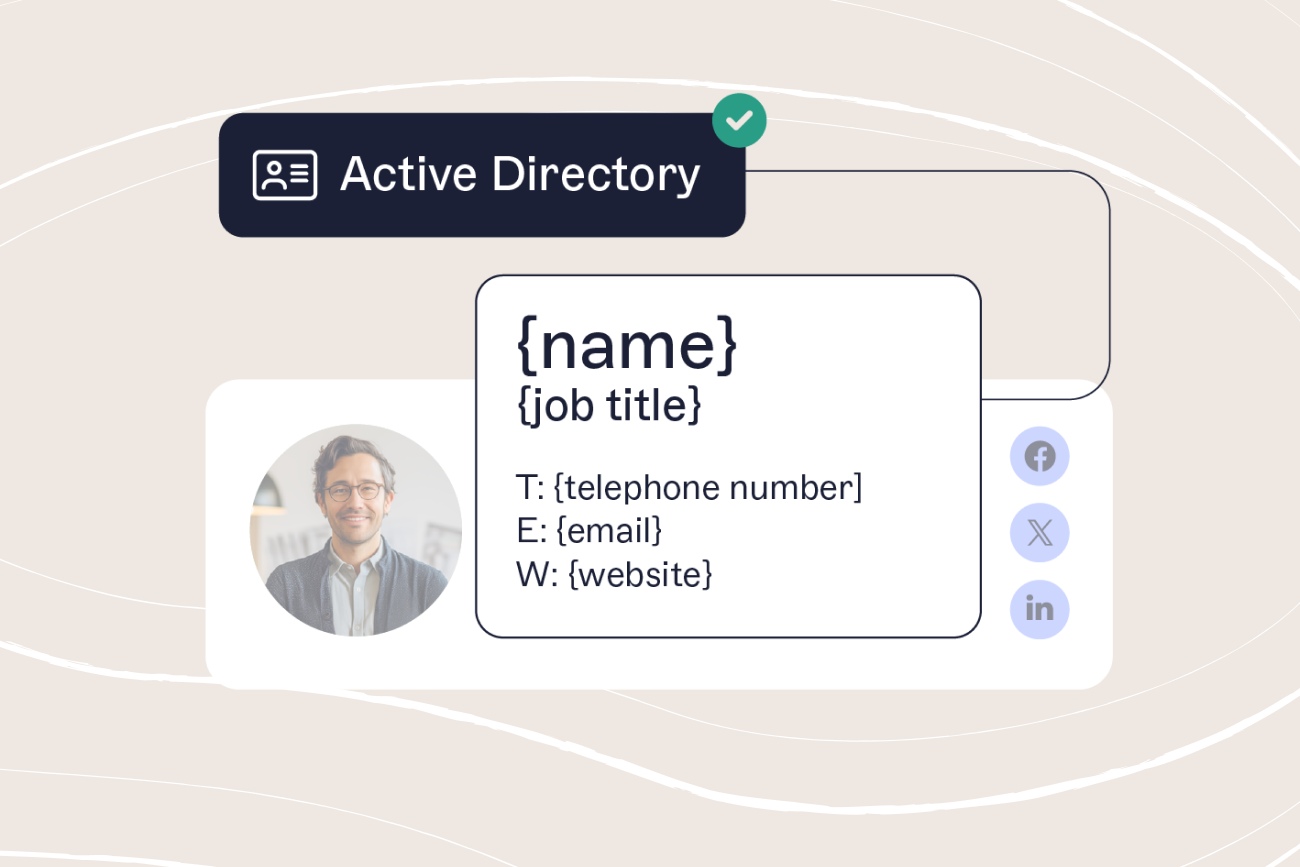
Sync user data from Microsoft Entra ID or Google Directory so every signature stays accurate.
Set conditional disclaimers that appear only when required.
Ready to simplify reply email signatures?
Managing reply email signatures manually takes time. With Exclaimer’s cloud solution, you can design, control, and deploy both full and reply email signatures from one platform. That means:
IT saves time by eliminating manual updates and support tickets.
Compliance stays confident with automated disclaimers and version control.
Marketing stays on-brand across every email and every device.
Whether you use Microsoft 365, Google Workspace, or Exchange, Exclaimer means your reply email signatures are always consistent, compliant, and professional.