Most organizations have no central control over employee email signatures. Contact details go stale, off-brand content goes out, and nobody notices until something goes wrong
ADA accessibility guidelines apply to email footers, and state and local government entities face real fines for non-compliance. This makes this an active commercial opportunity for MSPs with SLED clients
Regulated businesses including law firms and financial services organizations have strict disclaimer and disclosure requirements on every outbound message. Firms including Baker McKenzie, Leigh Day, FieldFisher, and Sidley manage this with Exclaimer
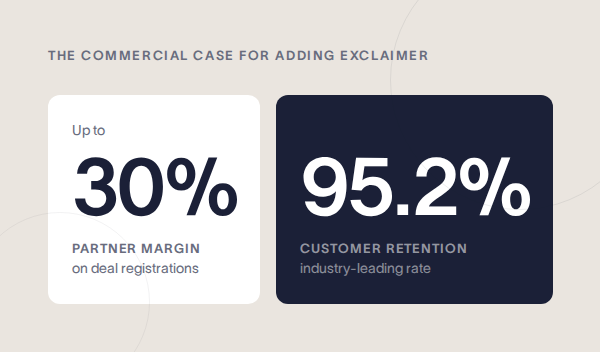
With Exclaimer, partners earn up to 30% on deal registrations, and churn on email signature management is near-zero once deployed
The client conversation about email signature management starts with one question: "Do you know what's in your employees' email footer right now?"
Two years ago, I spent a lot of time convincing MSPs to give Exclaimer a second look. Now I spend most of my time wondering why it took them so long. Because once they actually show it to a client, the reaction is almost always the same: "How do we not already have this?"
That question tells you something. It tells you the problem is obvious once you surface it. And the problem is this: every employee at every one of your clients sends emails every single day, and in most of those organizations, nobody is managing what those emails look like.
Not IT. Not marketing. Nobody.
What does an ungoverned email signature actually cost a business?
This is where the conversation usually starts. With a simple question: "Do you know what your employees' email signatures look like right now, across the whole company?"
Most IT managers and business owners don't know. When you show them, the reaction is usually somewhere between surprised and alarmed.
Here's what unmanaged signatures actually look like. An employee leaves and their contact details stay in the signature for months. A salesperson adds a personal quote. Someone in accounts puts something political in their footer. None of these are edge cases. They're the reasons companies come to us, often after something has already gone wrong.
The compliance exposure is more concrete than most people realize. ADA accessibility guidelines now apply to digital communications including email, and state and local government entities face real fines for non-compliant footers. Legal firms carry strict disclaimer and regulated disclosure requirements on every outbound message. Financial services organizations need consistent legal footers, full stop. Some of the top law firms in the world use Exclaimer to manage this, like Baker McKenzie, Leigh Day, FieldFisher, and Sidley. Those firms found us the same way most do. Because a compliance gap became a conversation.
None of your clients are managing this centrally. The question is whether you want to be the person who shows them why they should.
Why does email signature management sell faster than almost anything else in your stack?
The deal cycle is short because the problem is visible immediately. You don't need to explain a threat landscape or build a business case over three meetings. You show them their current signatures, which are often inconsistent, ungoverned, and outdated. Then you show them what central control looks like. The conversation tends to move quickly from there.
A few things make this work well as part of a managed services offering:
And the conversation doesn't end at signatures. Once you're talking about centralized governance of email communications, you're naturally talking about brand consistency, compliance, and what happens when those things break down. Those aren’t short discussions.
How do you start the client conversation?
Keep it simple. The question that works is: "Do you know what's going out in your employees' email footers right now?"
That's it. Most clients will either say no, or they'll tell you something that suggests the answer is effectively no. From there, you walk them through what it looks like without central management, and what it looks like with central management.
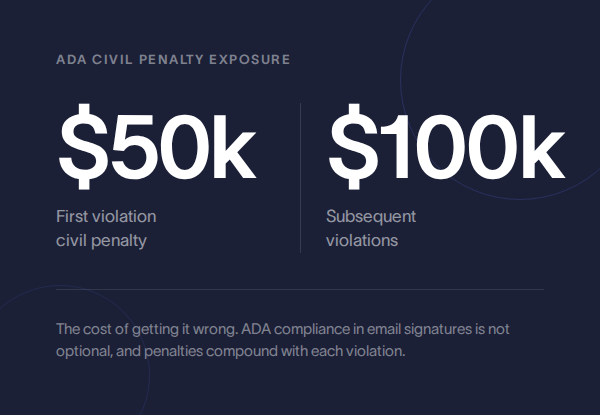
For MSPs with SLED clients, ADA compliance is the sharpest opener. Enforcement is active, the fines are significant, and most government contacts are already aware they need to act. The ADA authorizes civil penalties (historically up to $50,000 for a first violation and $100,000 for subsequent violations, with amounts adjusted periodically for inflation). If you have a state and local government practice, email compliance is one of the fastest-moving requirements you can help them address right now. The urgency is built in.
Why does email signature management get more valuable the longer a client has it?
Email signature management is one of the few products that becomes stickier over time rather than less.
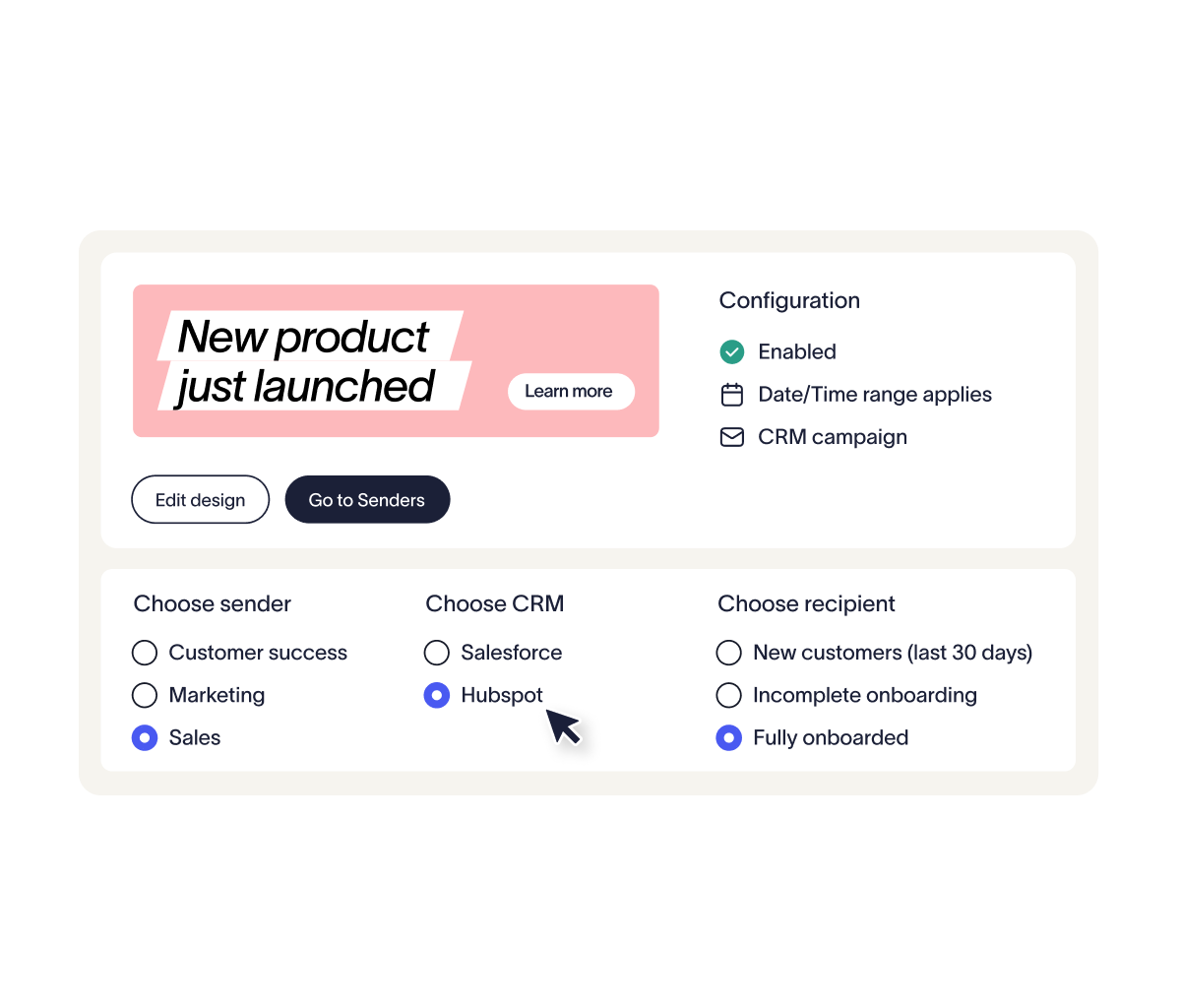
Exclaimer integrates with HR systems, so when someone joins, leaves, or changes roles, their signature updates automatically. Marketing campaigns get reflected across every employee email without anyone in IT needing to touch anything. New regulatory requirements roll out company-wide in minutes.
Your clients' businesses keep growing. Their compliance requirements keep changing. The email channel is not going anywhere. Building this into your standard offering means you own that touchpoint throughout the relationship.
Is email signature management the most headline-grabbing product in your portfolio? Probably not. But it’s likely the most consistently overlooked one. The revenue recurs. The retention is high. And in ten years of channel sales, I have not found many conversations that start more easily or close more reliably than this one.
If this resonated, our Partner Playbook is worth an hour of your time. It's the full picture of how to position, pitch, and close email signature management, from an MSP that's already done it.