Elisabeth leads Exclaimer’s global brand narrative, thought leadership, and research-led storytelling. With over 15 years’ experience in PR and B2B technology marketing, she is known for turning complex ideas into clear, compelling communications that resonate with global audiences.
In two years, Gen Z went from AI's biggest skeptics to its heaviest users

Communication norms can turn over in the space of a single product cycle. Gen Z just proved it.
Across our research over the past two years, no group has moved faster. In 2024, Gen Z was the most skeptical of AI in email of any age group. By 2026, they are its heaviest users. New findings from our latest report, set against two studies from 2024, tell the story.
Key findings
65% of consumers said brand emails should always be formal in 2024, and even Gen Z, the group most open to informality, leaned formal at 54%
64% of Gen Z viewed AI in email negatively in 2024, the most skeptical of any generation
17% of Gen Z now never use AI in their communications, the lowest of any generation
29% of Gen Z rate a professional, branded email signature as a trust signal, level with Millennials and ahead of older groups
41% of people have now questioned whether a message they received was genuine
2024: formality in, AI out
Two years ago the mood was cautious, and Gen Z was the most cautious of all.
Our 2024 study, The Generation Email Effect, found that 65% of consumers believed brand emails should always be formal. Even Gen Z, the group most open to informality, still leaned formal, at 54%. And in The Personal Touch, our study of attitudes to AI-generated email, Gen Z was the most negative of any generation, with 64% viewing AI in email unfavorably. The generation assumed to be most at home with new technology was the most wary of letting it into the inbox.
2026: Gen Z leads on AI
Two years later, the same generation has moved further than anyone.
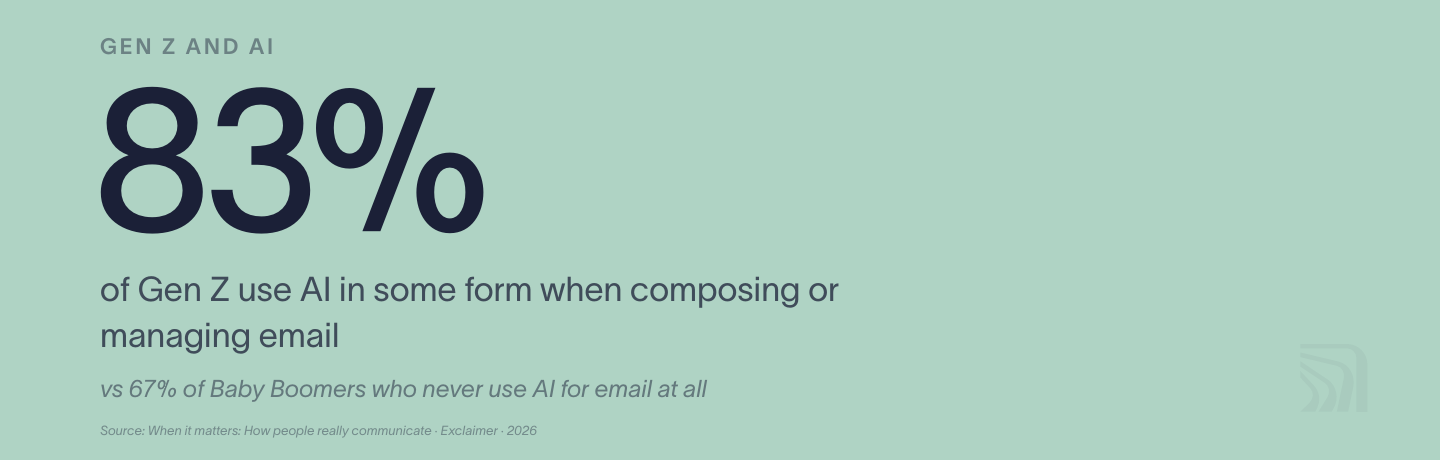 In our latest research, only 17% of Gen Z say they never use AI in their communications (the lowest share of any generation), suggesting that around 83% now do. They’re also the most likely to use it to shape how they come across: 32% use AI to sound more professional, and 29% to improve their grammar. The generation that was most wary of AI in email is now the least likely to keep it out of how they communicate. In just two years, caution has given way to comfort.
What hasn't shifted: the bar for looking genuine
AI adoption within email soared. The standards for what feels authentic did not fall with it.
The striking part is that Gen Z's fast embrace of AI has not come with a shrug about authenticity. They still hold business email to a high standard. Gen Z rates a professional, branded email signature as a trust signal more highly than older generations (29%, level with Millennials), and looks for a professional email address on a company domain almost as often (43%). Meanwhile, doubt about what is real has spread across everyone: 41% of people have now questioned whether a message they received was genuine.
The generation once most wary of AI in email is now among those driving its spread, in an environment where the visible signals of a genuine sender count for more, not less.
Why it matters for brands
If norms can move this fast, the fixed points are the ones worth knowing.
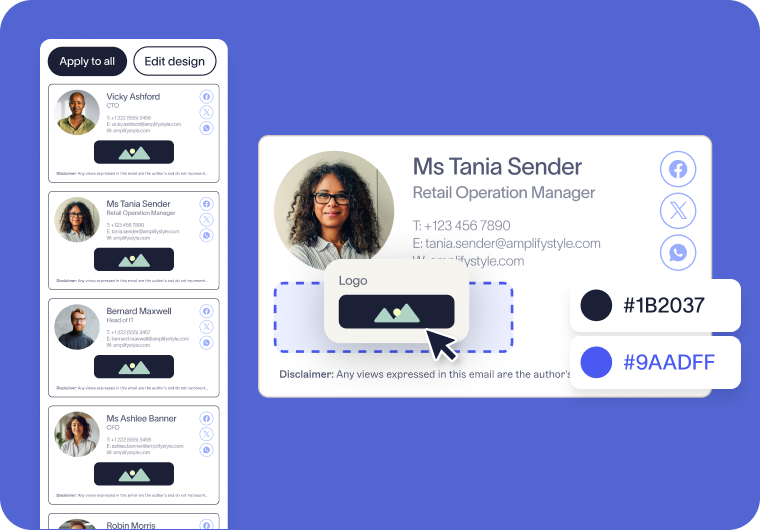 The lesson for anyone communicating with a younger audience is not that Gen Z is fickle. Behavior can shift far faster than anyone expects, but one thing holds true: people want to trust whoever is emailing them.
How each generation uses email keeps diverging, and yet, for all the talk of younger users leaving, Gen Z has not walked away from the inbox. What they have done is learn to judge a sender on the visible marks of legitimacy, and Gen Z holds that bar higher than most. Keeping those signals steady, a consistent, professional, on-brand email signature on everything your organization sends is one thing that remains valuable over time.
This blog draws on When it matters: How people really communicate, the latest in Exclaimer's ongoing research into how people communicate, alongside earlier studies from 2024. Read the full report.